









INTERFERENZE
Fall Winter 26/27
INTERFERENZE
Fall Winter 26/27
Palazzo Barberini is not an architecture at peace. It is a space of tension where many devices concur to question form’s claim to stability. The building resists any synthesis between order and movement: it lays bare their forced coexistence, their permanent friction, the interferences produced as they overlap. In Nietzschean terms, the palazzo reveals itself as the site of an unresolved tension between an Apollonian principle, punctuated by measure, clarity and hierarchy, and a Dionysian impulse made of rapture, drift and dissolution of boundaries.
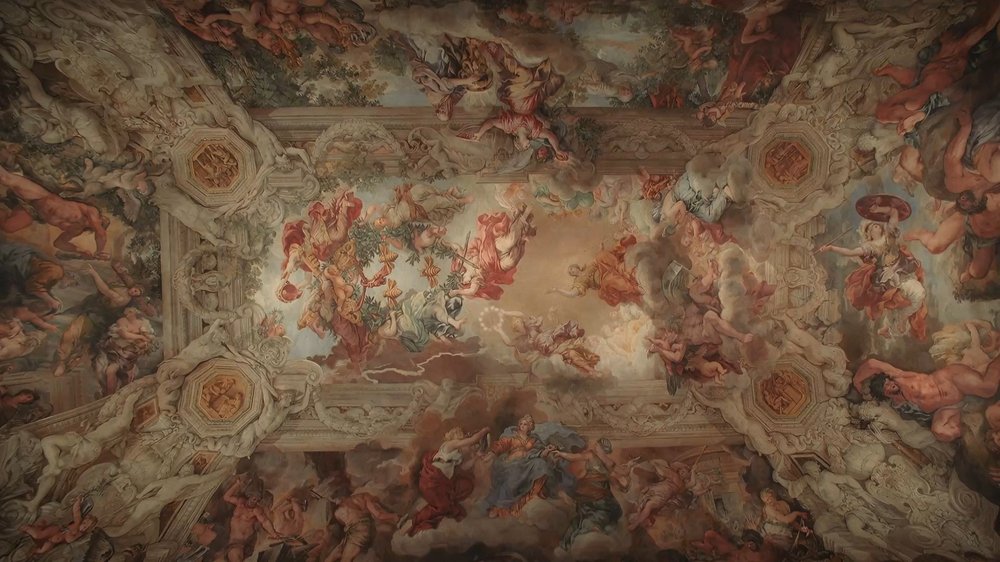
At first glance, the building’s layout appears solid and regular, governed by a symmetrical and legible clarity of distribution. While firmly rooted in the Baroque era, the architectural organism retains an ordered skeleton, a compositional equilibrium that anchors the space, making it fully intelligible. The façade, the courtyard, and the rhythmic cadence of its levels establish a system functioning as a perspectival machine, where every element finds its place within a precise hierarchy. It is an architecture that asserts continuity, measure, and solidity. Yet, on the inside, centrifugal forces tear at this formal regularity, cracking its compactness. In the Great Hall, Pietro da Cortona’s Triumph of Divine Providence erupts and shatters that geometric rigor. The ceiling dissolves through an illusionistic upheaval: it opens up and dematerializes. The heavens convulse the architecture; nature dismantles the underlying orthogonality; light and wind penetrate the disciplined space. Above the regularity of the layout, a vortical, ascensional, atmospheric movement unfolds. A structural friction is thus generated: on one side, architectural stability, heir to a hierarchical thought; on the other, pictorial illusion that ruptures boundaries and transforms the ceiling into an event. Here, life – Georg Simmel would say - exceeds the form that contains it, forcing it to confront its own insufficiency.
This dialectic between opposing forces is especially evident in the confrontation between Gian Lorenzo Bernini and Francesco Borromini, both commissioned to work on the same building and embodying radically different spatial conceptions. In their dialogue - or conflict - architecture becomes a site where order and instability are not resolved, but continue to measure themselves within the very materiality of form.
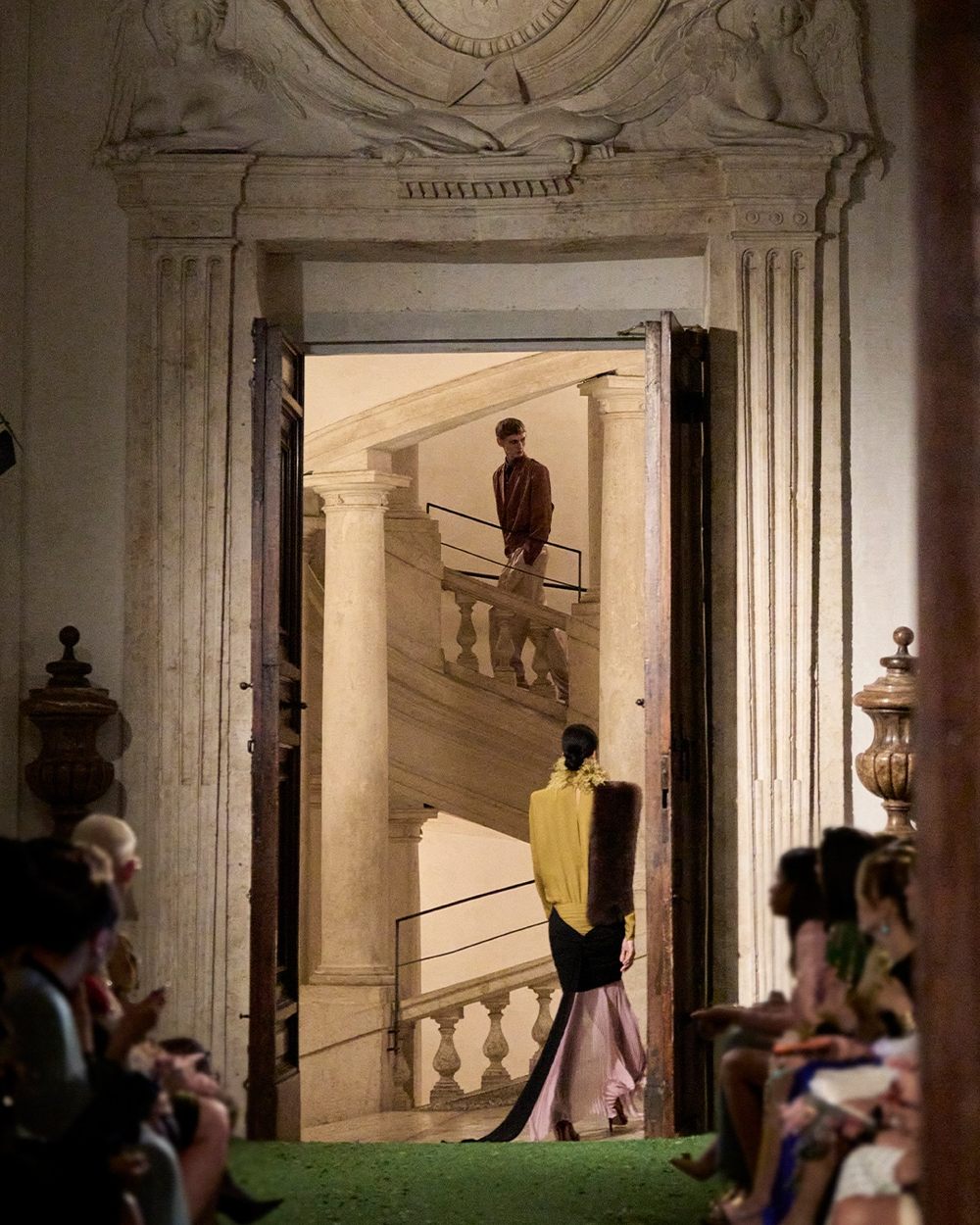
Bernini’s staircase articulates a transparent geometry of hierarchy and orientation. The body is guided, the path is clear, the ascent coincides with the geometric principle that presents itself as natural. The space serves as a stabilizing apparatus: it reassures, it disciplines, it makes power visible and measurable. Bernini’s staircase is a mechanism of affirmation. Vast, rectilinear, solemn. The stride is channeled, the rhythm predictable. The body is disciplined: to ascend is to adhere to a hierarchy, to acknowledge a clear direction, to accept a centrality. Here order is not negotiated: it is imposed with elegance. Borromini’s elliptical staircase, by contrast, does not accompany the body but exposes it to a loss of orientation. Geometry curves, verticality becomes an unstable experience. Movement is no longer linear but torsion, drift, continuous adaptation. The space does not stabilize. Rigor is cracked from within; form persists, but ceases to guarantee security. To ascend is to negotiate one’s own balance, to accept a shifting centrality, to inhabit a configuration that becomes problematic. Here architecture does not affirm: it questions.
Precisely in this questioning, the palace reveals its deepest nature: not a unitary organism, but a field of interferences where divergent forces cohabit without neutralizing one another. It is a space inhabited by tensions, by layered wills, by visions that measure themselves in matter. What guides and what cracks can share the same perimeter, the same representational ambition: this co-presence generates density. The linearity that disciplines and the curve that disorients do not exclude each other: together they produce a space that refuses to be reduced to a single grammar. As in Walter Benjamin’s dialectical images, truth does not emerge from synthesis, but from the spark produced by holding polarities together.
In a similar way, fashion too can be read as a field of opposing forces cohabiting in and on the body. The garment is never a merely decorative surface: it is an apparatus that organizes the dialogue between discipline and desire, between social norm and individual gesture, between belonging and excess. As Bradley Quinn has argued, fashion and architecture do not simply resemble each other formally, they share the same operative logic: both structure space and orient identity. The garment constructs the proximal space of the body just as architecture constructs the inhabitable environment. Both give form to fields of tension capable of interfering with the conditions of the subject’s presence, with the ways in which the body exposes itself, moves, and is seen.
Like architecture, fashion both stabilizes and destabilizes, orients and decenters, asserts and calls into question. It makes a hierarchy visible, yet it can also subvert it. The form of a garment is the outcome of a continuous negotiation between structure and movement, gravity and levitation, control and openness. Within this friction, the act of dressing acquires reflective density: not mere adherence to a code, but a dynamic space where power - whether aesthetic, symbolic, or social - manifests and interrogates itself. The construction of a garment, like that of a building, is always the provisional result of a negotiation between code and invention, between memory and mutation. Every creative gesture confronts a tradition that precedes it, and this confrontation opens the possibility for a drift, capable of unsettling a pre-established normative structure. Sense is not generated by the triumph of one polarity over another, but by their holding together: an unstable equilibrium that makes form a continuously operative field of forces, an open system of interferences.
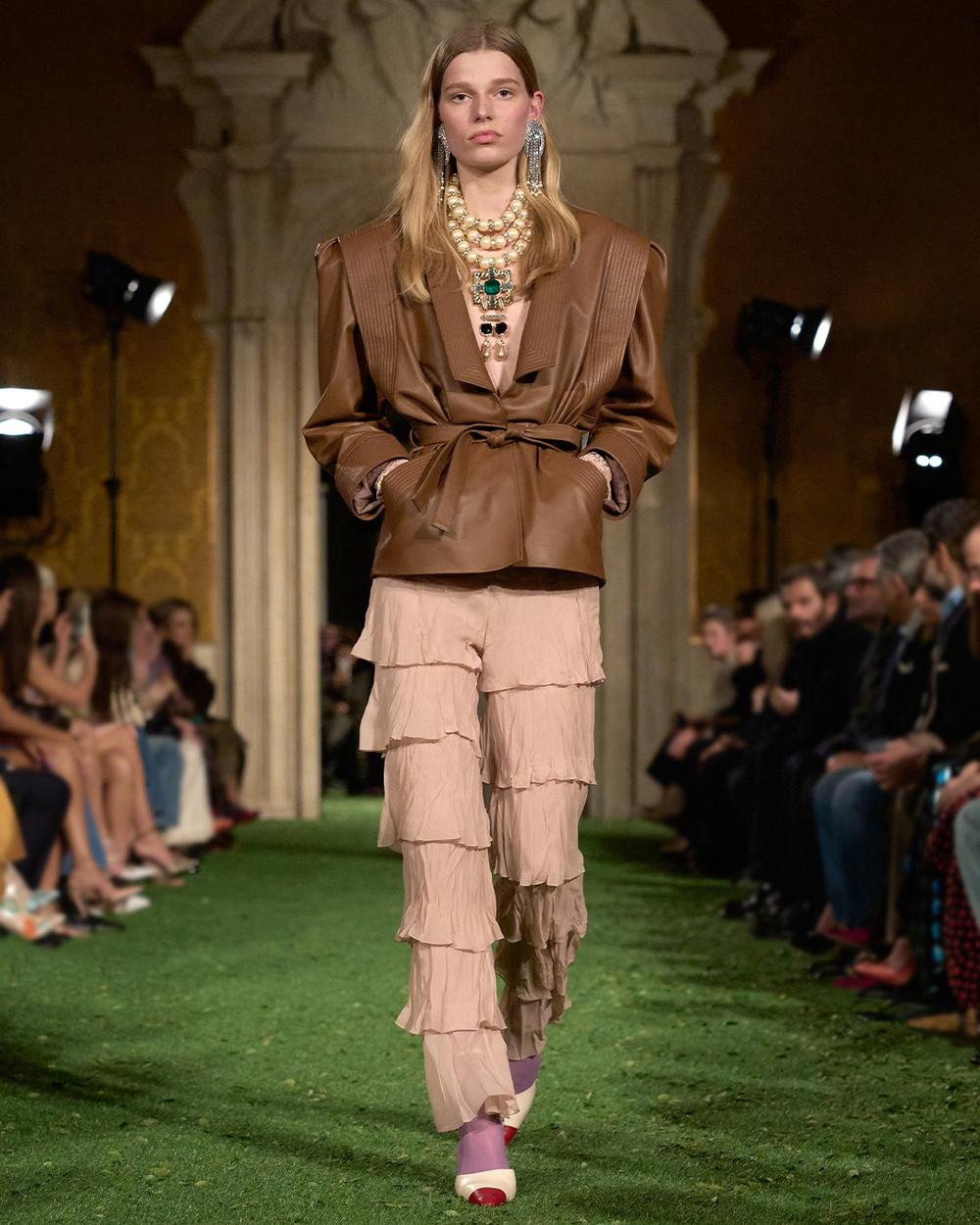
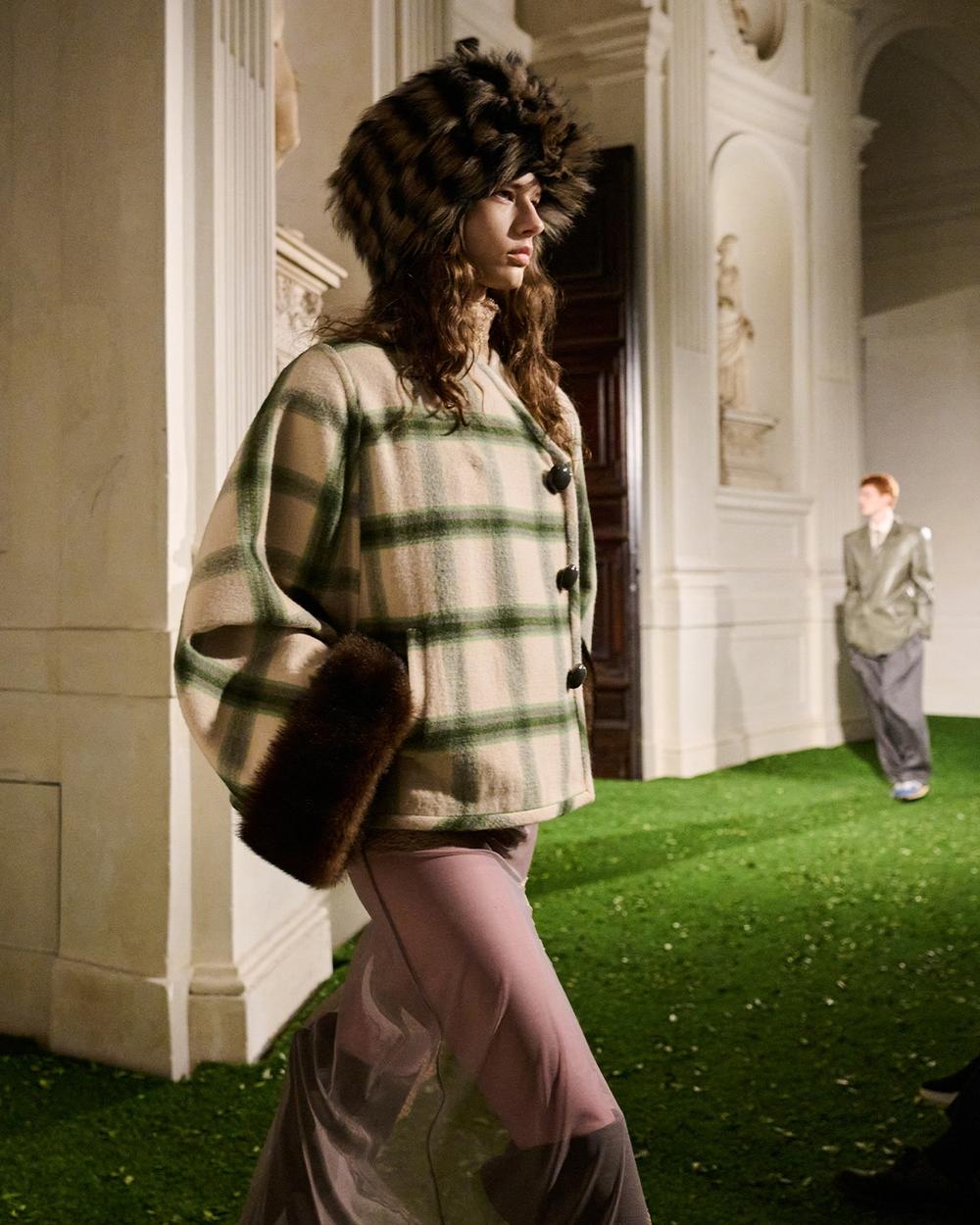
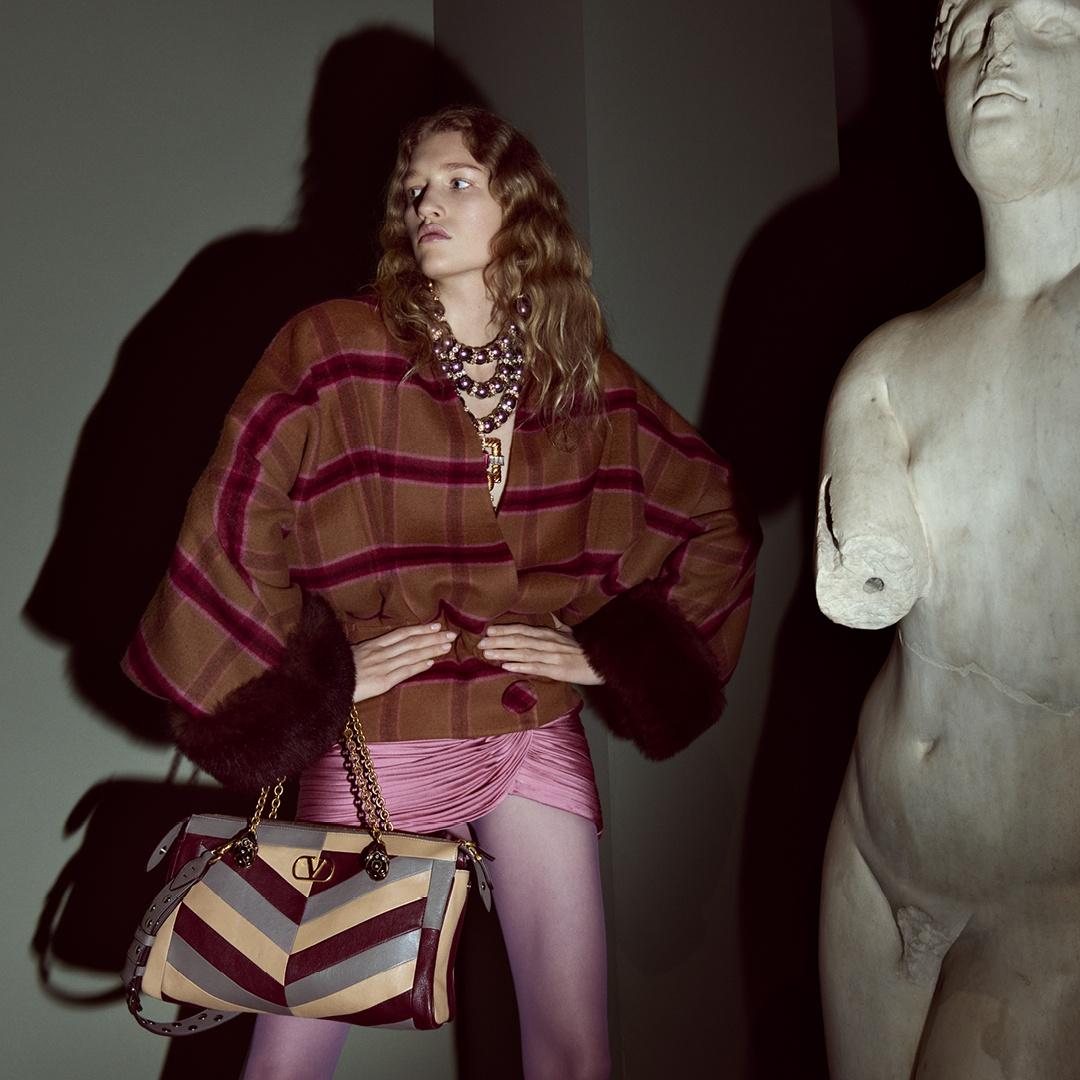
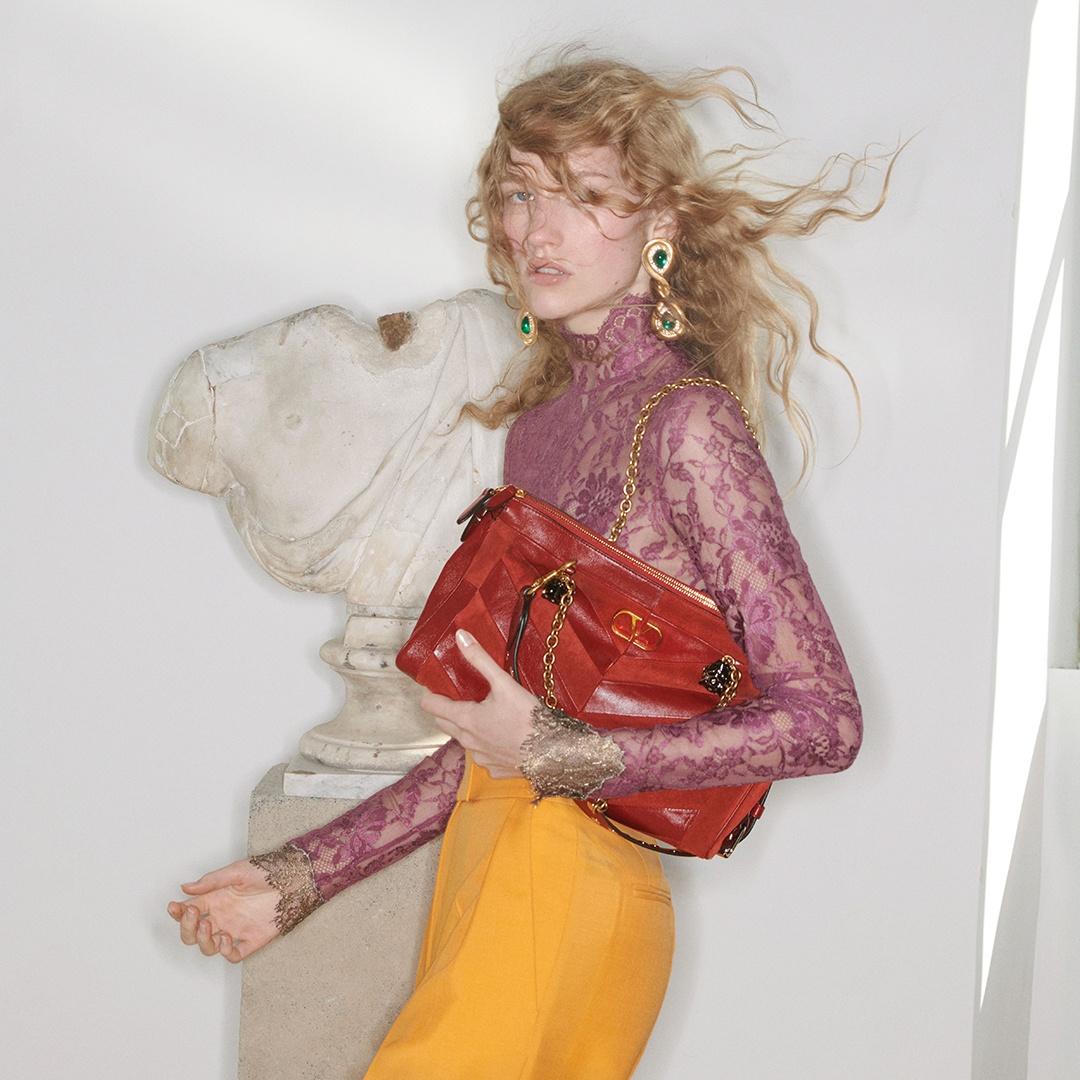
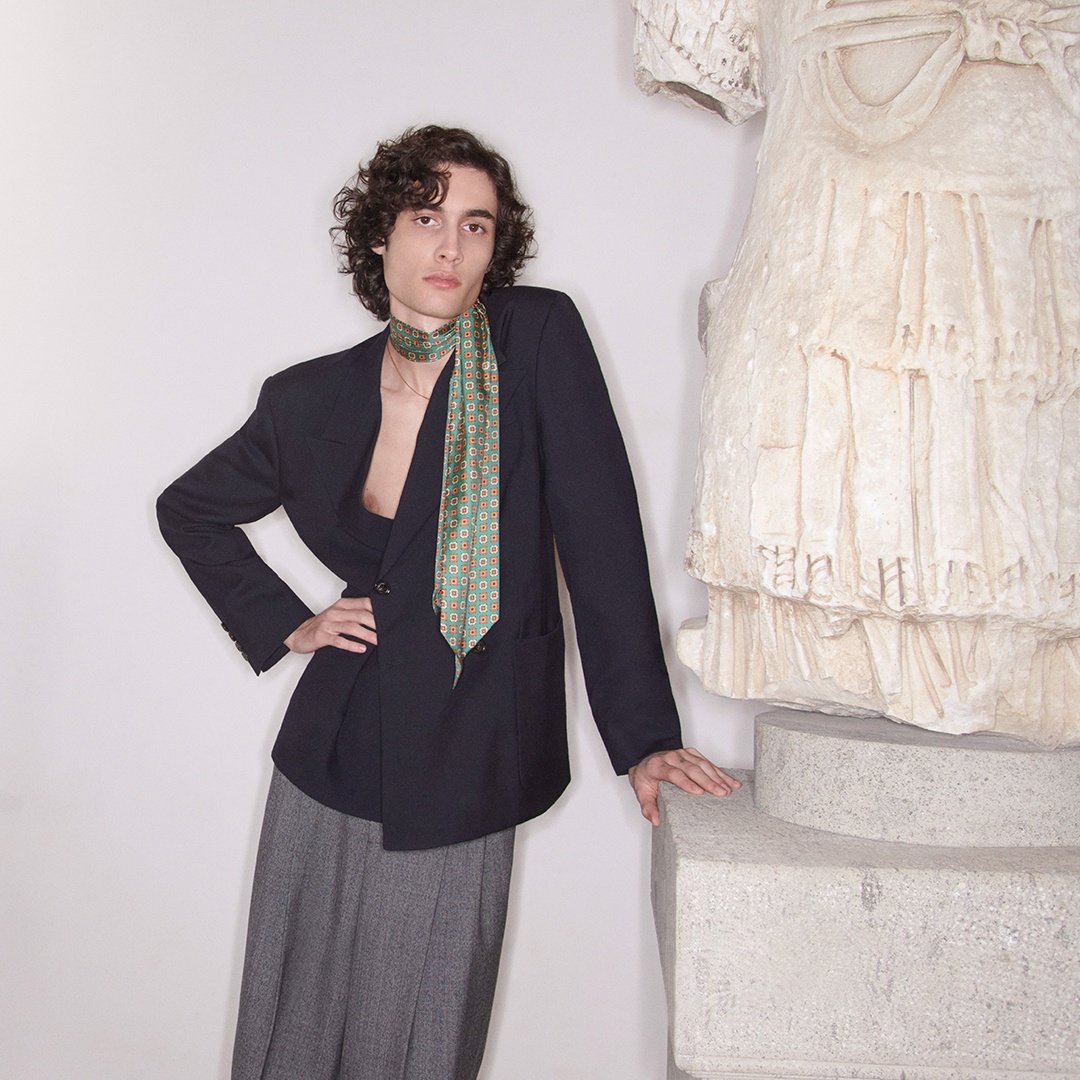
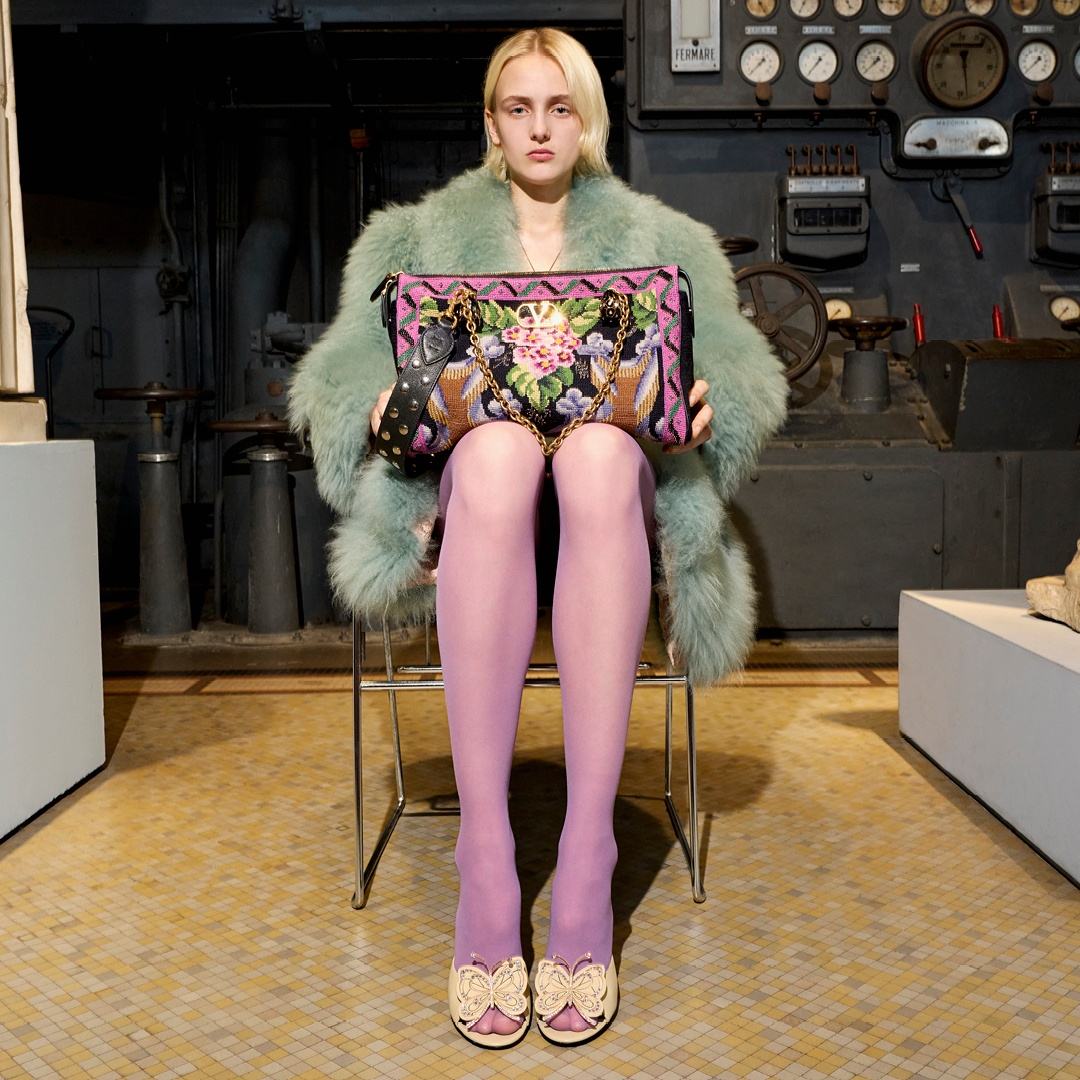
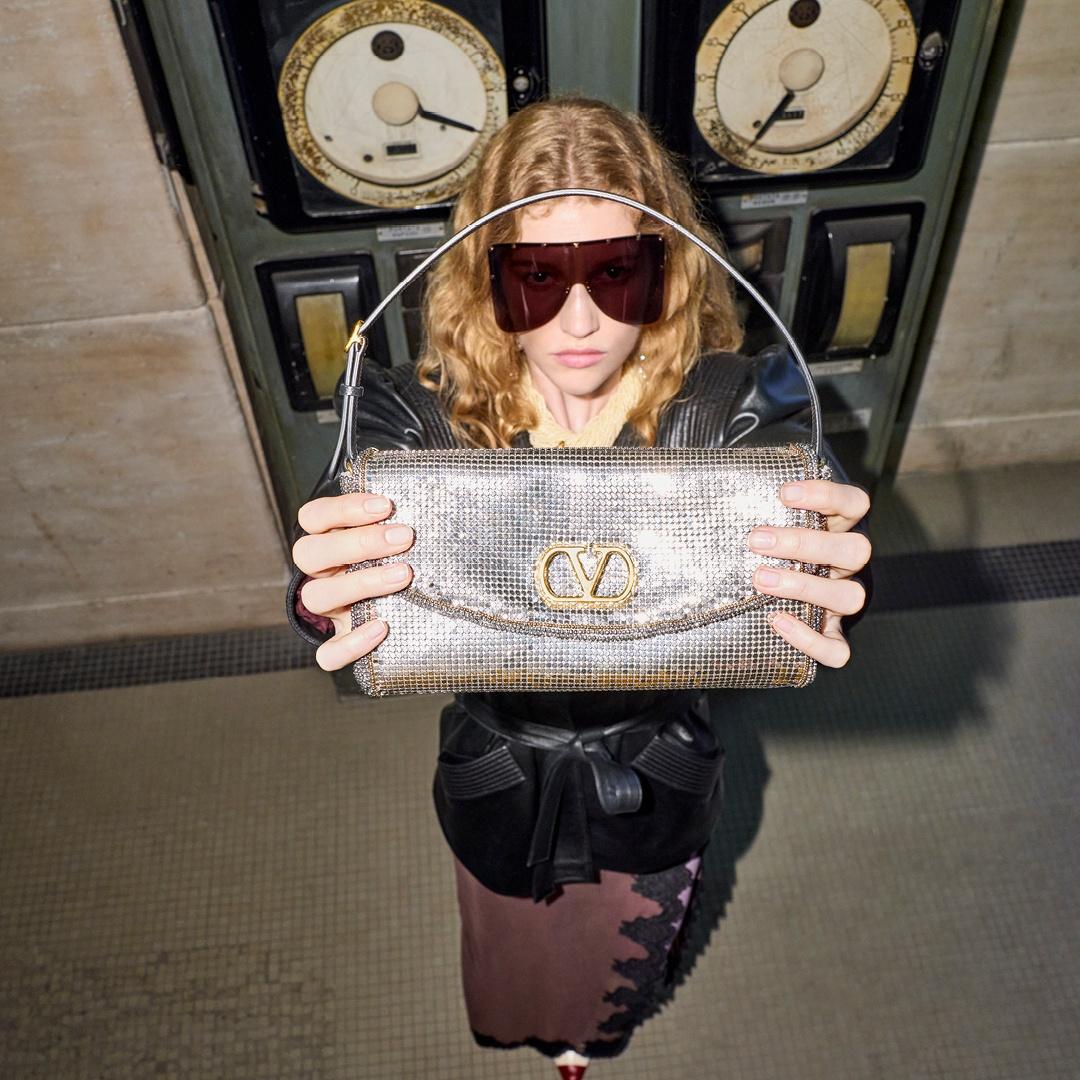
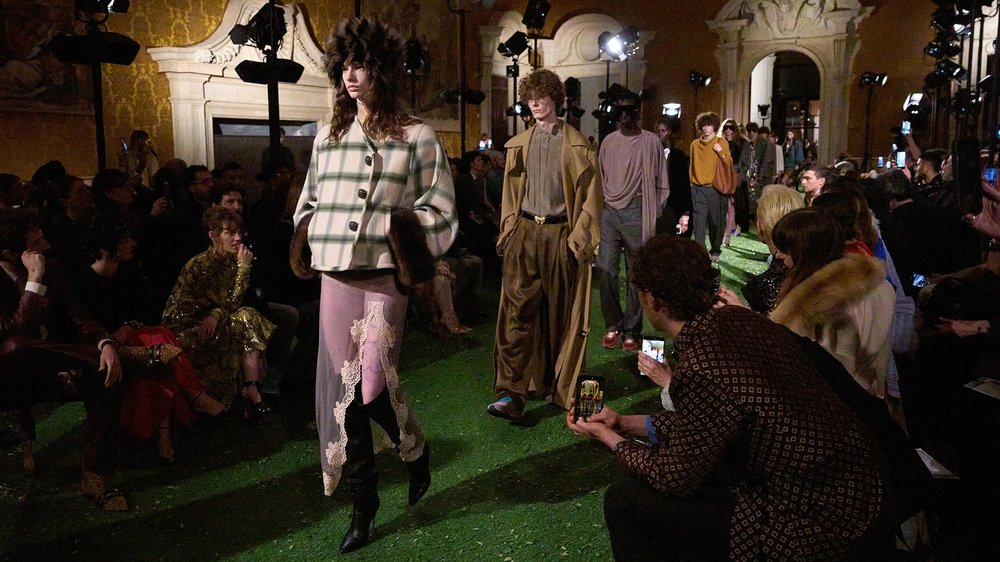
This makes Palazzo Barberini the ideal stage for a fashion show, emphasizing the constitutive friction between rigor and transgression that haunts architecture and fashion. The analogy is not aesthetic, nor does it rest on simple formal echoes. It arises from the recognition of a polar structure in which the Apollonian and the Dionysian do not oppose one another, but operate as simultaneous principles animating both languages from within. Palazzo Barberini is not a simple backdrop, it is an apparatus for critical reactivation. Far from being a mere host to the bodies, the building claims them, orienting and exposing them, forcing a confrontation with a history of hierarchy and torsion, of axes and curves.
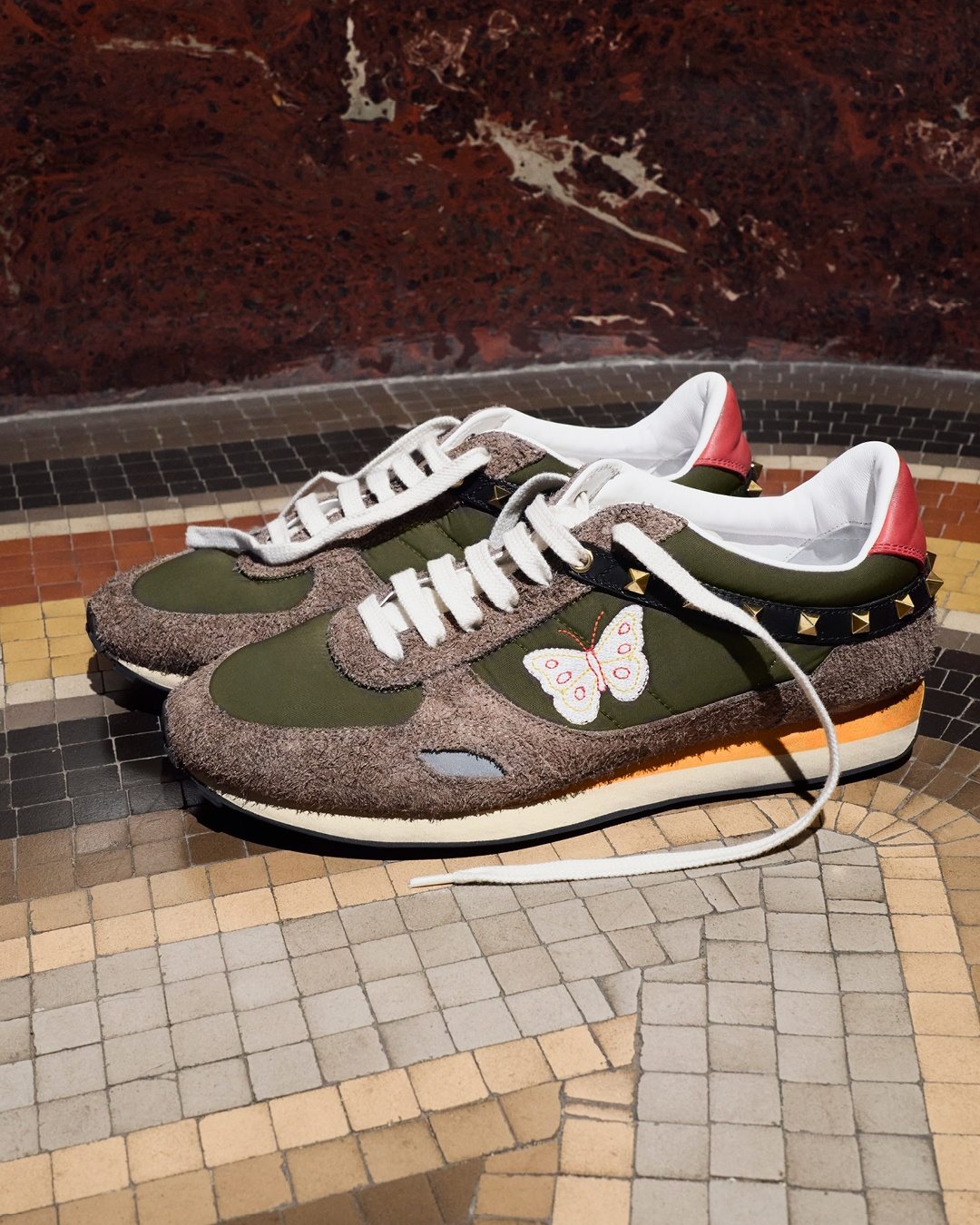
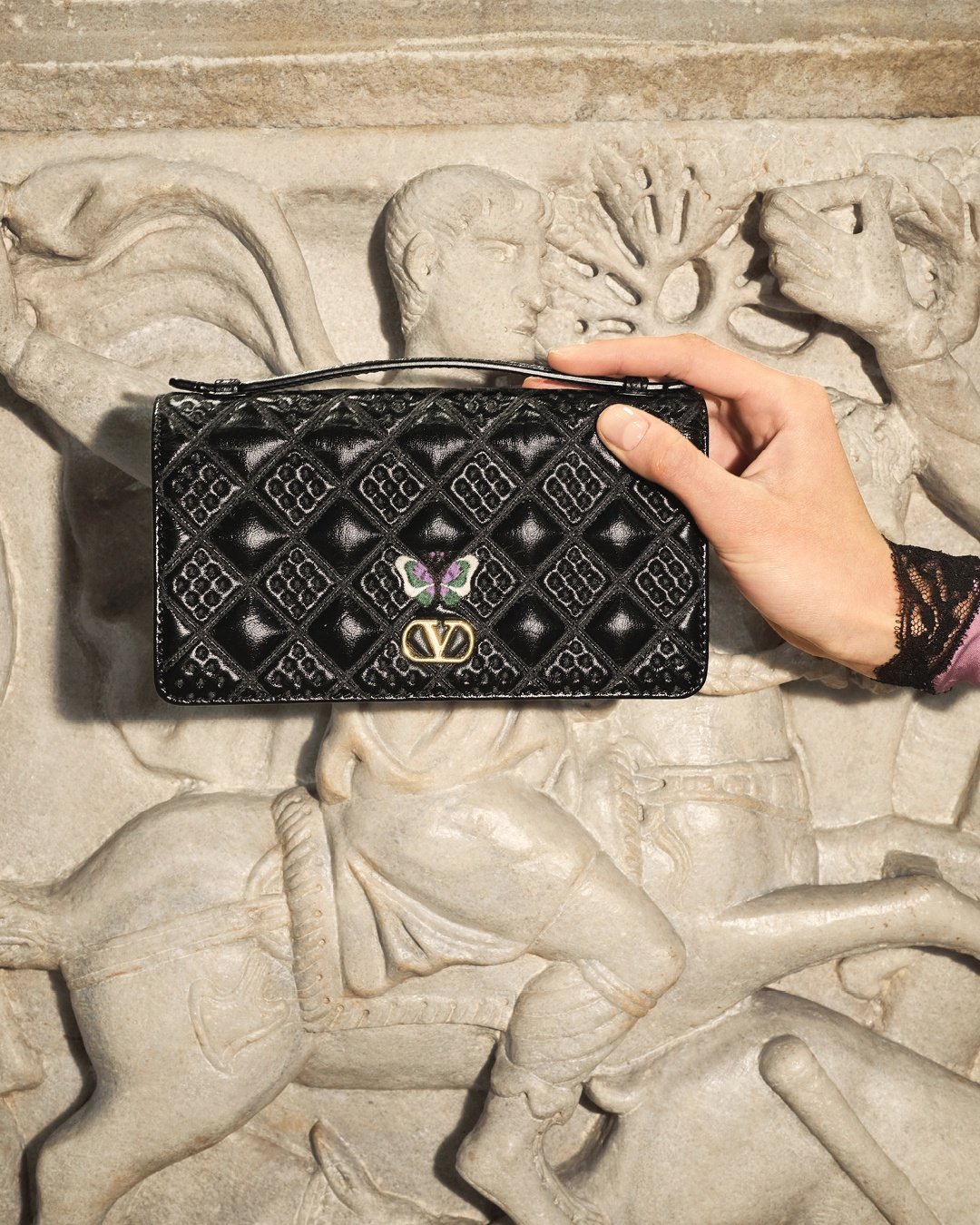
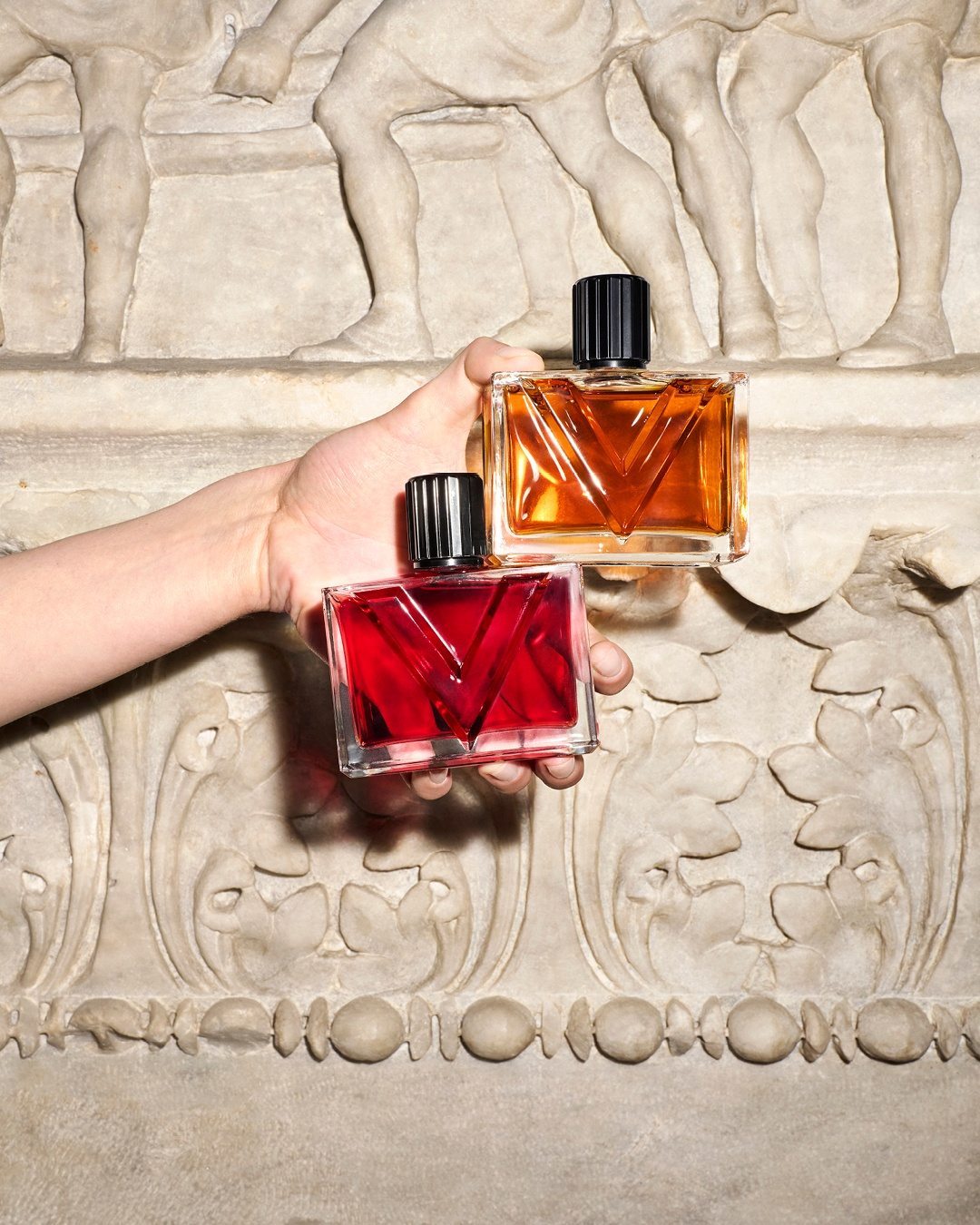
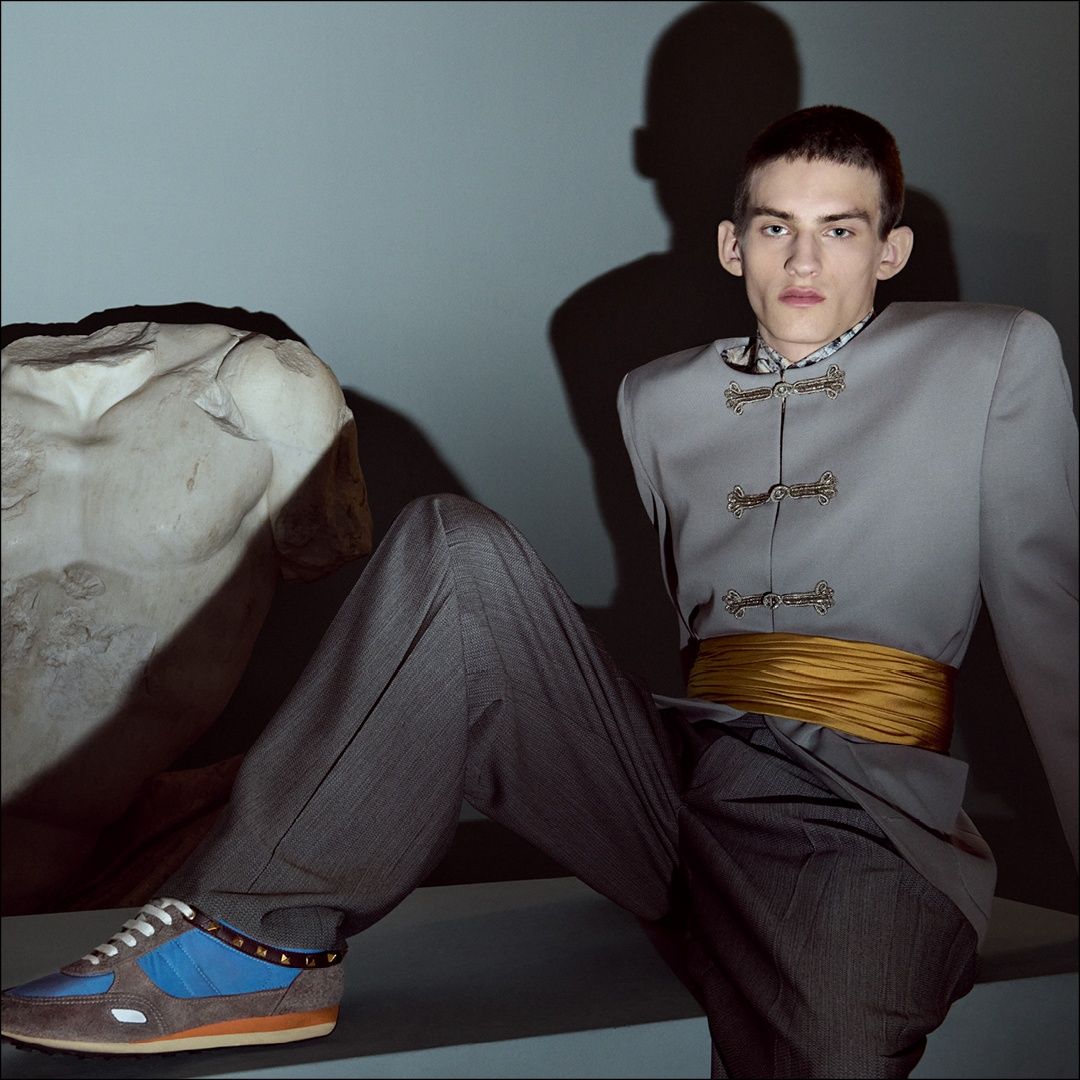
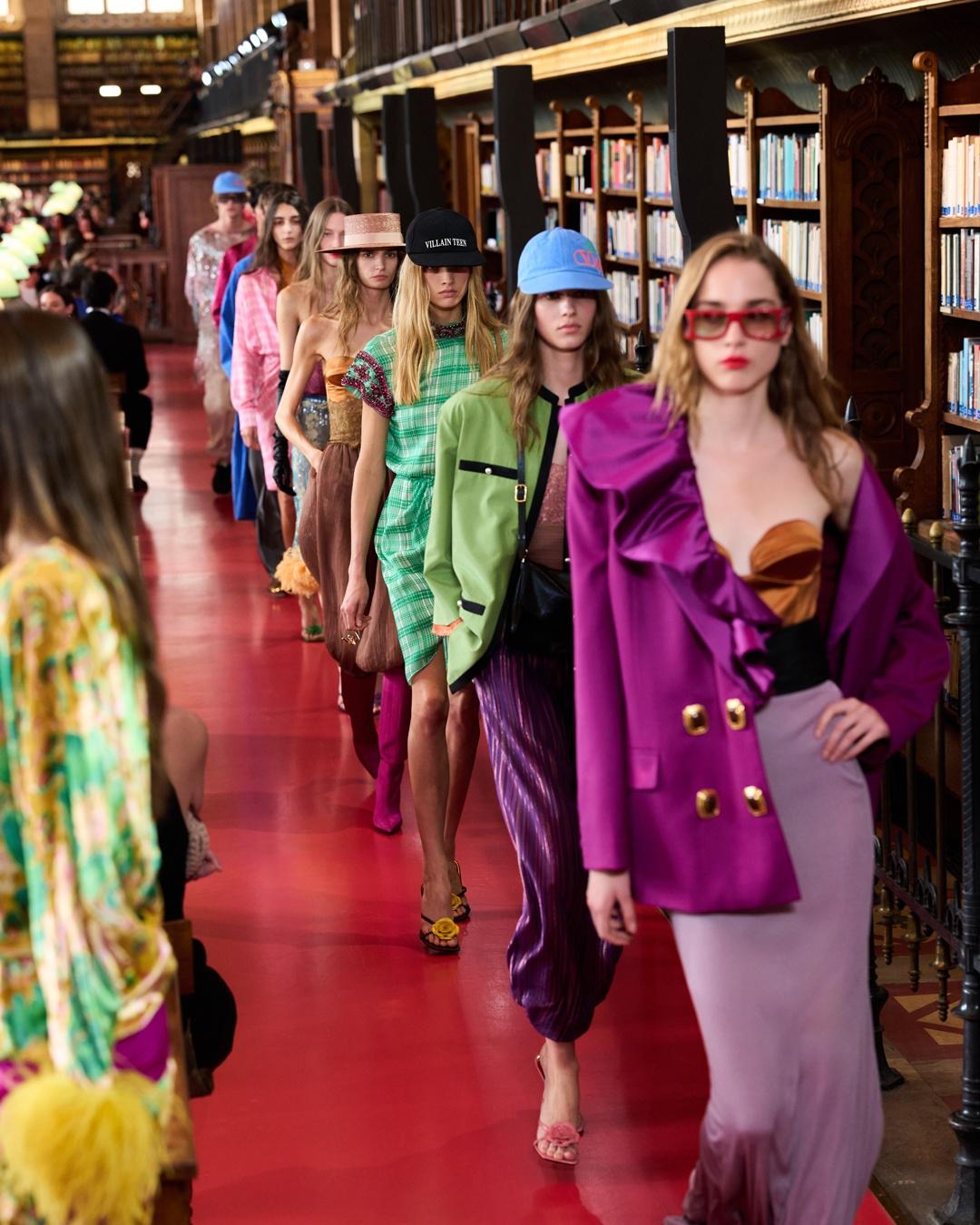
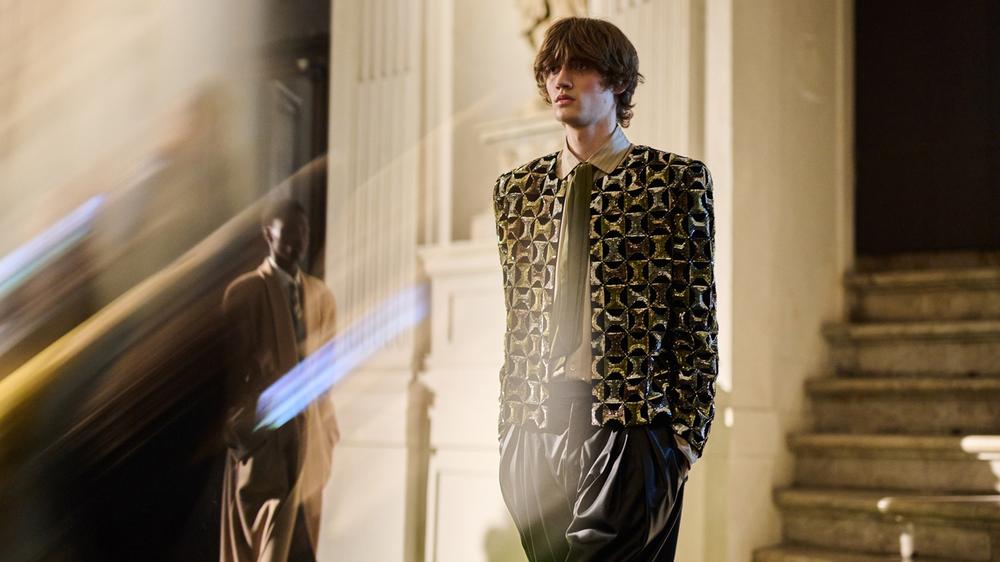
In this tension, running through stone and textile alike, the show Interferenze unveils the collision between code and deviation, lightness and gravity, rule and profusion, transparency and opacity, conformity and transgression. What emerges is a collection that celebrates order while simultaneously revealing its structural vulnerability, exposing it to the possibility of its own overcoming.
Alessandro
Palazzo Barberini is not an architecture at peace. It is a space of tension where many devices concur to question form’s claim to stability. The building resists any synthesis between order and movement: it lays bare their forced coexistence, their permanent friction, the interferences produced as they overlap. In Nietzschean terms, the palazzo reveals itself as the site of an unresolved tension between an Apollonian principle, punctuated by measure, clarity and hierarchy, and a Dionysian impulse made of rapture, drift and dissolution of boundaries.
At first glance, the building’s layout appears solid and regular, governed by a symmetrical and legible clarity of distribution. While firmly rooted in the Baroque era, the architectural organism retains an ordered skeleton, a compositional equilibrium that anchors the space, making it fully intelligible. The façade, the courtyard, and the rhythmic cadence of its levels establish a system functioning as a perspectival machine, where every element finds its place within a precise hierarchy. It is an architecture that asserts continuity, measure, and solidity. Yet, on the inside, centrifugal forces tear at this formal regularity, cracking its compactness. In the Great Hall, Pietro da Cortona’s Triumph of Divine Providence erupts and shatters that geometric rigor. The ceiling dissolves through an illusionistic upheaval: it opens up and dematerializes. The heavens convulse the architecture; nature dismantles the underlying orthogonality; light and wind penetrate the disciplined space. Above the regularity of the layout, a vortical, ascensional, atmospheric movement unfolds. A structural friction is thus generated: on one side, architectural stability, heir to a hierarchical thought; on the other, pictorial illusion that ruptures boundaries and transforms the ceiling into an event. Here, life – Georg Simmel would say - exceeds the form that contains it, forcing it to confront its own insufficiency.
This dialectic between opposing forces is especially evident in the confrontation between Gian Lorenzo Bernini and Francesco Borromini, both commissioned to work on the same building and embodying radically different spatial conceptions. In their dialogue - or conflict - architecture becomes a site where order and instability are not resolved, but continue to measure themselves within the very materiality of form.
Bernini’s staircase articulates a transparent geometry of hierarchy and orientation. The body is guided, the path is clear, the ascent coincides with the geometric principle that presents itself as natural. The space serves as a stabilizing apparatus: it reassures, it disciplines, it makes power visible and measurable. Bernini’s staircase is a mechanism of affirmation. Vast, rectilinear, solemn. The stride is channeled, the rhythm predictable. The body is disciplined: to ascend is to adhere to a hierarchy, to acknowledge a clear direction, to accept a centrality. Here order is not negotiated: it is imposed with elegance. Borromini’s elliptical staircase, by contrast, does not accompany the body but exposes it to a loss of orientation. Geometry curves, verticality becomes an unstable experience. Movement is no longer linear but torsion, drift, continuous adaptation. The space does not stabilize. Rigor is cracked from within; form persists, but ceases to guarantee security. To ascend is to negotiate one’s own balance, to accept a shifting centrality, to inhabit a configuration that becomes problematic. Here architecture does not affirm: it questions.
Precisely in this questioning, the palace reveals its deepest nature: not a unitary organism, but a field of interferences where divergent forces cohabit without neutralizing one another. It is a space inhabited by tensions, by layered wills, by visions that measure themselves in matter. What guides and what cracks can share the same perimeter, the same representational ambition: this co-presence generates density. The linearity that disciplines and the curve that disorients do not exclude each other: together they produce a space that refuses to be reduced to a single grammar. As in Walter Benjamin’s dialectical images, truth does not emerge from synthesis, but from the spark produced by holding polarities together.
In a similar way, fashion too can be read as a field of opposing forces cohabiting in and on the body. The garment is never a merely decorative surface: it is an apparatus that organizes the dialogue between discipline and desire, between social norm and individual gesture, between belonging and excess. As Bradley Quinn has argued, fashion and architecture do not simply resemble each other formally, they share the same operative logic: both structure space and orient identity. The garment constructs the proximal space of the body just as architecture constructs the inhabitable environment. Both give form to fields of tension capable of interfering with the conditions of the subject’s presence, with the ways in which the body exposes itself, moves, and is seen.
Like architecture, fashion both stabilizes and destabilizes, orients and decenters, asserts and calls into question. It makes a hierarchy visible, yet it can also subvert it. The form of a garment is the outcome of a continuous negotiation between structure and movement, gravity and levitation, control and openness. Within this friction, the act of dressing acquires reflective density: not mere adherence to a code, but a dynamic space where power - whether aesthetic, symbolic, or social - manifests and interrogates itself. The construction of a garment, like that of a building, is always the provisional result of a negotiation between code and invention, between memory and mutation. Every creative gesture confronts a tradition that precedes it, and this confrontation opens the possibility for a drift, capable of unsettling a pre-established normative structure. Sense is not generated by the triumph of one polarity over another, but by their holding together: an unstable equilibrium that makes form a continuously operative field of forces, an open system of interferences.
This makes Palazzo Barberini the ideal stage for a fashion show, emphasizing the constitutive friction between rigor and transgression that haunts architecture and fashion. The analogy is not aesthetic, nor does it rest on simple formal echoes. It arises from the recognition of a polar structure in which the Apollonian and the Dionysian do not oppose one another, but operate as simultaneous principles animating both languages from within. Palazzo Barberini is not a simple backdrop, it is an apparatus for critical reactivation. Far from being a mere host to the bodies, the building claims them, orienting and exposing them, forcing a confrontation with a history of hierarchy and torsion, of axes and curves.
In this tension, running through stone and textile alike, the show Interferenze unveils the collision between code and deviation, lightness and gravity, rule and profusion, transparency and opacity, conformity and transgression. What emerges is a collection that celebrates order while simultaneously revealing its structural vulnerability, exposing it to the possibility of its own overcoming.
Alessandro
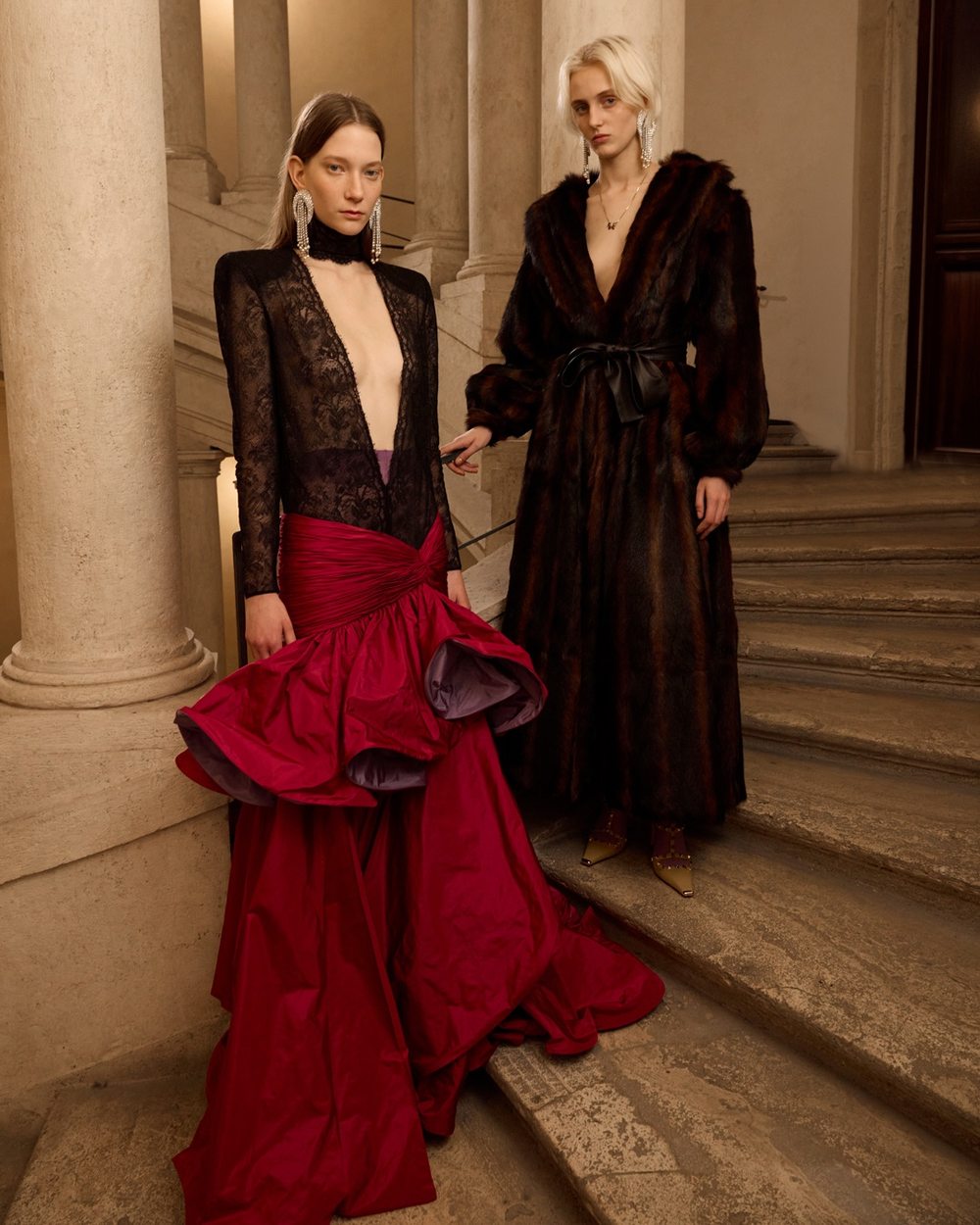
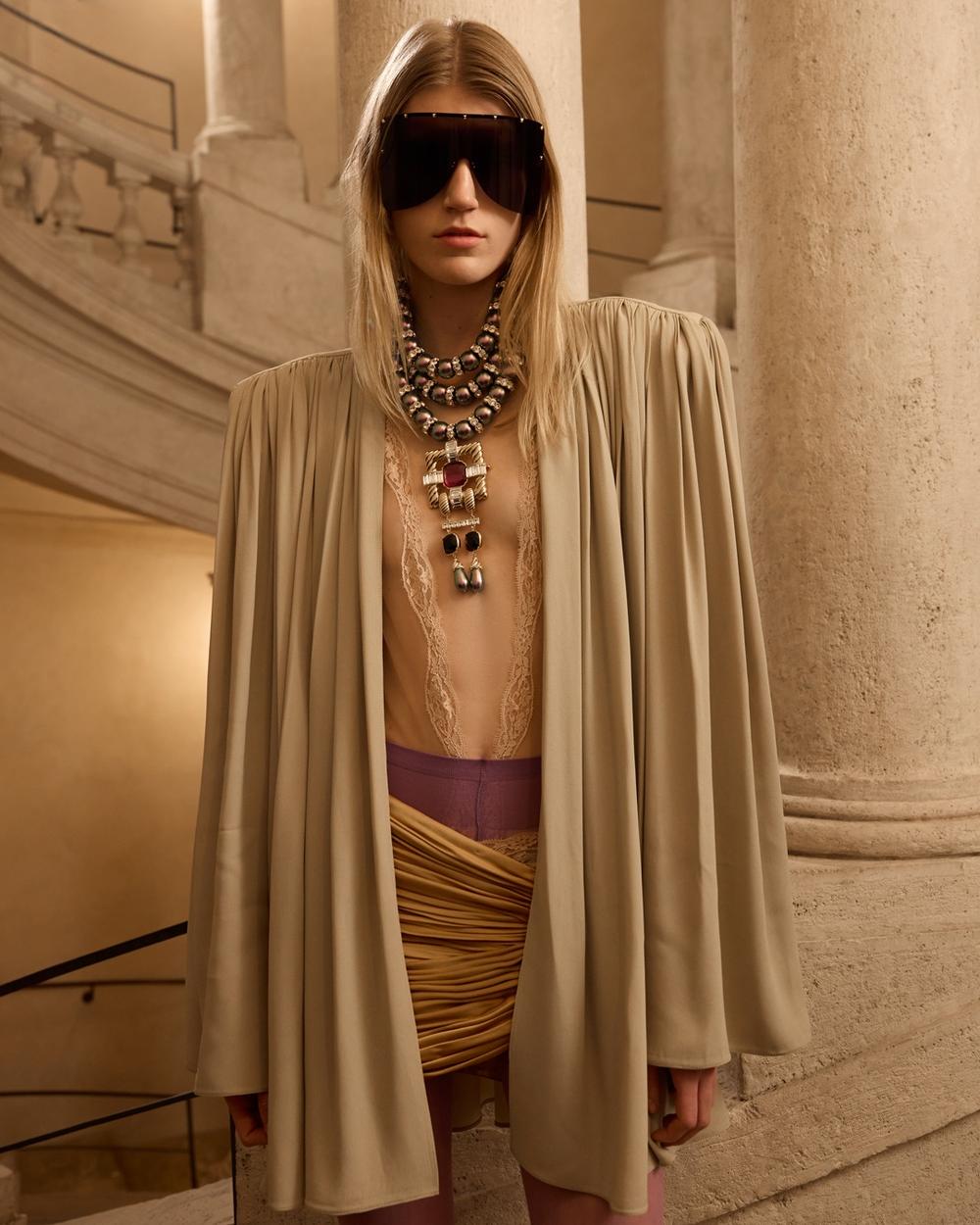
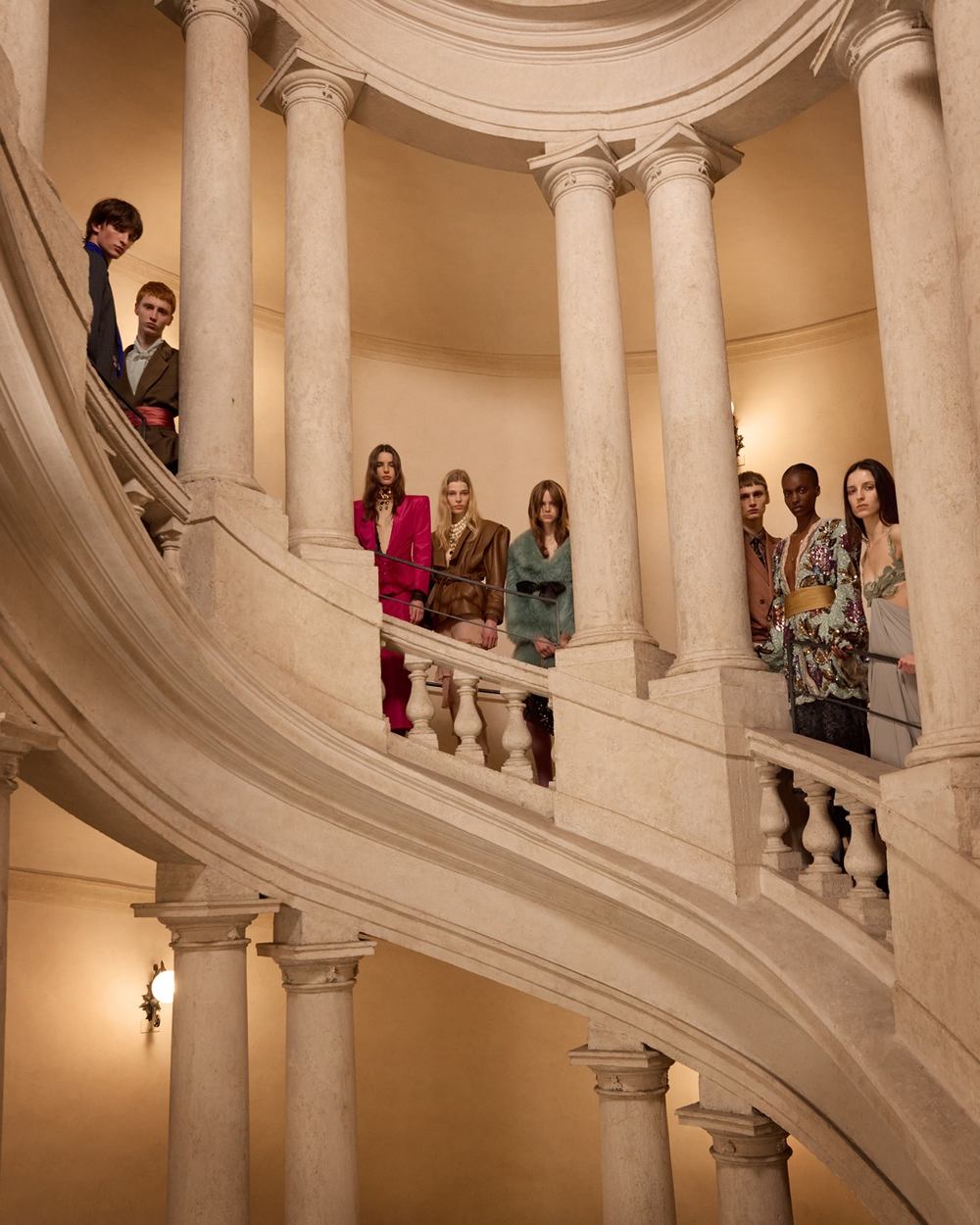
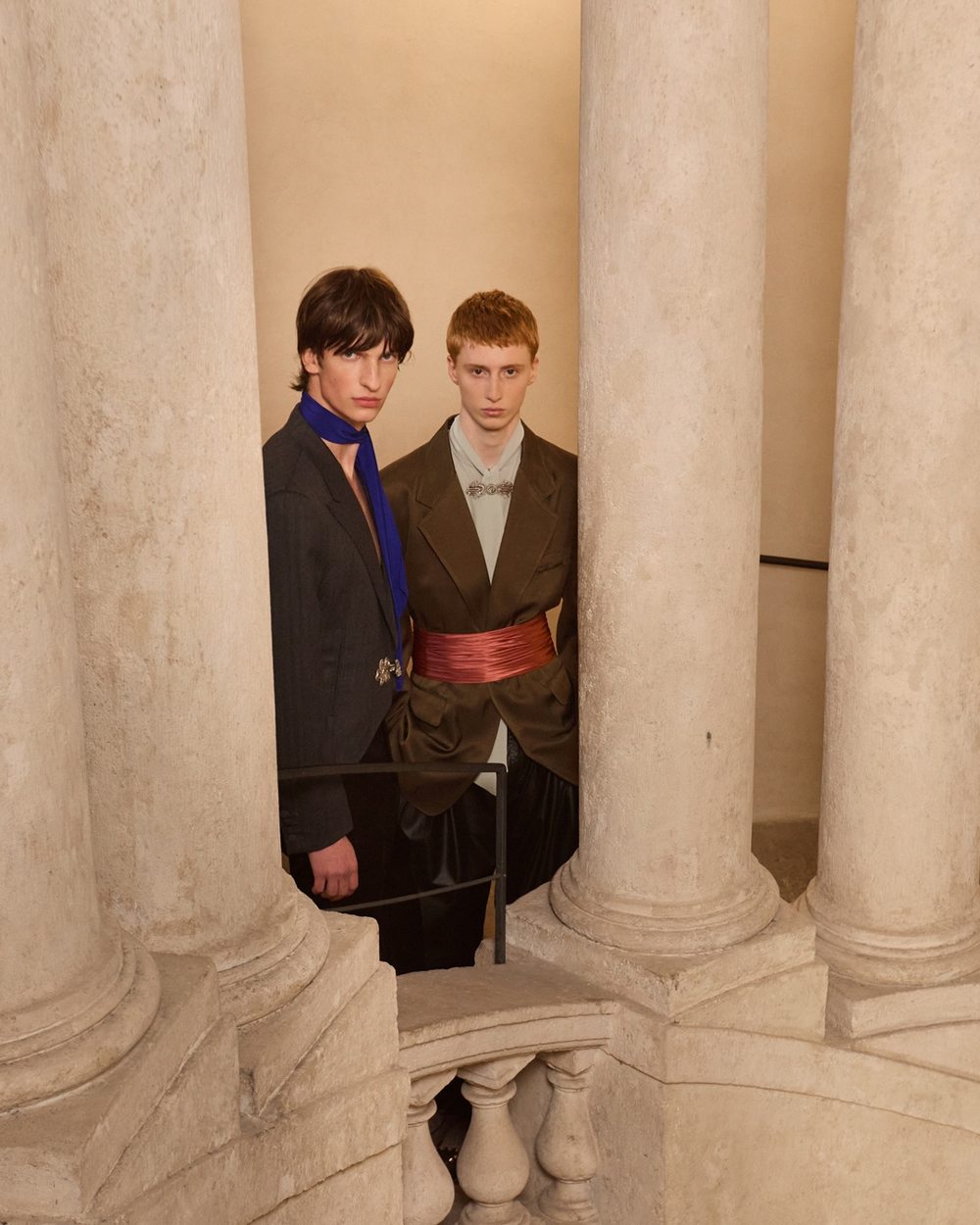
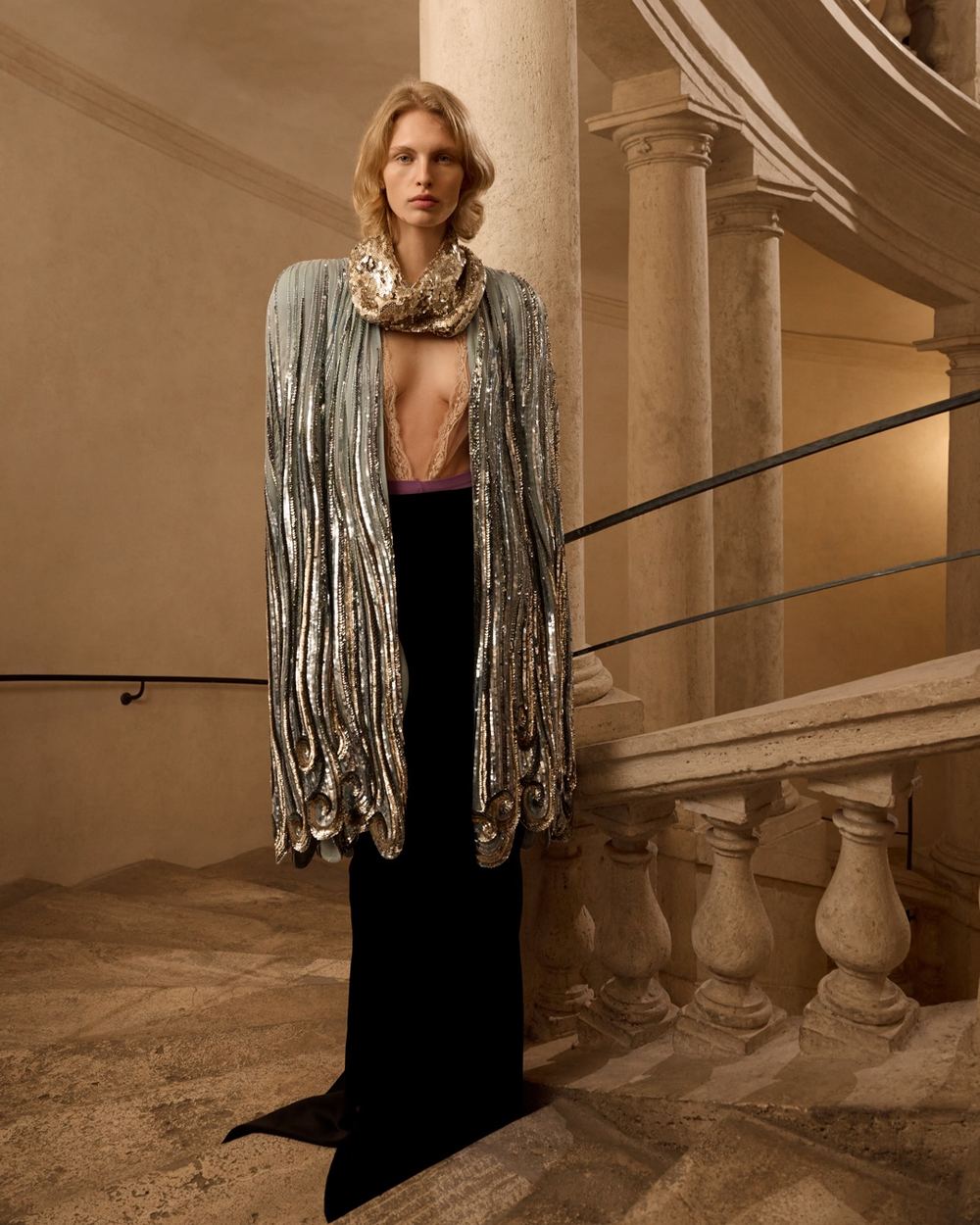
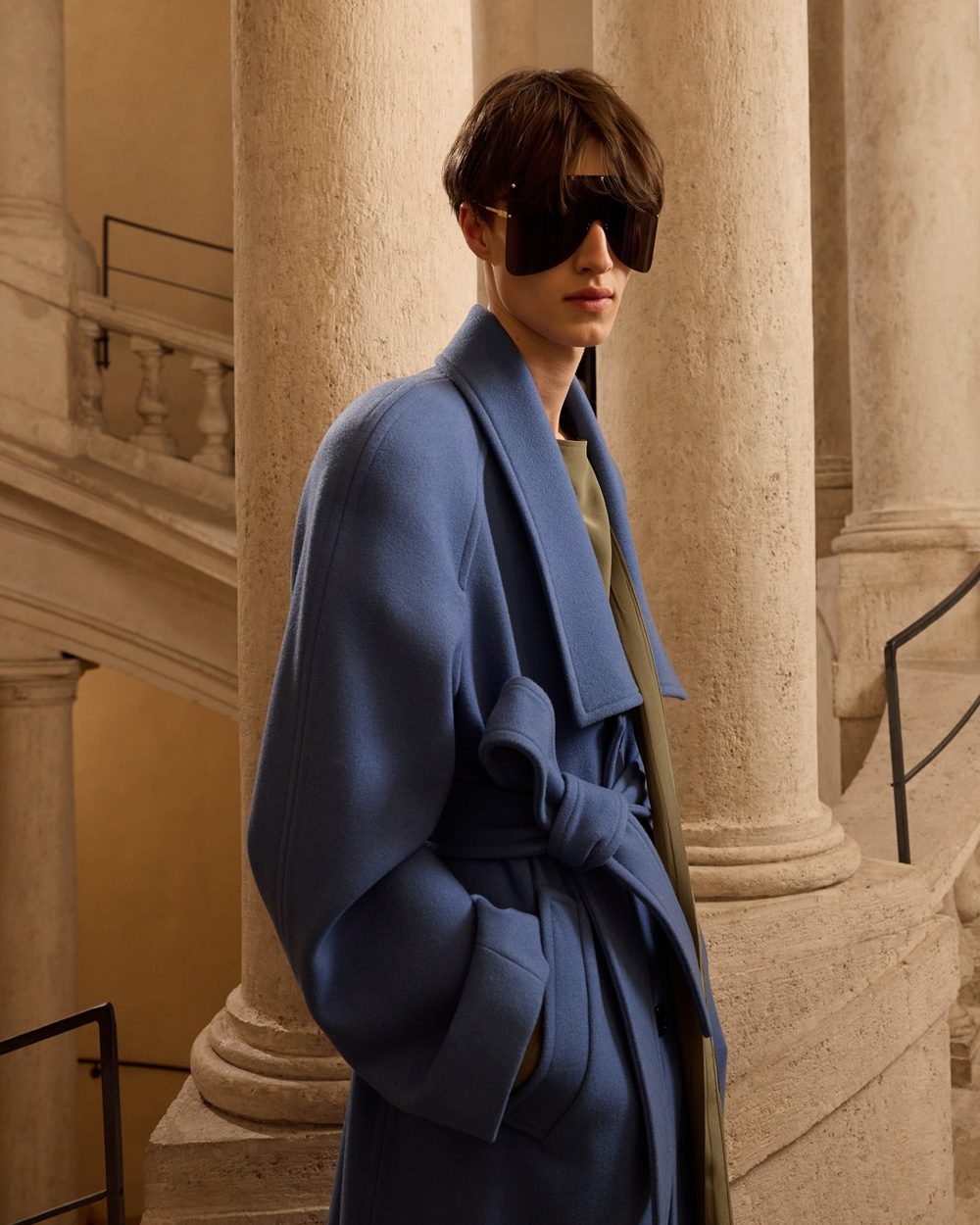

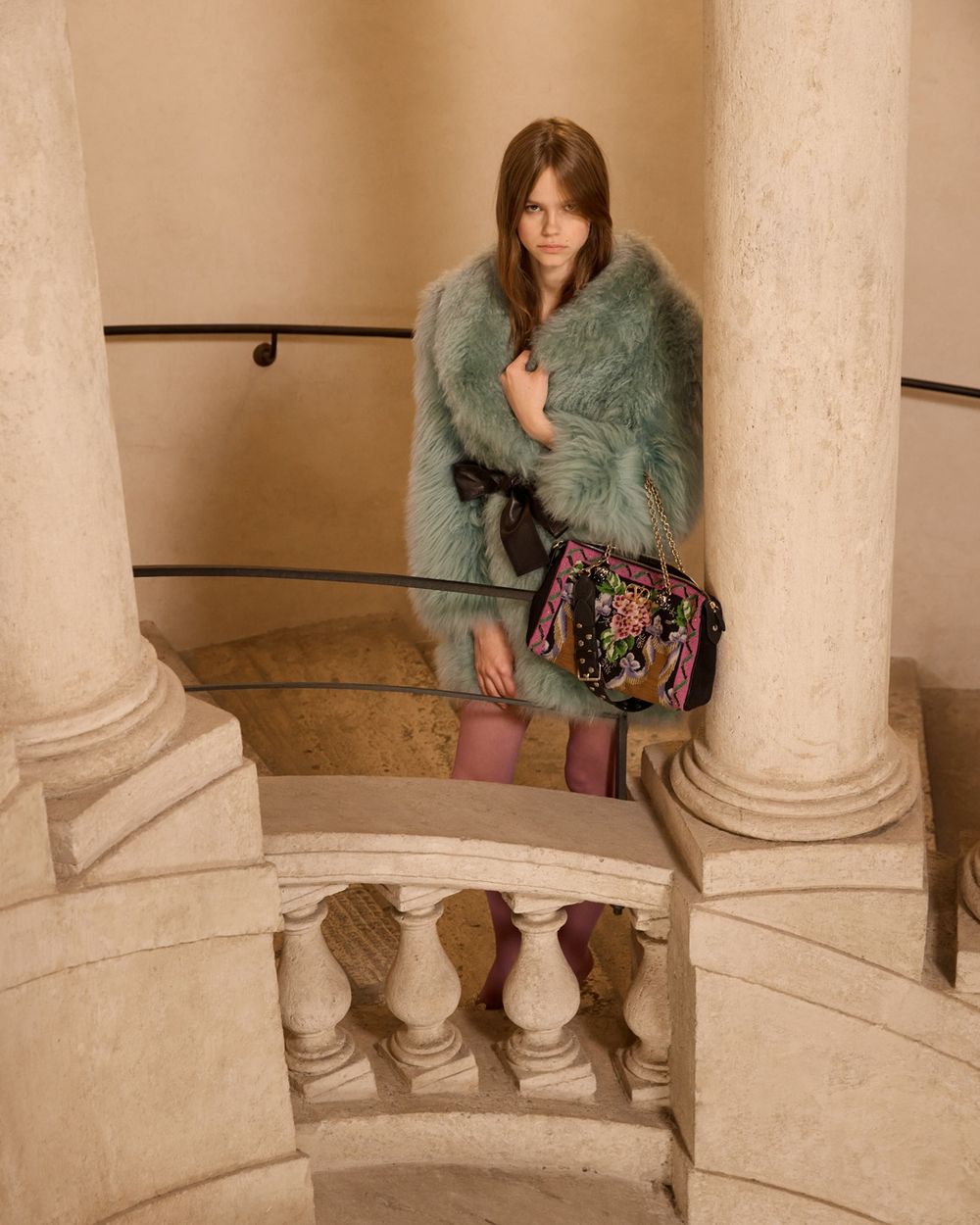
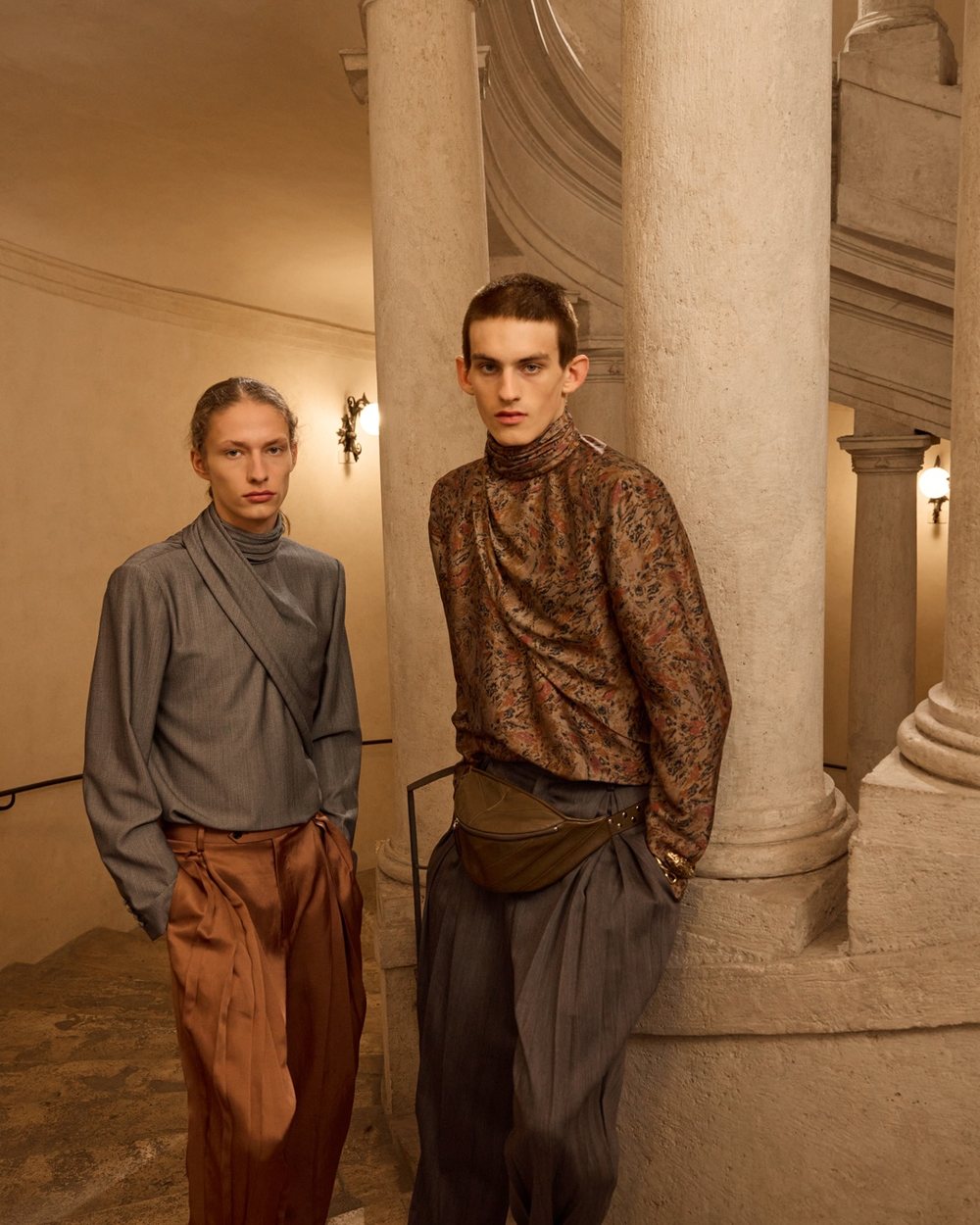
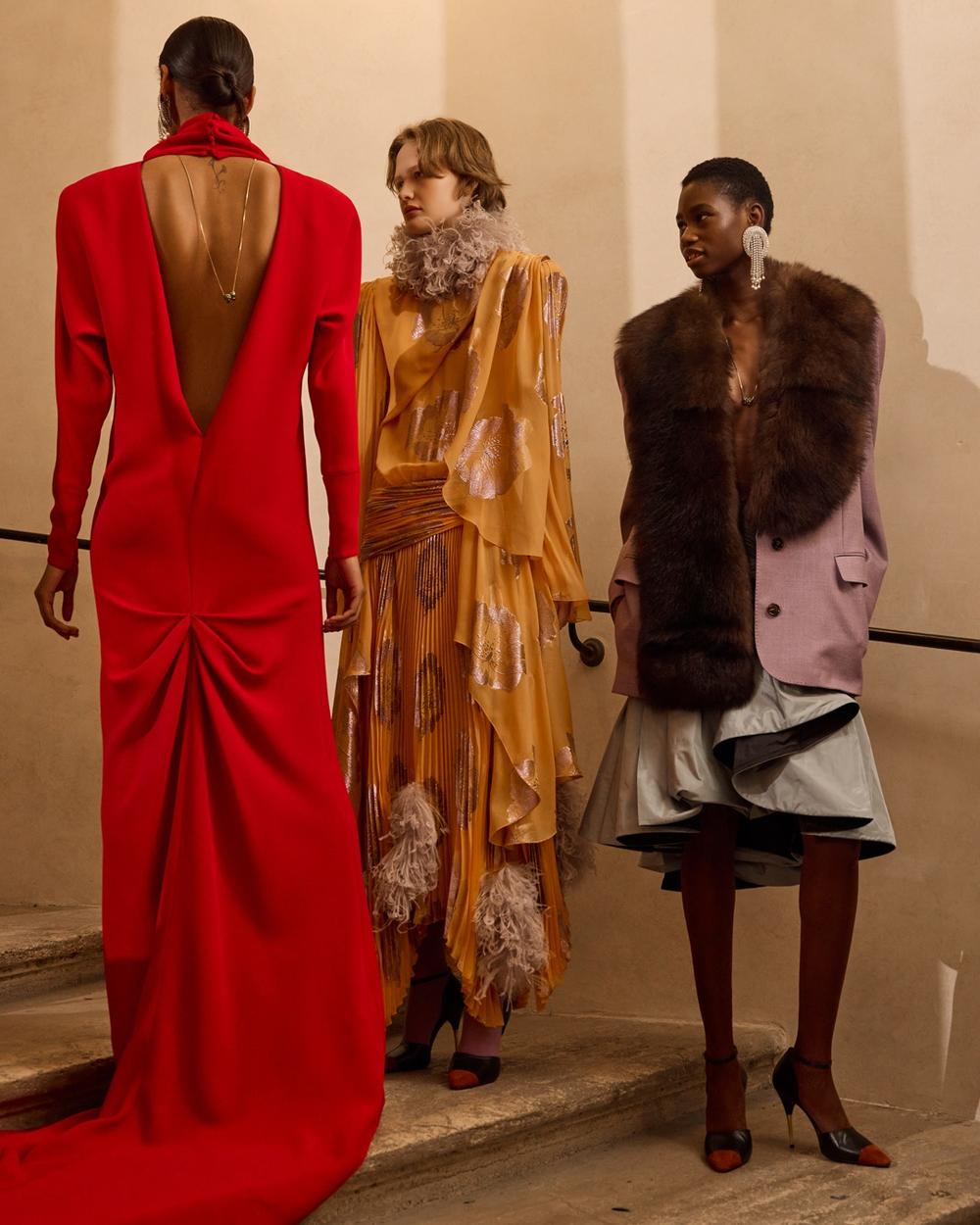
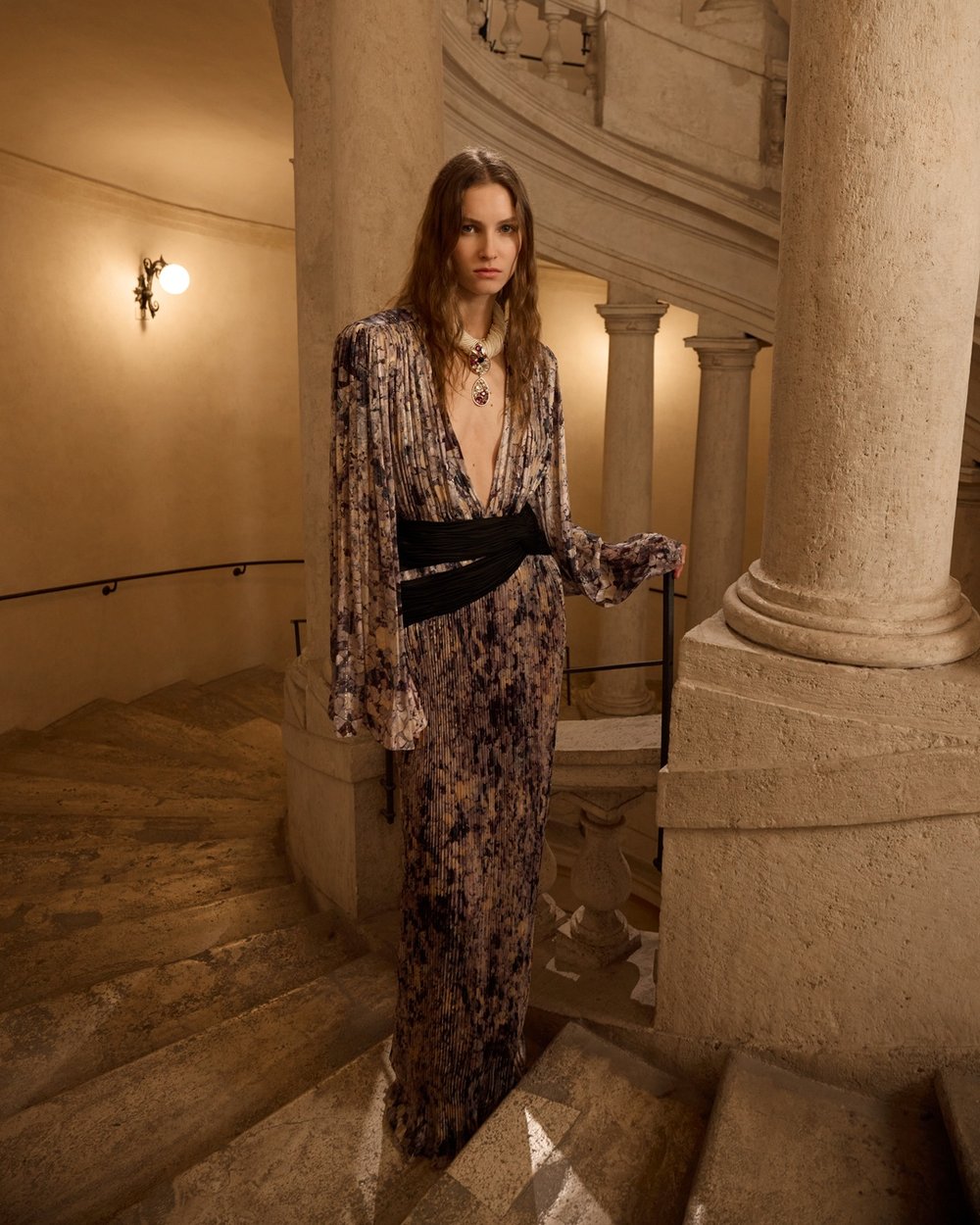
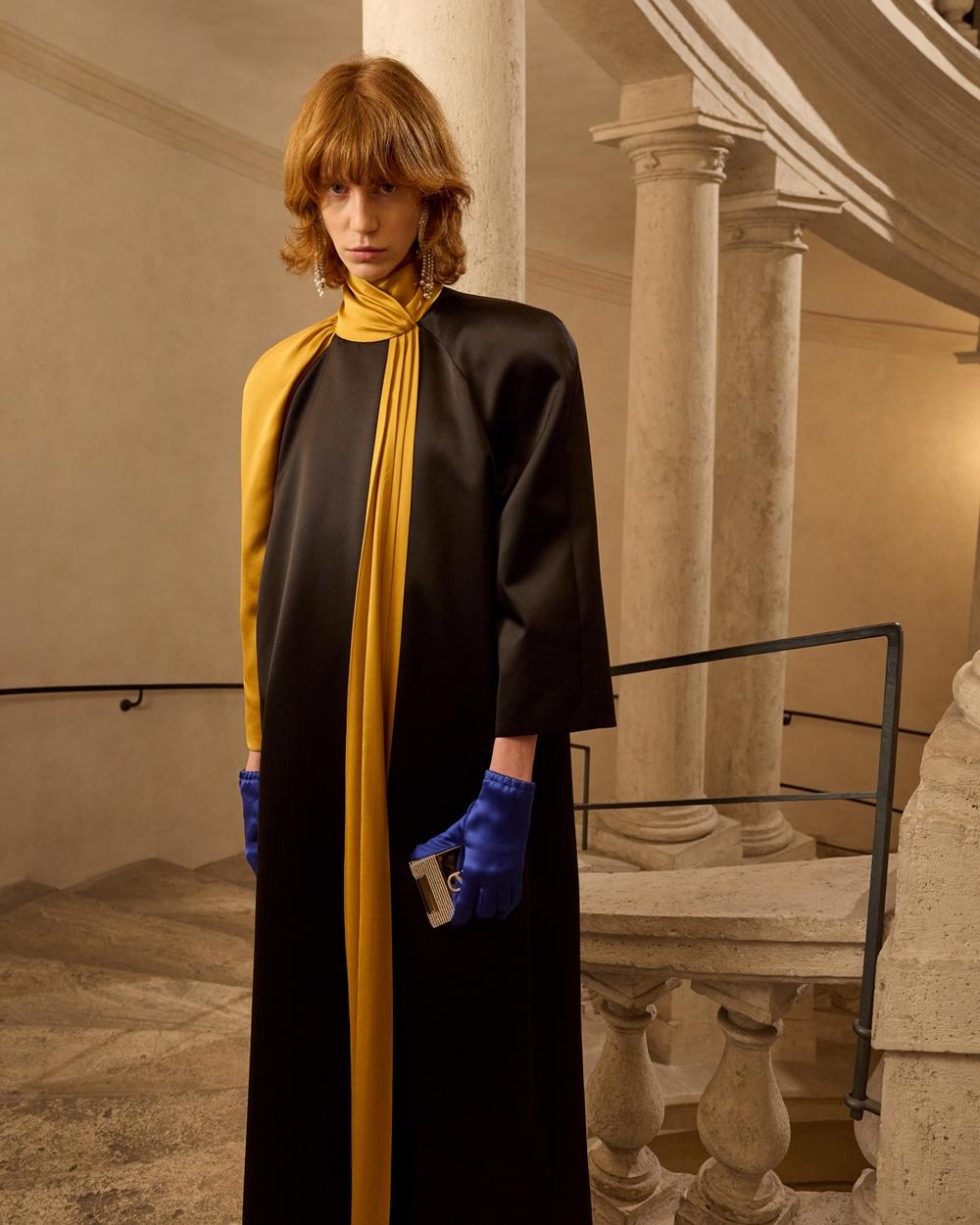
An immersive journey through the show's venue
Discover More