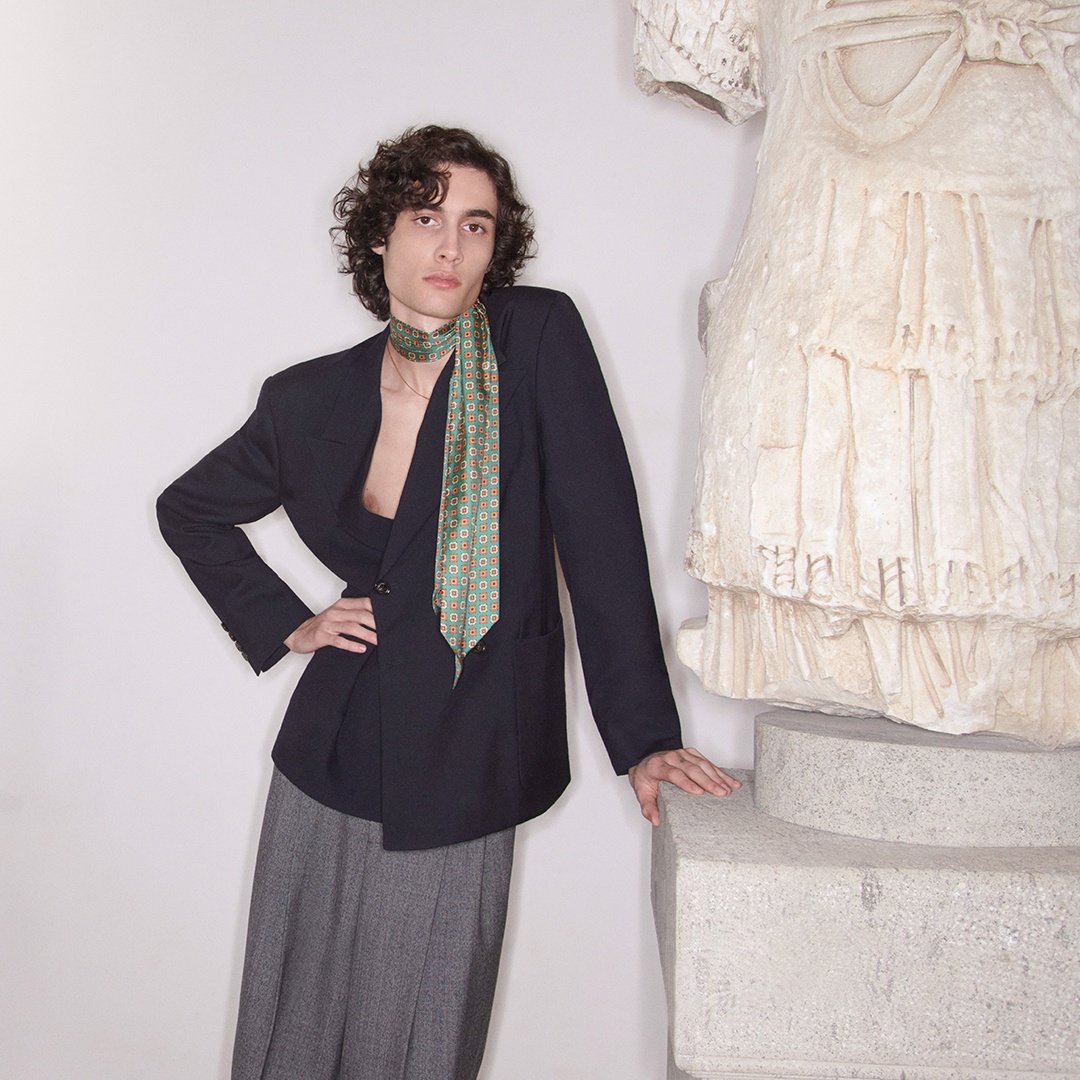
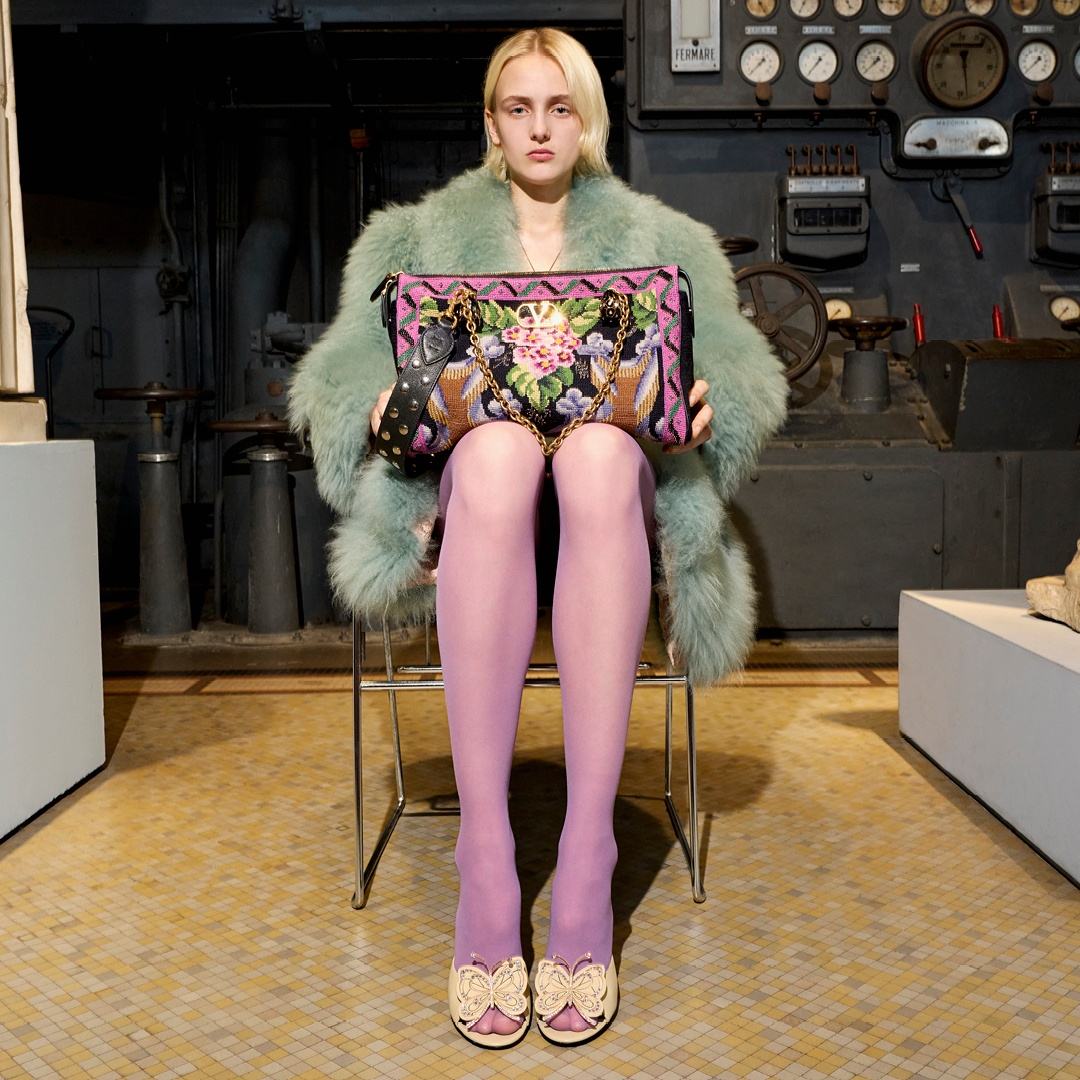
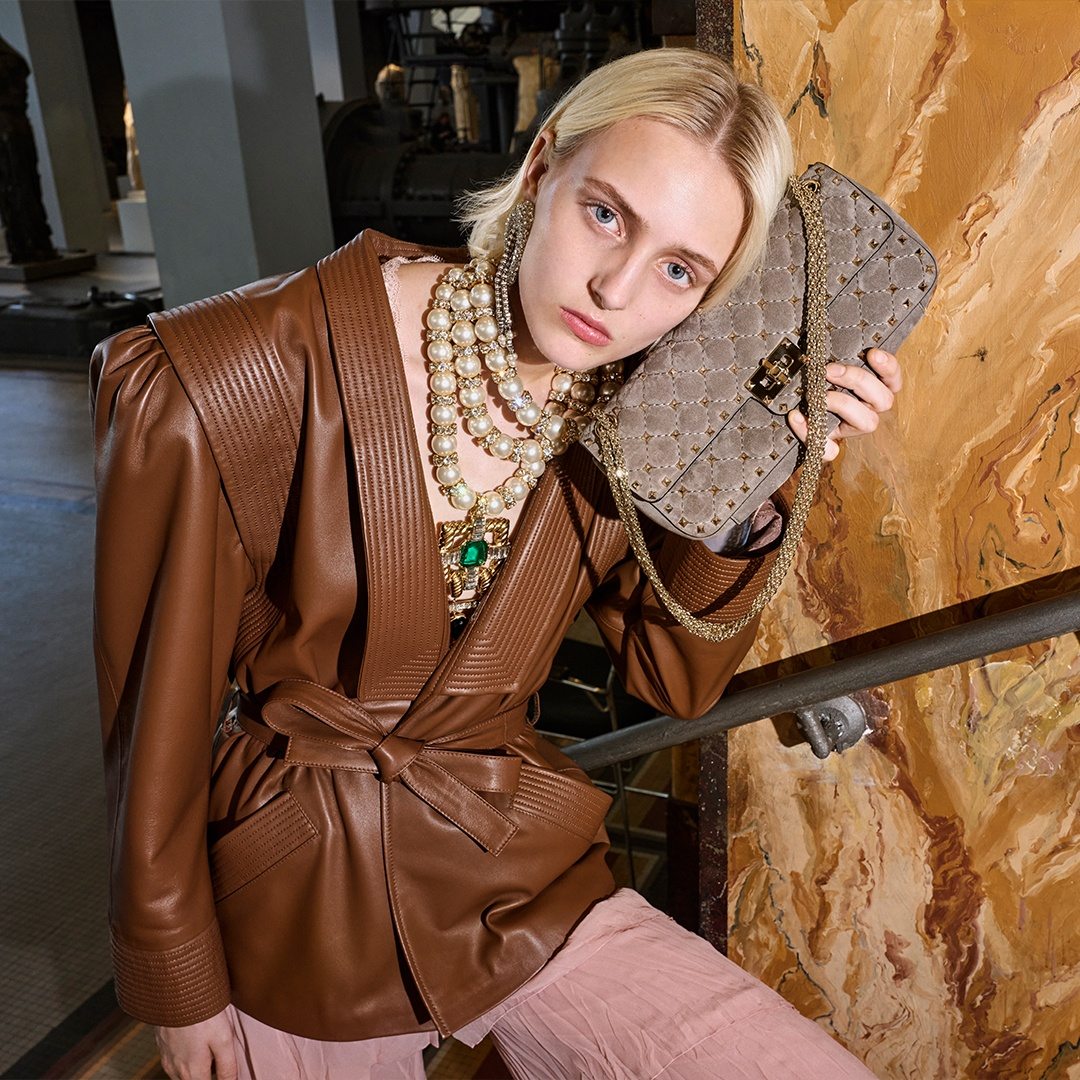
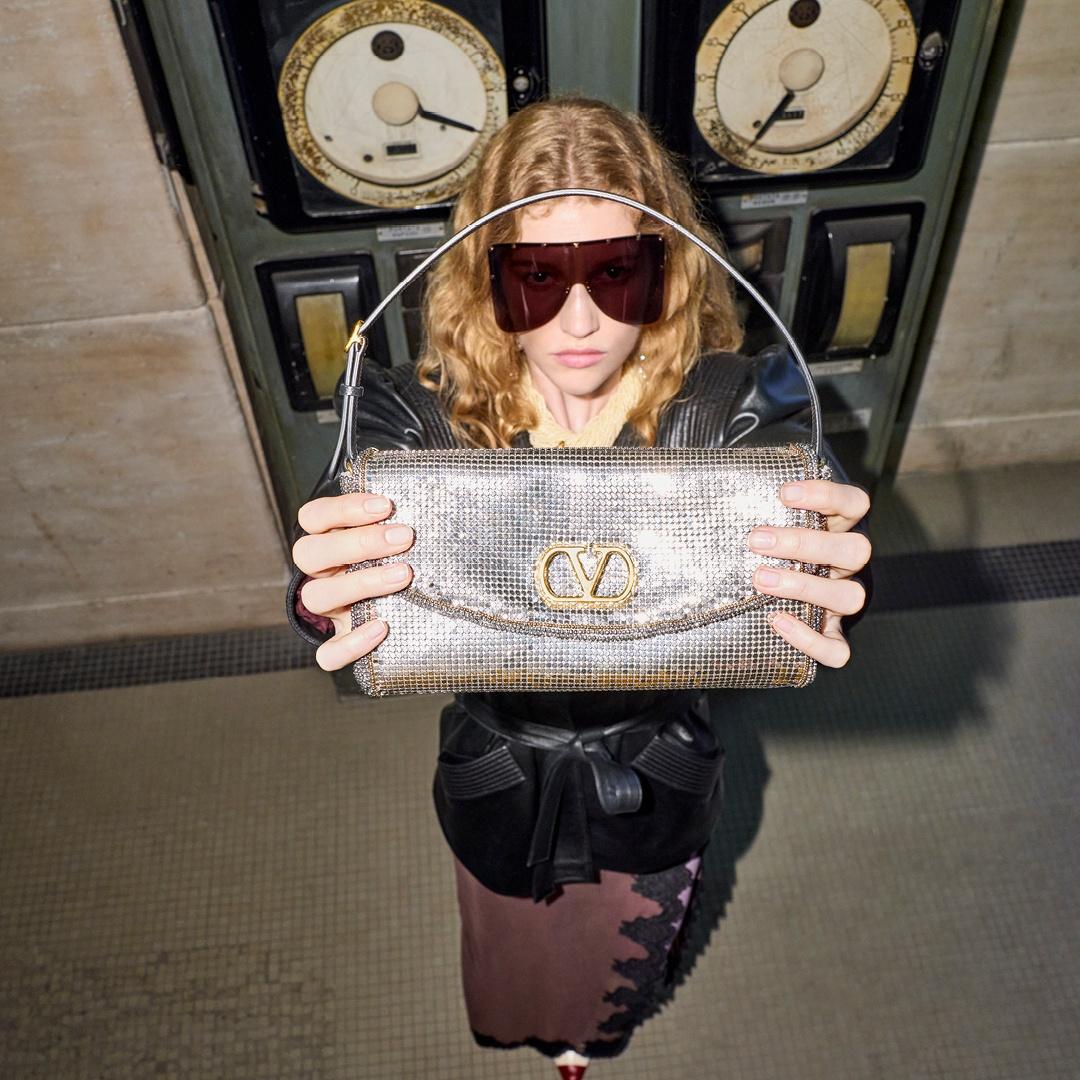


Specula Mundi
Valentino Haute Couture 2026
Specula Mundi
Valentino Haute Couture 2026
One of the great attractions of the Kaiserpanorama was that you could start the carousel from any image. Since the mechanism before the seats moved in a circle, each view passed before all the positions from which, through a double window, its faded remoteness could be seen […] In 1822 Daguerre opened his Panorama in Paris. Since then, these clear, gleaming boxes, aquariums of remoteness and of the past, have been at home on all fashionable streets and boulevards.
(Walter Benjamin)
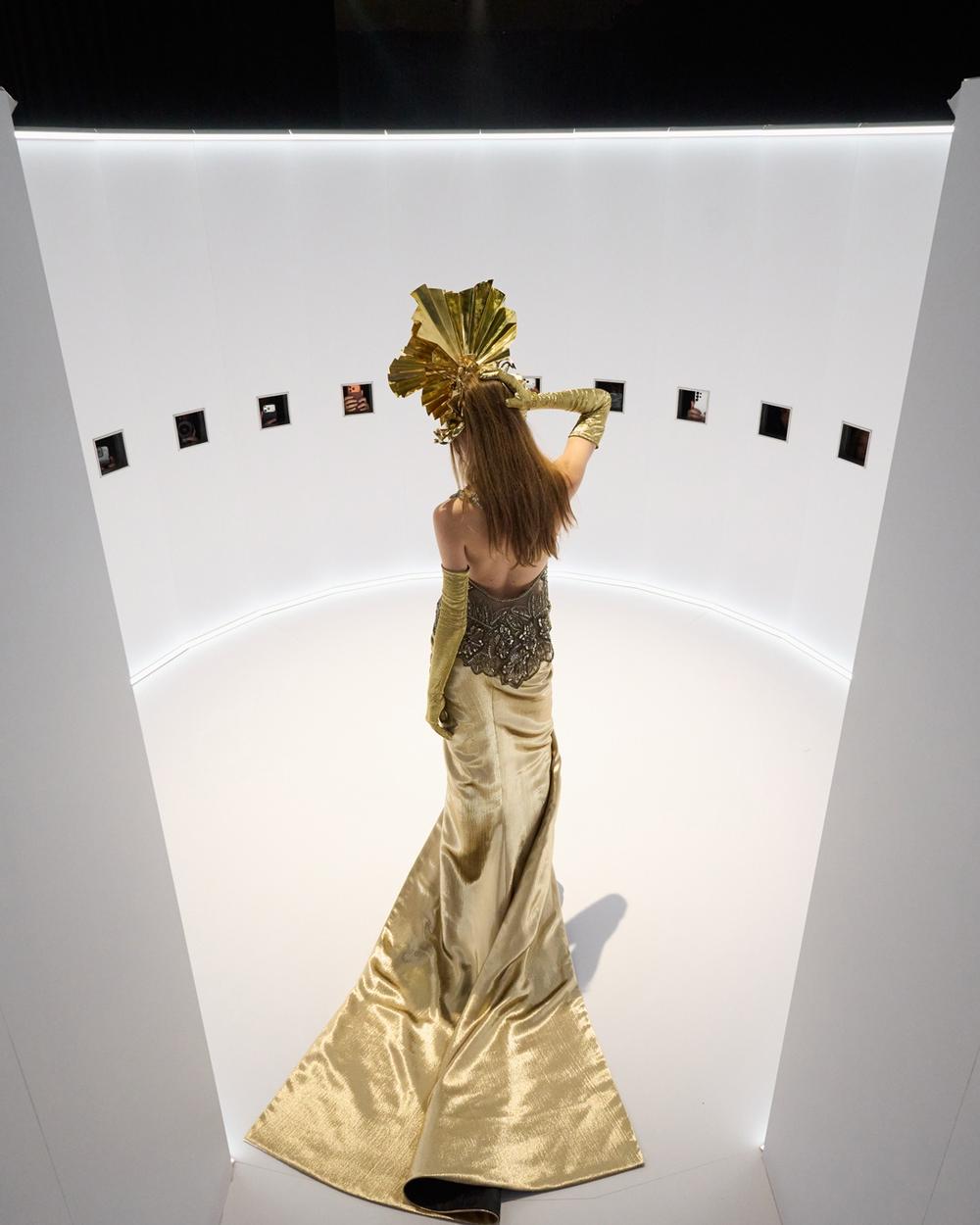
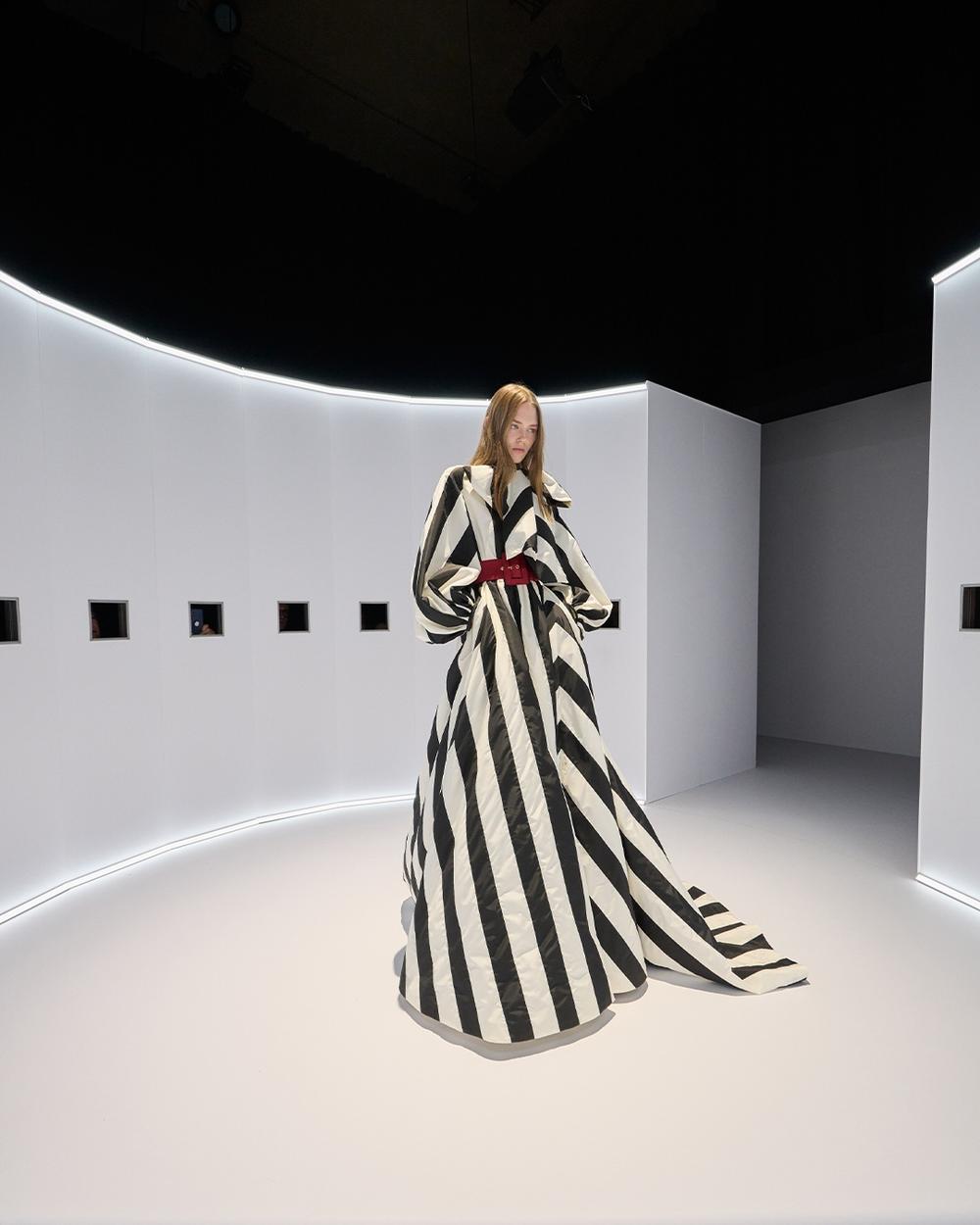
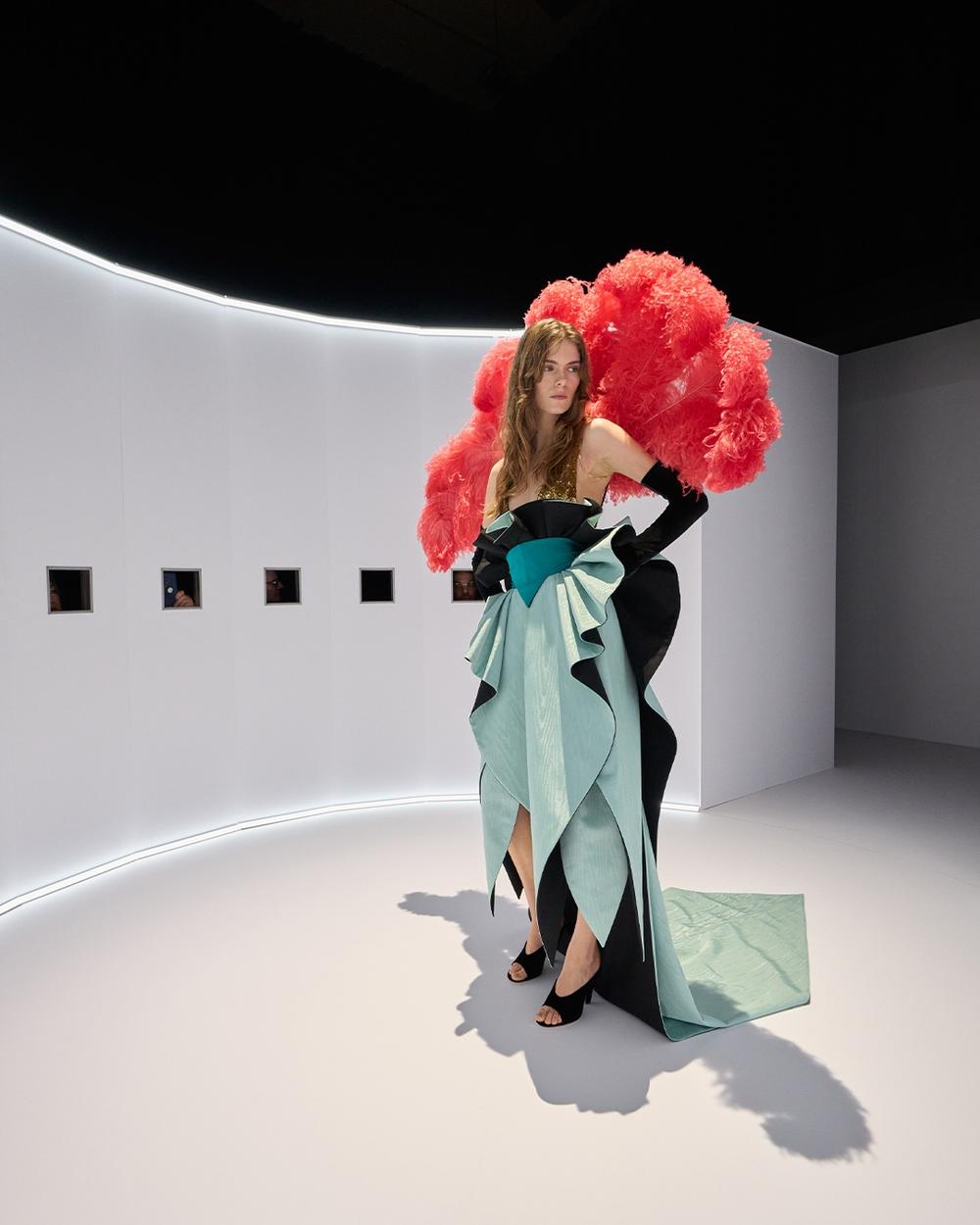
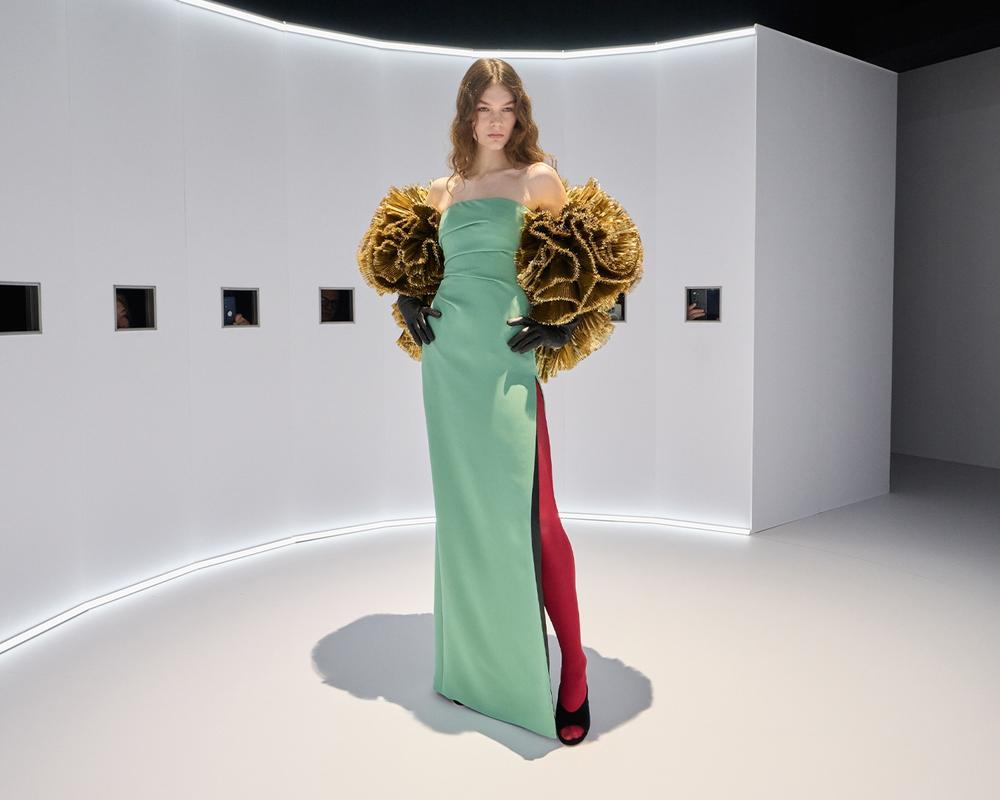
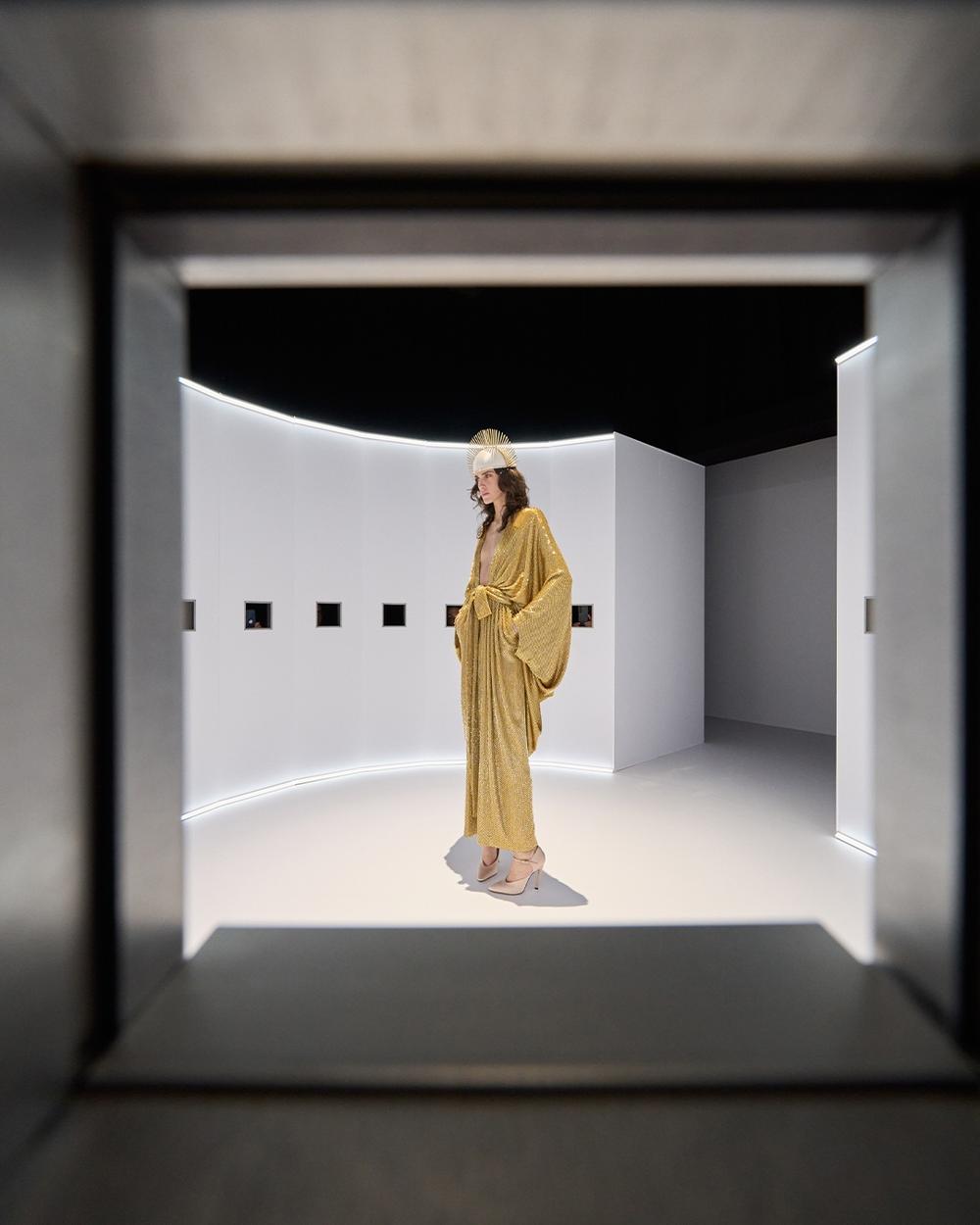
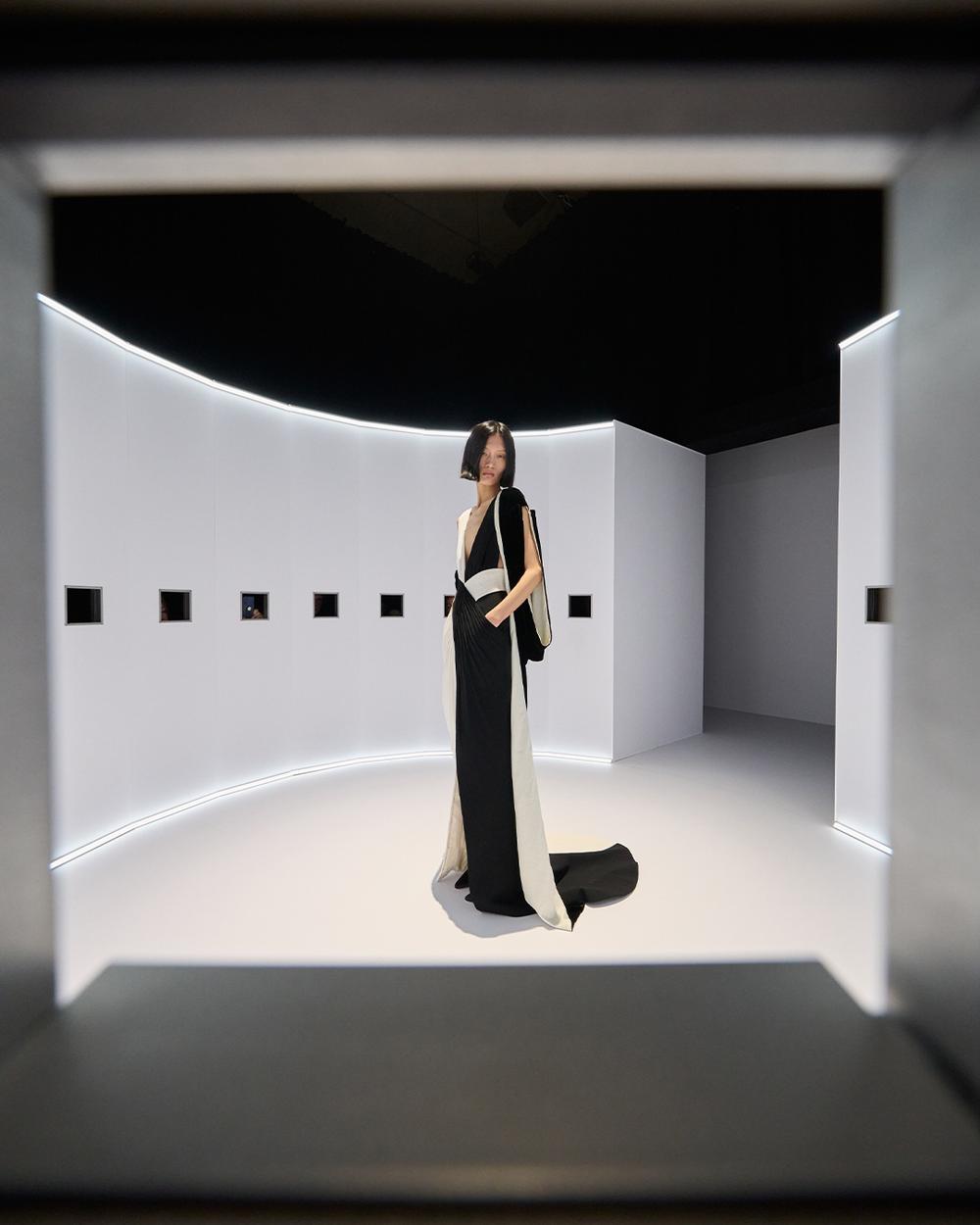
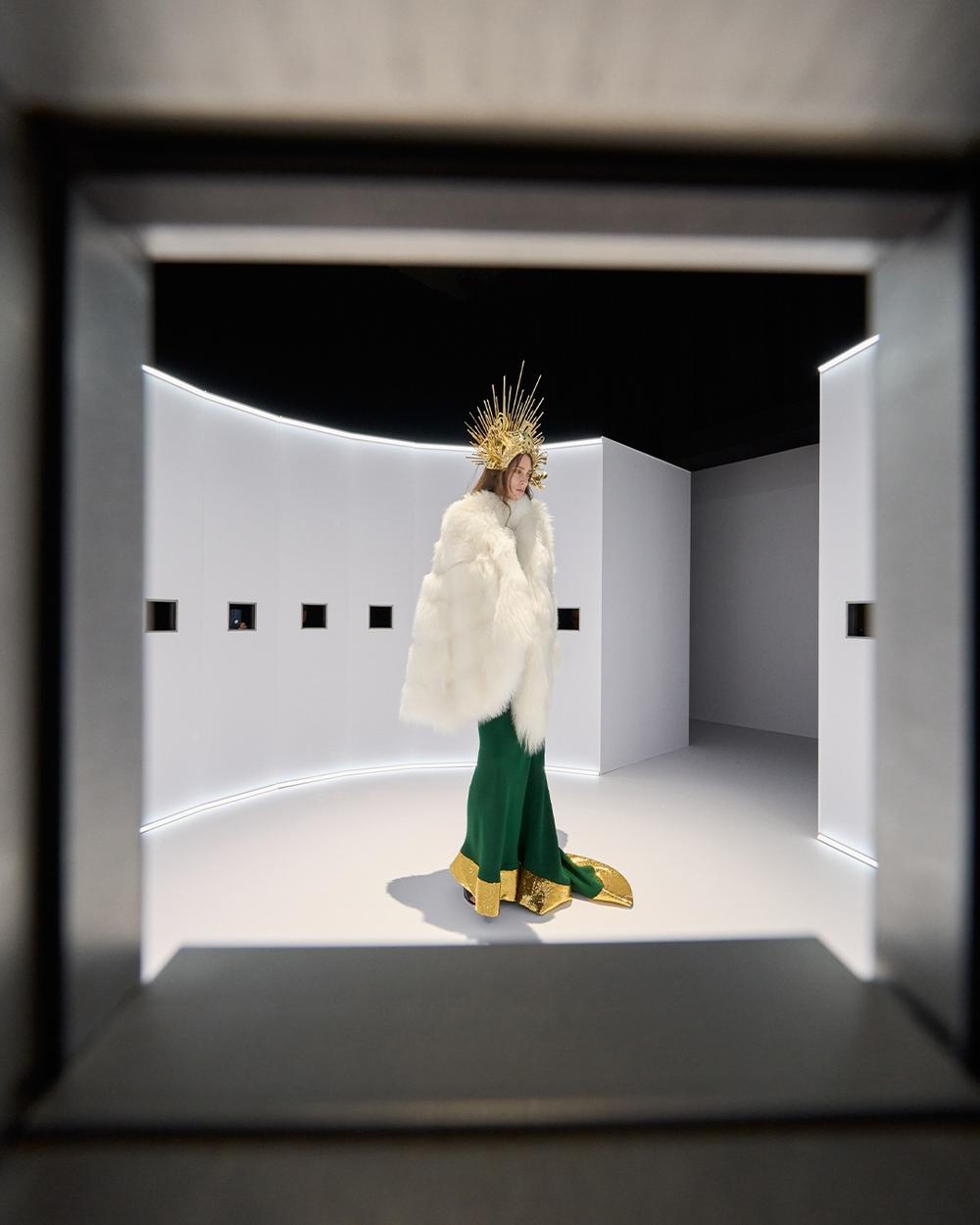
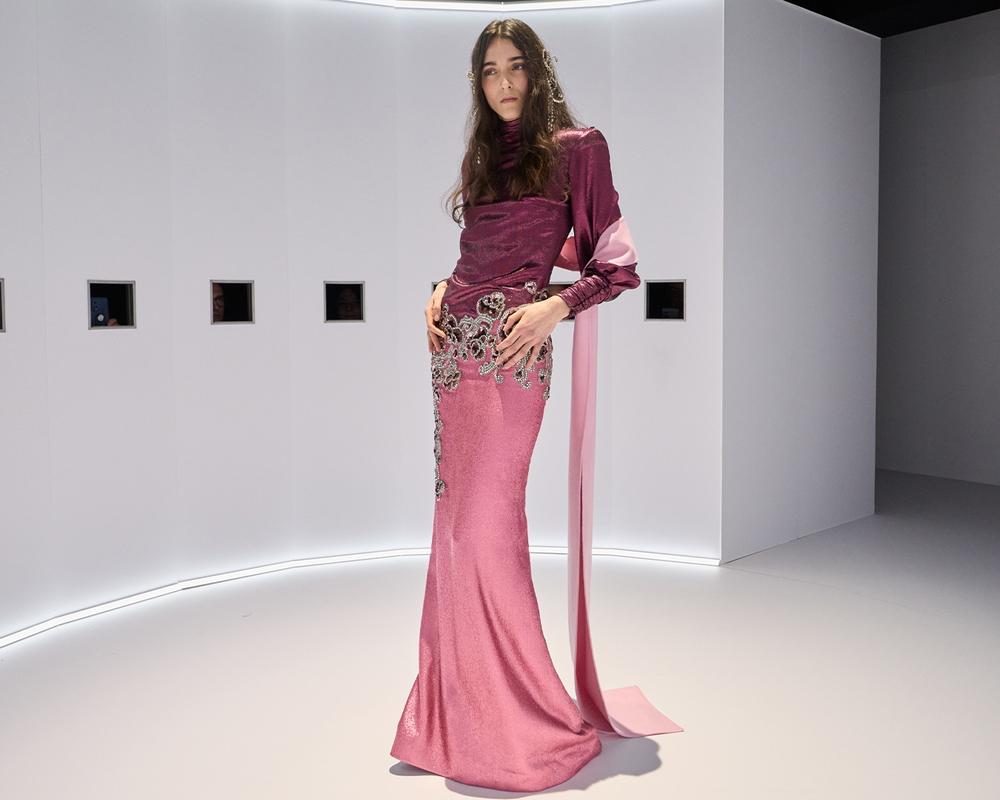
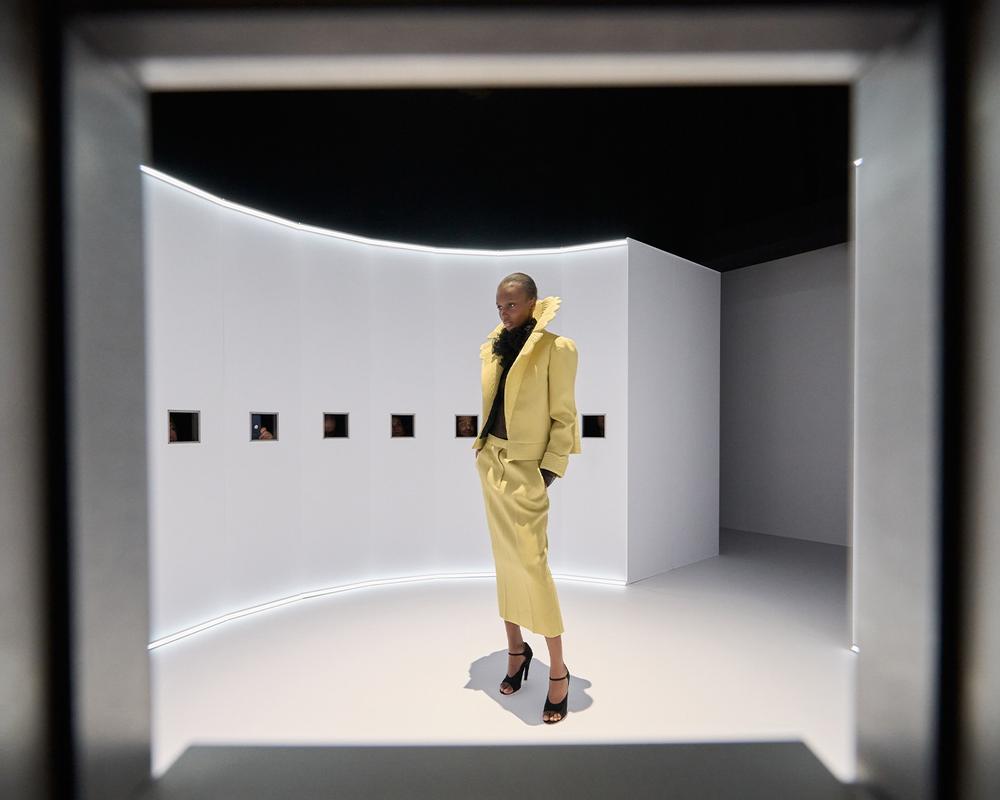
At the end of the XIX century a device appeared in the major European cities: the Kaiserpanorama, today almost forgotten but key to understanding a certain historical regime of the vision. It was a collective optical machine with a circular wooden structure, perforated with little ocular holes. The audience gathered around the machine and observed the stereoscopic moving images inside it, watching through those viewing holes. Each spectator watched on his own, though everybody watched at the same time: a public ritual founded on the isolation of the gaze.
This device allowed access to images of distant cities, exotic landscapes, monuments, ruins, scenes of everyday life in unreachable places. A whole world entered a room. It was a way to travel, while staying still. The Kaiserpanorama did not just show images, it staged the mechanism of vision itself. In that theater of ephemeral apparitions, as Walter Benjamin recalls, a disciplined, patient, hypnotic vision was practiced, paving the way for cinema while preserving something more archaic: contemplation, distance, suspension. The image doesn’t overwhelm the spectator, not yet, it educates him. It teaches one to stay still, to focus the gaze, and to assume a position built on attention.
This pedagogy of the vision will be partly eclipsed by the acceleration of cinema and, later, by the proliferation of digital images. What is marginalized, though, doesn’t completely disappear. It remains suspended and available for translations, shifts, refractions. It’s exactly in this zone of survival that the Kaiserpanorama device can today be reactivated as a perceptual model for a Haute Couture show. Not as a nostalgic mention, rather as a critical tool able to interrogate the contemporary conditions of the gaze.
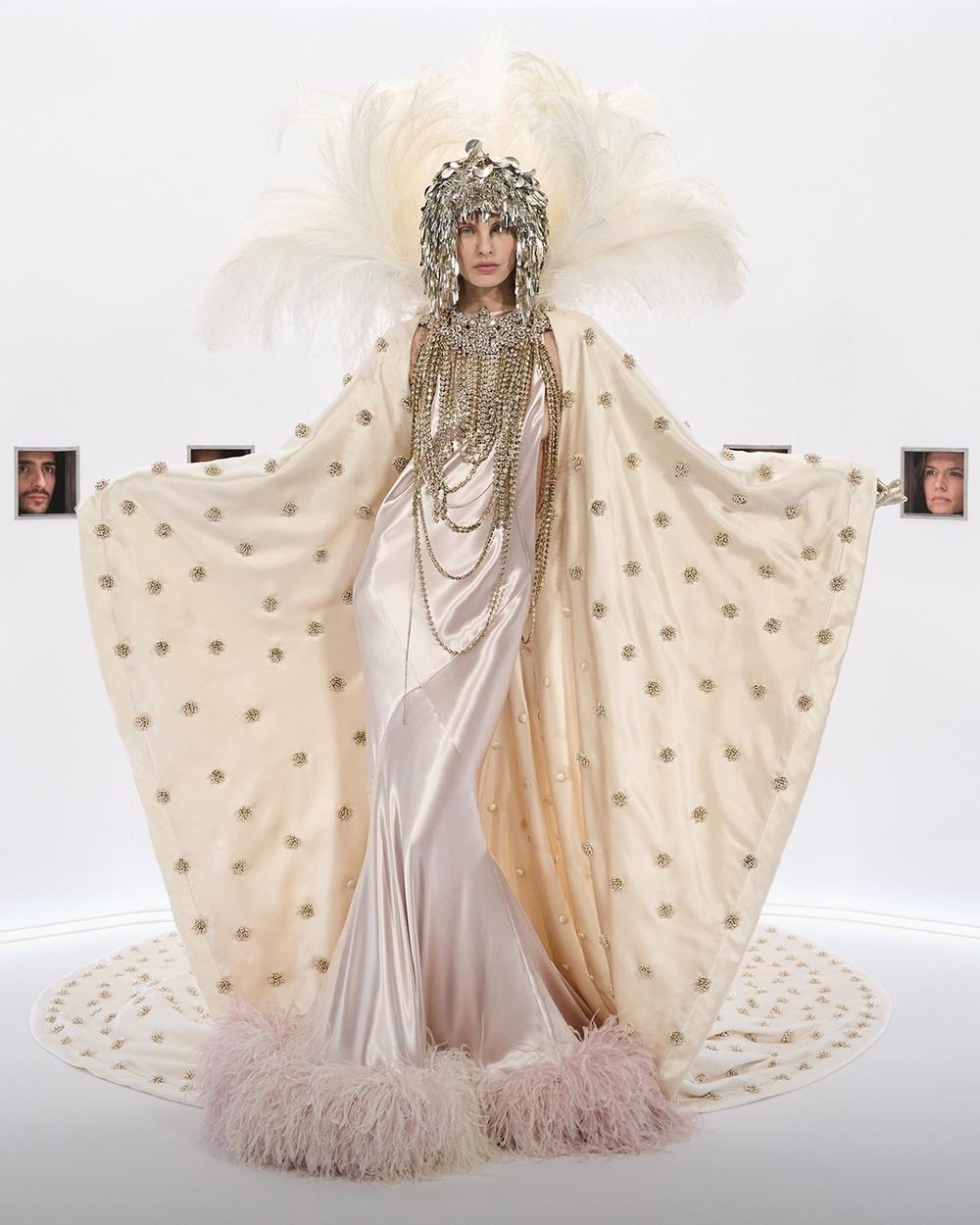
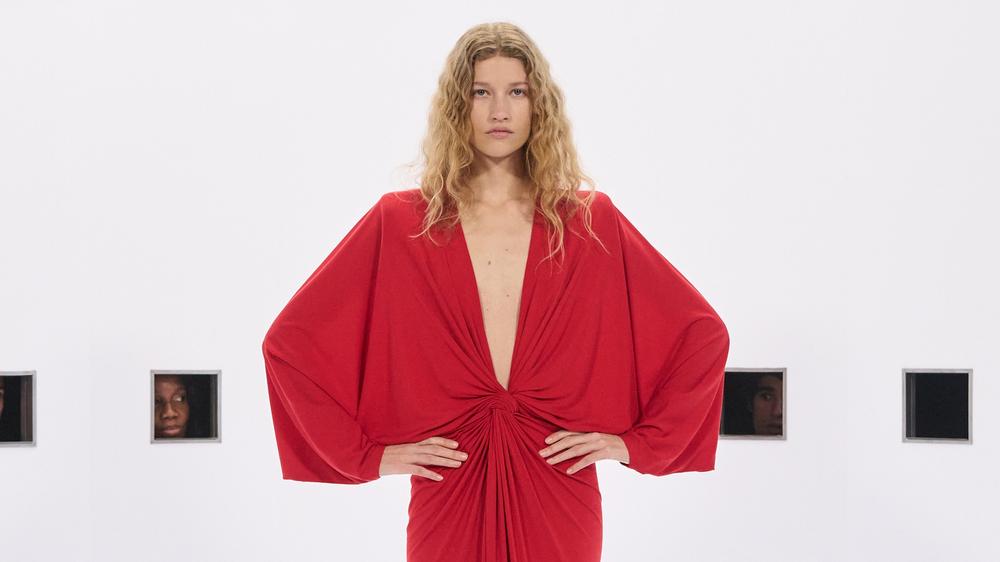
Our present is ruled by simultaneity of the gaze, media overexposure and fast consumption, which is why Haute Couture wants to offer a vision punctuated by a different temporality made of slowness, proximity, concentration. Each garment celebrates a singular encounter, both for the way it is conceived and crafted and for the conditions through which it is offered to the gaze. The Kaiserpanorama conveys this demand inside a spatial form, performing a conceptual torsion: it doesn’t amplify the visibility, it restricts it. The gaze is asked to occupy a position and it becomes intentional, situated, aware of its partiality. So it’s the spasmodic circulation of hyper-photographable images opposed to a solitary, attentive, almost secret observation. In that ambiguous zone where dressing and being seen intersect, the eye penetrates an intimate, almost inaccessible, space. A dystopian, mechanical, intermittent space where voyeuristic tension intensifies, loaded with anticipation. Here, one does not see along with the others: one stealthily spies on the other like in a modern peepshow, each from one’s own blind spot.
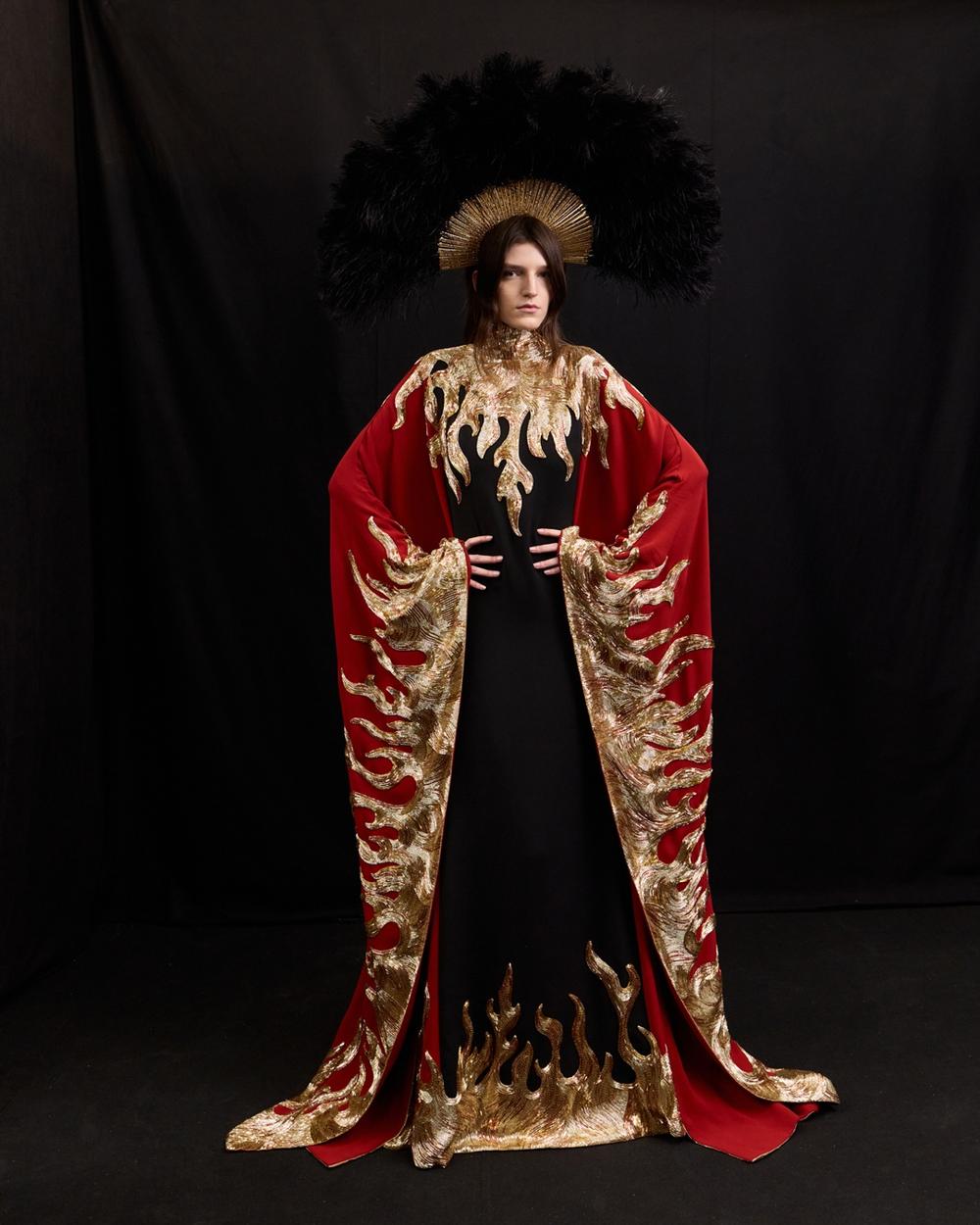
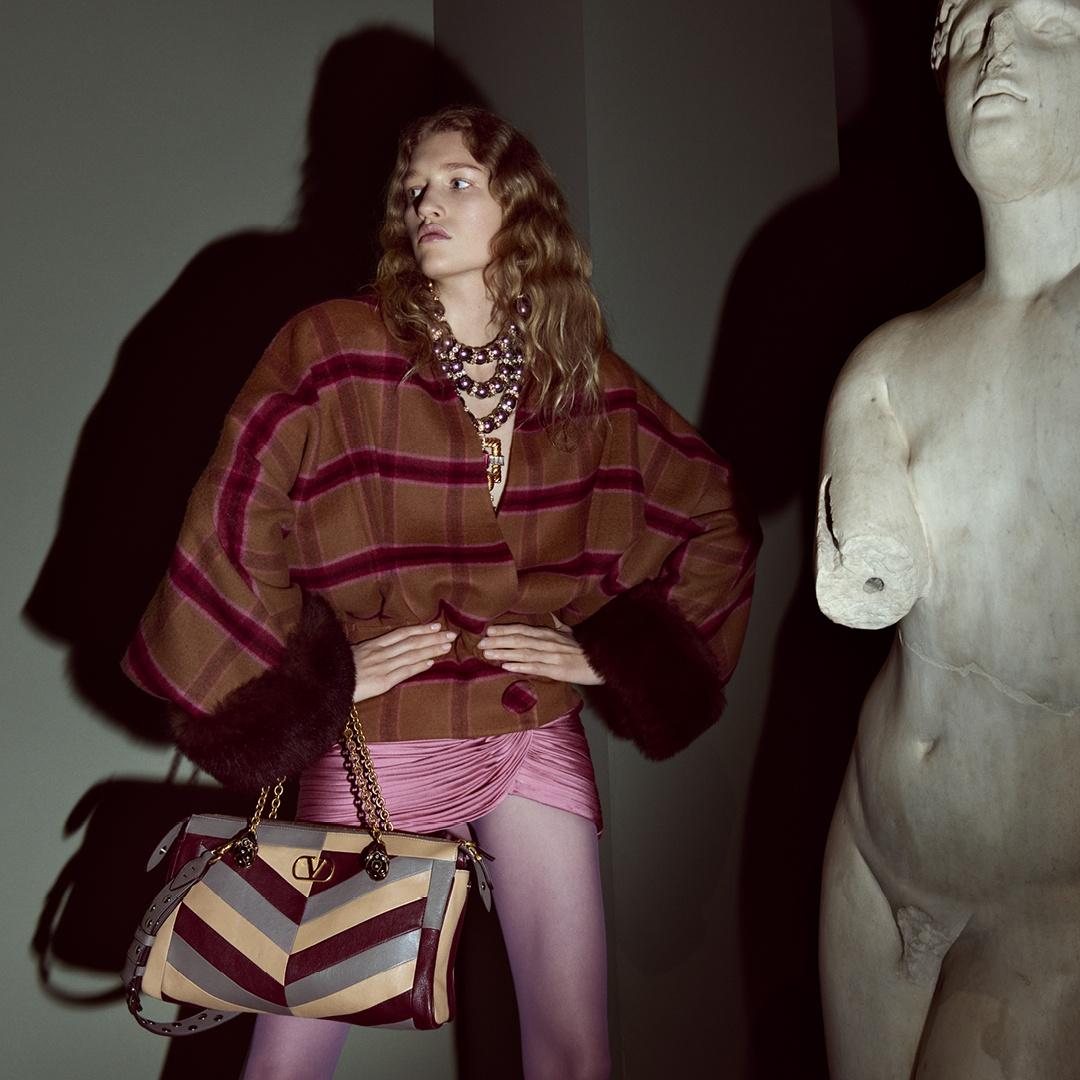
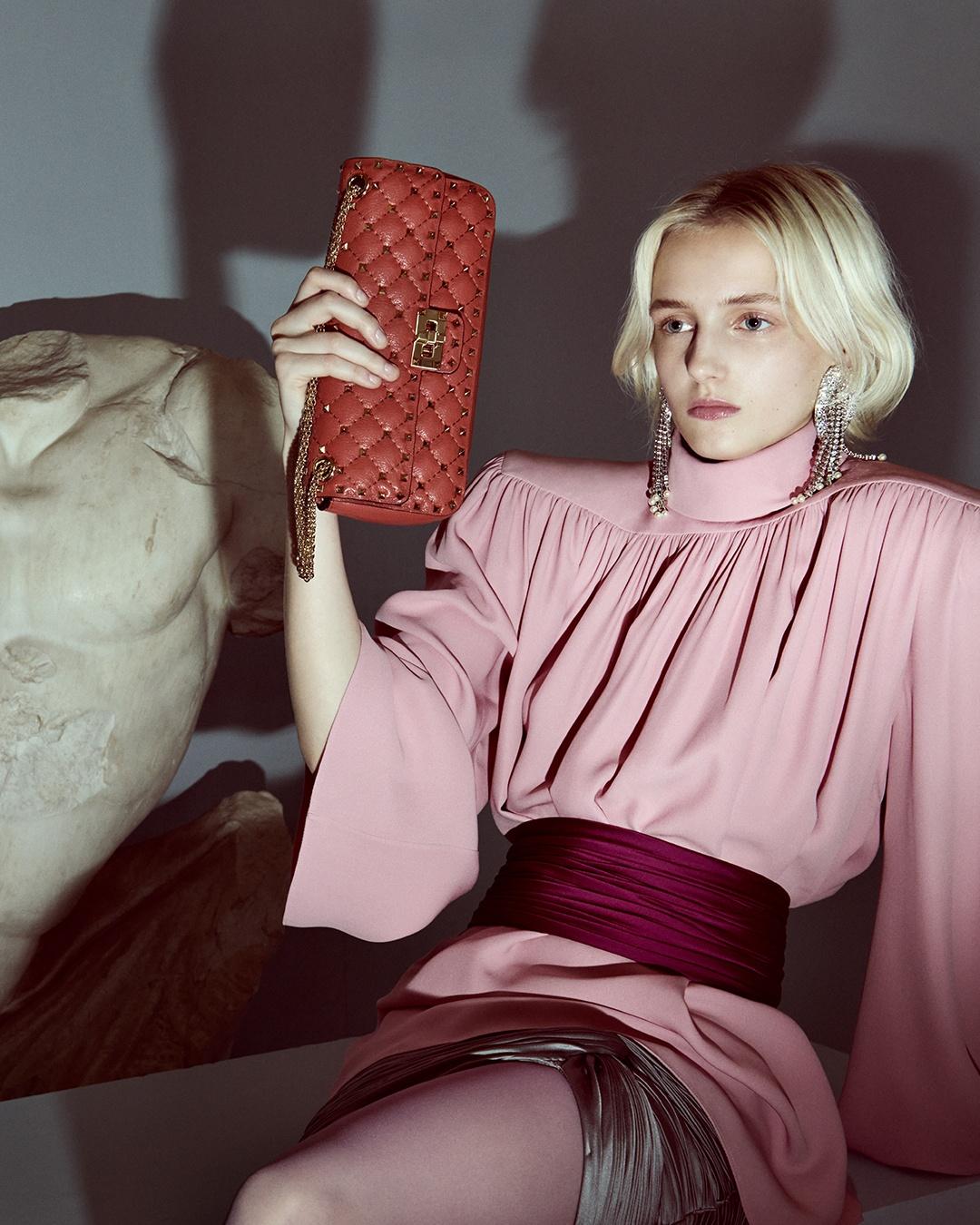
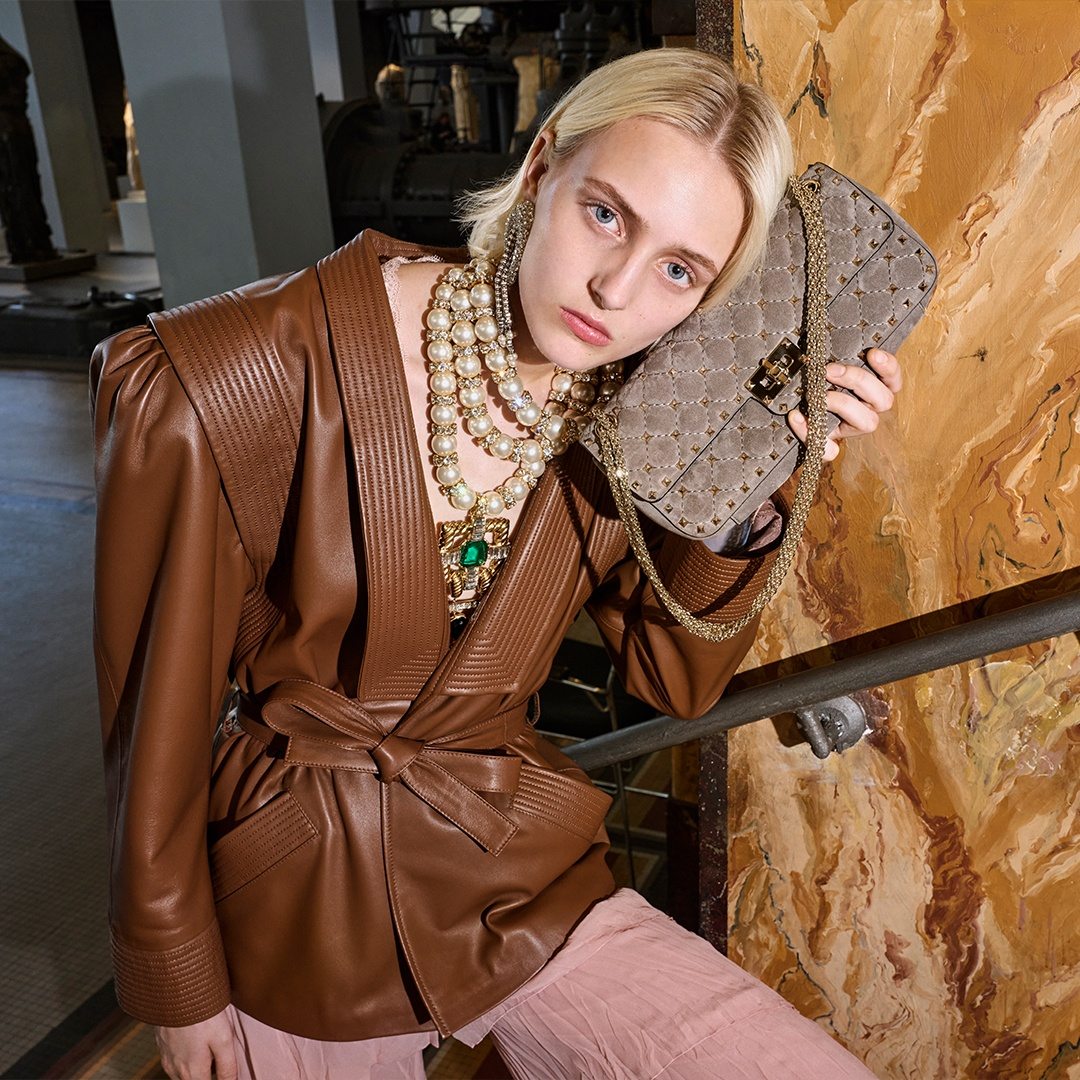
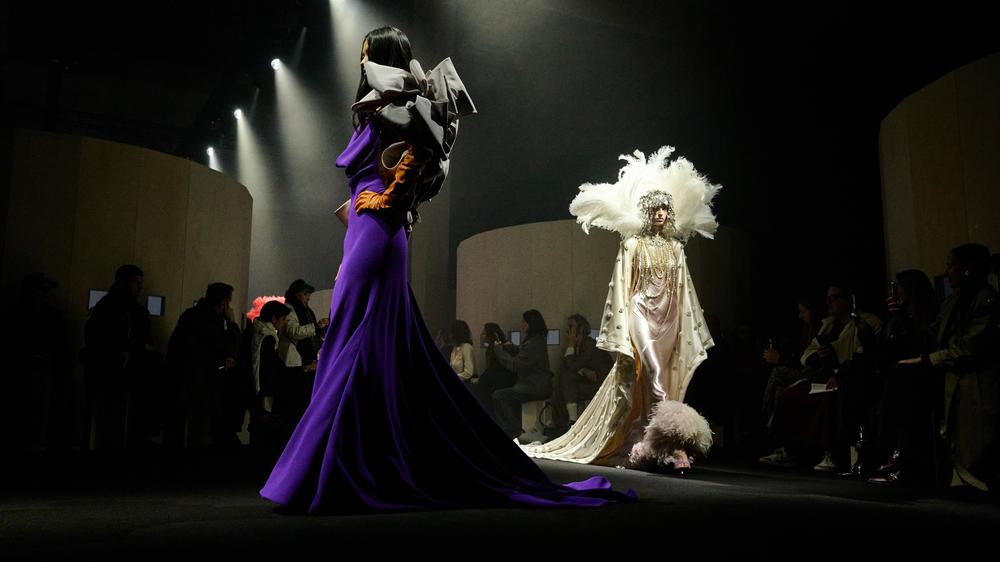
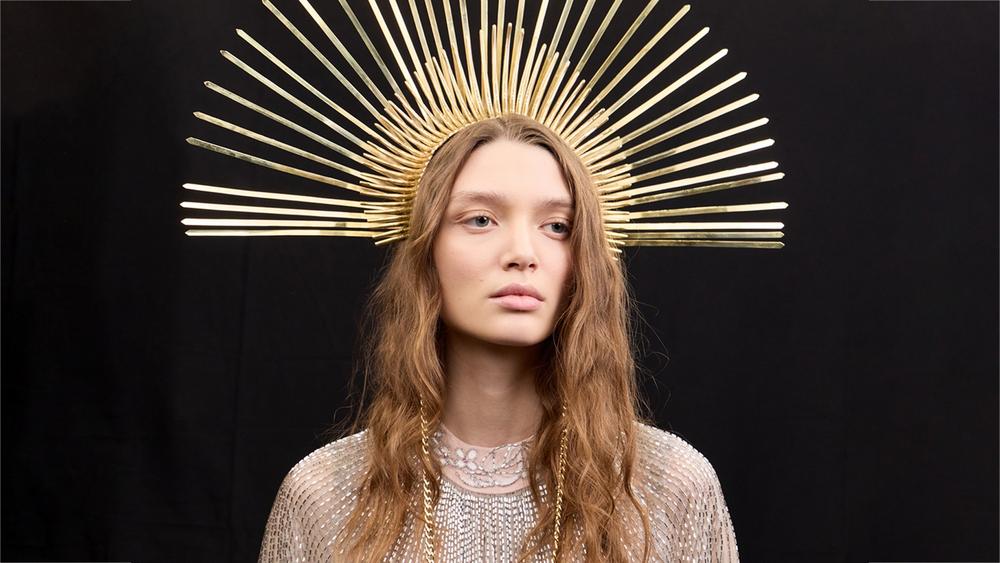
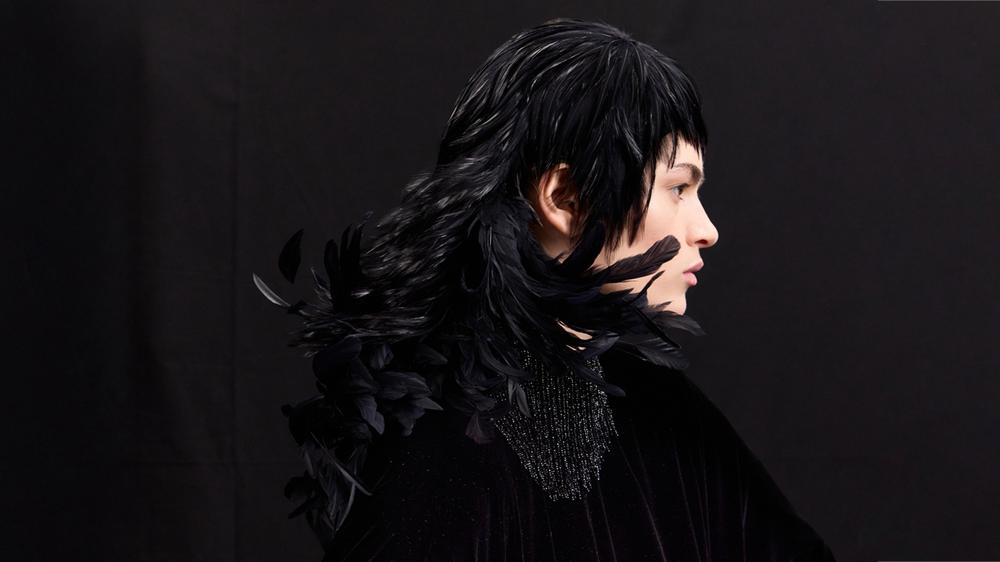
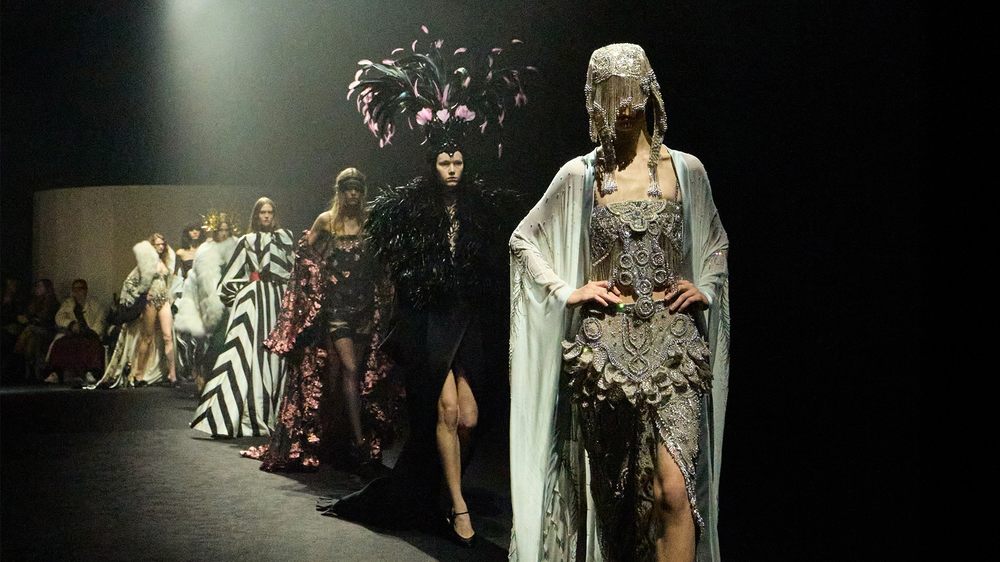
In the Specula Mundi show, the Kaiserpanorama takes the shape of a contemporary altar: a place for symbolic concentration that establishes a rituality, orients the gaze and regulates access. What appears is separated from ordinary use, isolated, highlighted, made worthy of contemplation. The bells that traditionally marked the transition from one image to the next in the Kaiserpanorama, here become techno music transformed into liturgical beats that set the tempo of the apparition. It’s no coincidence that the garments emerge like epiphanies permeated with the divine: archaic yet still deeply contemporary presences emerging from an archaeological excavation into Hollywood imagery.
Within such a device, cinema is not evoked as a technology of the image, rather as a mythological repository, a factory of icons, sublimated bodies and apparitions that become objects of veneration. A living archive of figures and gestures that keep acting in the becoming of history. In Hollywood, divinities had very recognizable postures, gazes, silhouettes. They dwelled in distance, light, excess. They were presences withdrawn from the ordinary, entrusted to a form of secular worship. Specula Mundi’s garments enroll in such mythopoietic continuity. Not as tributes or references, but as new incarnations. Haute Couture here becomes the altar where the myth transmutes once again into body, matter, fabric.
The Kaiserpanorama turns into a device that enables this transmission: a liturgy of appearance that situates the garment within its ritual temporality, away from the compulsive circulation of images. In such separated space, clothes are no longer fast-consumption objects, they present themselves as hierophanies: sacred presences that require lingering, listening and a specific disposition. Accordingly, the Kaiserpanorama is not a simple historical quotation or a scenographic artifice. It embodies a theoretical gesture that interrogates the relationship between fashion and vision, between desire and distance, between the ordinary and what transcends it. Here the gaze no longer dominates the scene; it is itself called into question.
In this regard, Specula Mundi becomes the mirror with no ambition to reflect the real as it is, but to interrogate what makes it possible. It doesn’t multiply images, but suspends their flow to reveal the conditions of their existence. In such reflection, fashion rediscovers its ritual and critical dimension: not merely a surface to walk on, but a threshold where one learns to pause and contemplate the world.
Alessandro
One of the great attractions of the Kaiserpanorama was that you could start the carousel from any image. Since the mechanism before the seats moved in a circle, each view passed before all the positions from which, through a double window, its faded remoteness could be seen […] In 1822 Daguerre opened his Panorama in Paris. Since then, these clear, gleaming boxes, aquariums of remoteness and of the past, have been at home on all fashionable streets and boulevards.
(Walter Benjamin)
At the end of the XIX century a device appeared in the major European cities: the Kaiserpanorama, today almost forgotten but key to understanding a certain historical regime of the vision. It was a collective optical machine with a circular wooden structure, perforated with little ocular holes. The audience gathered around the machine and observed the stereoscopic moving images inside it, watching through those viewing holes. Each spectator watched on his own, though everybody watched at the same time: a public ritual founded on the isolation of the gaze.
This device allowed access to images of distant cities, exotic landscapes, monuments, ruins, scenes of everyday life in unreachable places. A whole world entered a room. It was a way to travel, while staying still. The Kaiserpanorama did not just show images, it staged the mechanism of vision itself. In that theater of ephemeral apparitions, as Walter Benjamin recalls, a disciplined, patient, hypnotic vision was practiced, paving the way for cinema while preserving something more archaic: contemplation, distance, suspension. The image doesn’t overwhelm the spectator, not yet, it educates him. It teaches one to stay still, to focus the gaze, and to assume a position built on attention.
This pedagogy of the vision will be partly eclipsed by the acceleration of cinema and, later, by the proliferation of digital images. What is marginalized, though, doesn’t completely disappear. It remains suspended and available for translations, shifts, refractions. It’s exactly in this zone of survival that the Kaiserpanorama device can today be reactivated as a perceptual model for a Haute Couture show. Not as a nostalgic mention, rather as a critical tool able to interrogate the contemporary conditions of the gaze.
Our present is ruled by simultaneity of the gaze, media overexposure and fast consumption, which is why Haute Couture wants to offer a vision punctuated by a different temporality made of slowness, proximity, concentration. Each garment celebrates a singular encounter, both for the way it is conceived and crafted and for the conditions through which it is offered to the gaze. The Kaiserpanorama conveys this demand inside a spatial form, performing a conceptual torsion: it doesn’t amplify the visibility, it restricts it. The gaze is asked to occupy a position and it becomes intentional, situated, aware of its partiality. So it’s the spasmodic circulation of hyper-photographable images opposed to a solitary, attentive, almost secret observation. In that ambiguous zone where dressing and being seen intersect, the eye penetrates an intimate, almost inaccessible, space. A dystopian, mechanical, intermittent space where voyeuristic tension intensifies, loaded with anticipation. Here, one does not see along with the others: one stealthily spies on the other like in a modern peepshow, each from one’s own blind spot.
In the Specula Mundi show, the Kaiserpanorama takes the shape of a contemporary altar: a place for symbolic concentration that establishes a rituality, orients the gaze and regulates access. What appears is separated from ordinary use, isolated, highlighted, made worthy of contemplation. The bells that traditionally marked the transition from one image to the next in the Kaiserpanorama, here become techno music transformed into liturgical beats that set the tempo of the apparition. It’s no coincidence that the garments emerge like epiphanies permeated with the divine: archaic yet still deeply contemporary presences emerging from an archaeological excavation into Hollywood imagery.
Within such a device, cinema is not evoked as a technology of the image, rather as a mythological repository, a factory of icons, sublimated bodies and apparitions that become objects of veneration. A living archive of figures and gestures that keep acting in the becoming of history. In Hollywood, divinities had very recognizable postures, gazes, silhouettes. They dwelled in distance, light, excess. They were presences withdrawn from the ordinary, entrusted to a form of secular worship. Specula Mundi’s garments enroll in such mythopoietic continuity. Not as tributes or references, but as new incarnations. Haute Couture here becomes the altar where the myth transmutes once again into body, matter, fabric.
The Kaiserpanorama turns into a device that enables this transmission: a liturgy of appearance that situates the garment within its ritual temporality, away from the compulsive circulation of images. In such separated space, clothes are no longer fast-consumption objects, they present themselves as hierophanies: sacred presences that require lingering, listening and a specific disposition. Accordingly, the Kaiserpanorama is not a simple historical quotation or a scenographic artifice. It embodies a theoretical gesture that interrogates the relationship between fashion and vision, between desire and distance, between the ordinary and what transcends it. Here the gaze no longer dominates the scene; it is itself called into question.
In this regard, Specula Mundi becomes the mirror with no ambition to reflect the real as it is, but to interrogate what makes it possible. It doesn’t multiply images, but suspends their flow to reveal the conditions of their existence. In such reflection, fashion rediscovers its ritual and critical dimension: not merely a surface to walk on, but a threshold where one learns to pause and contemplate the world.
Alessandro
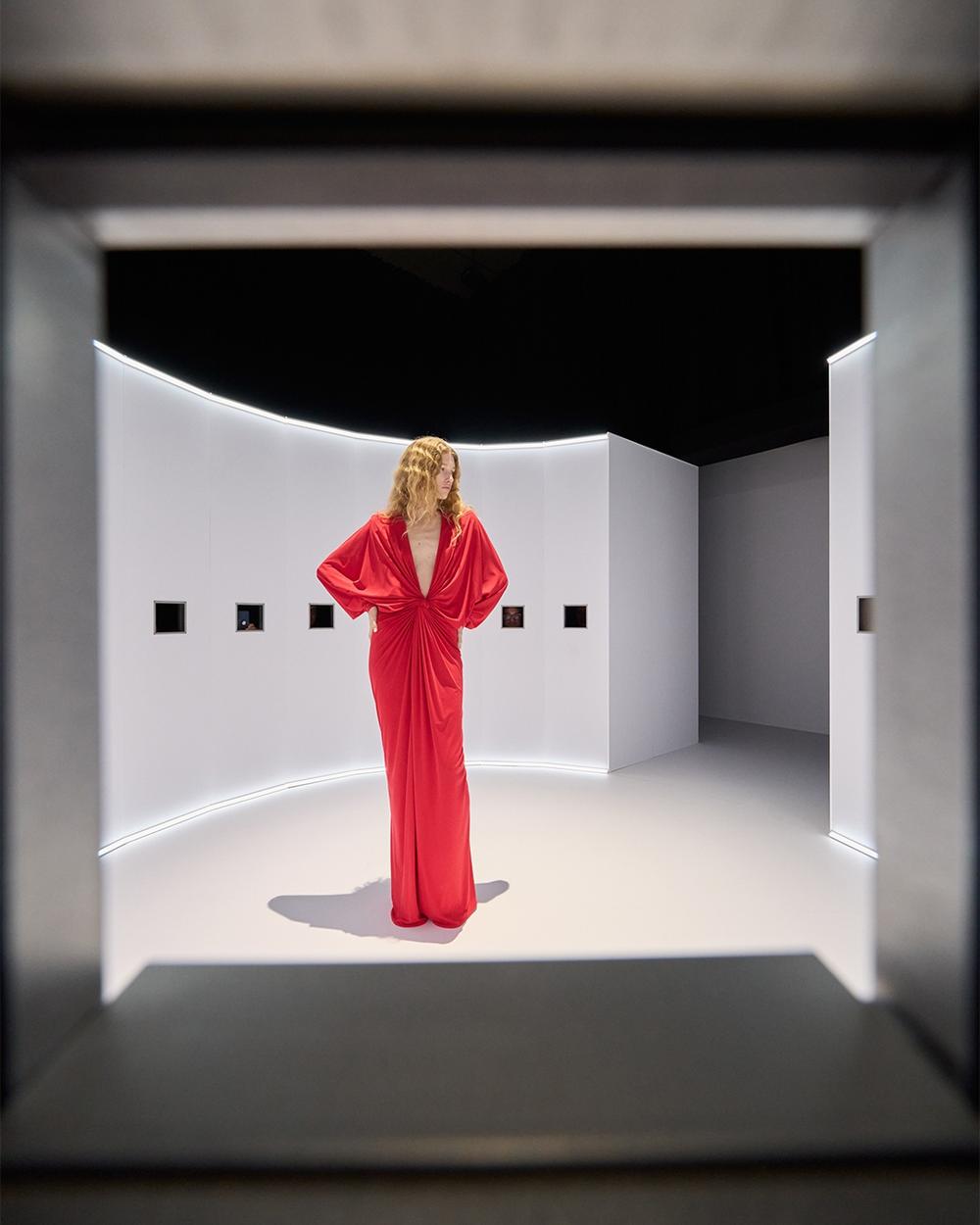
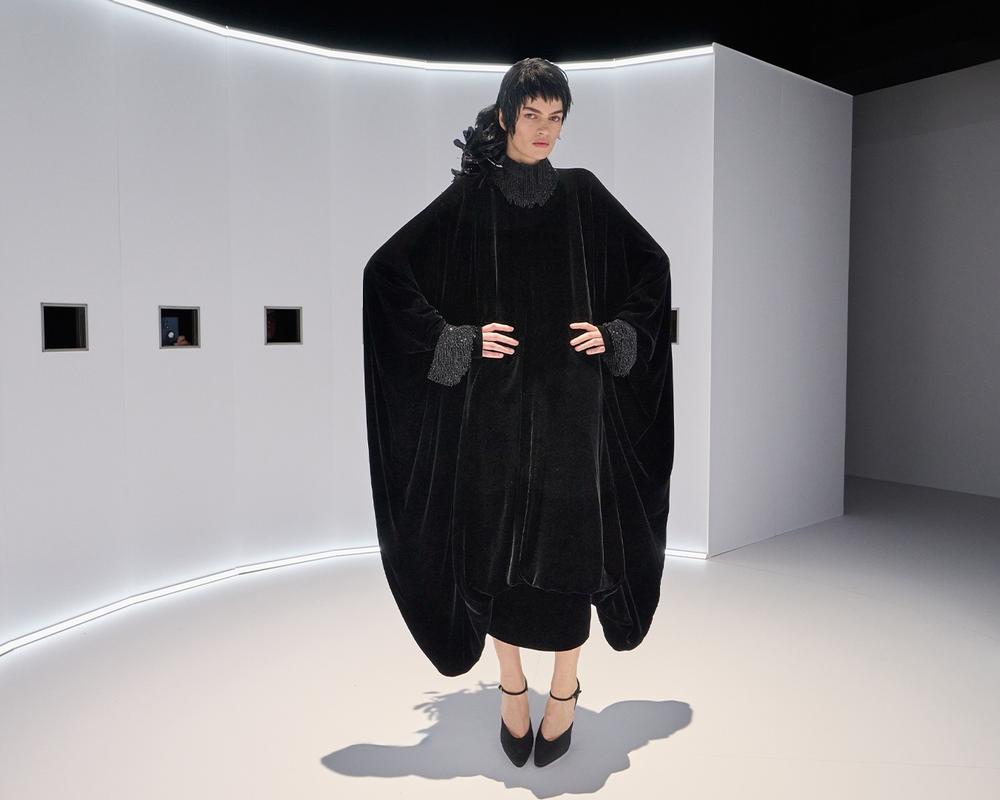
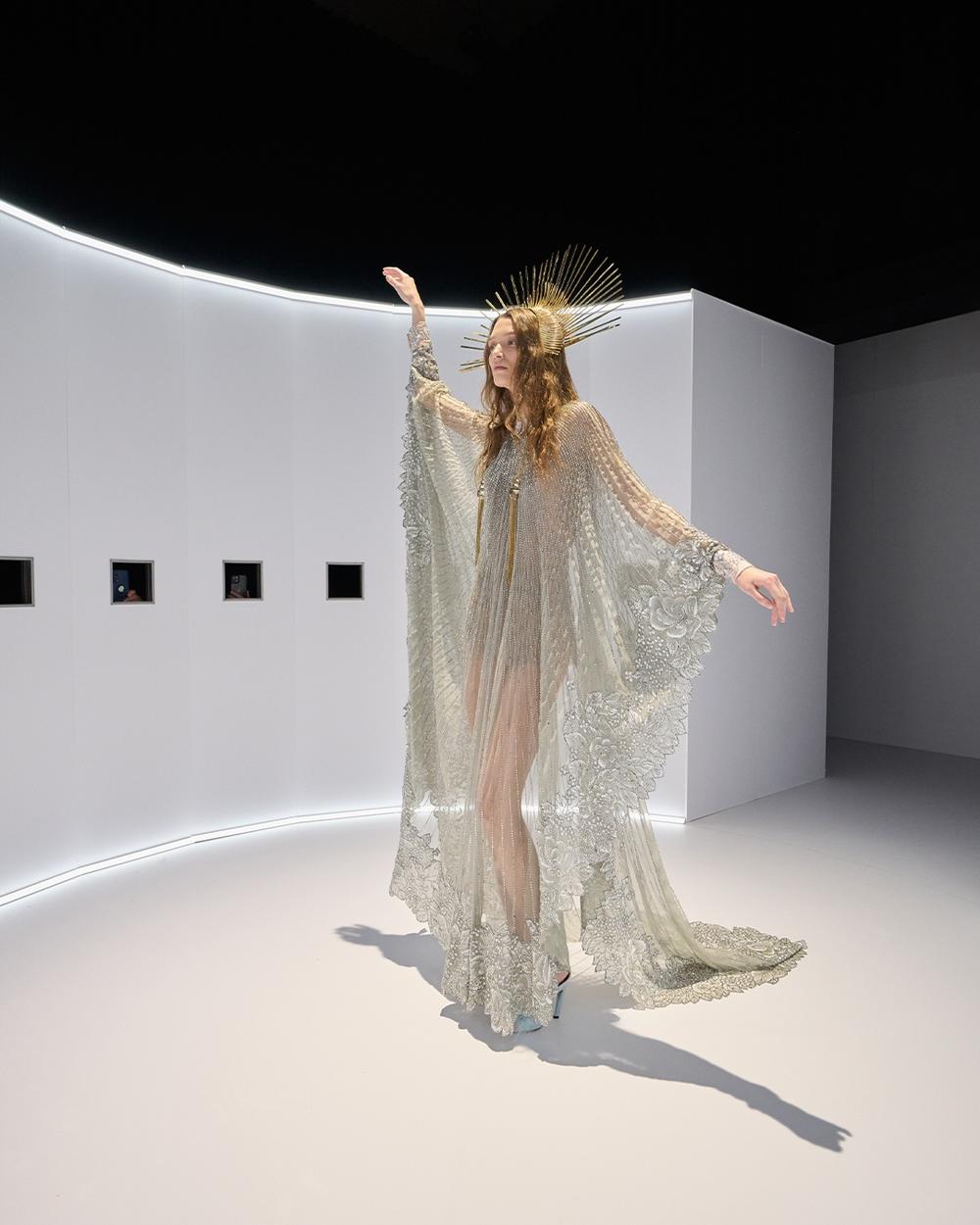
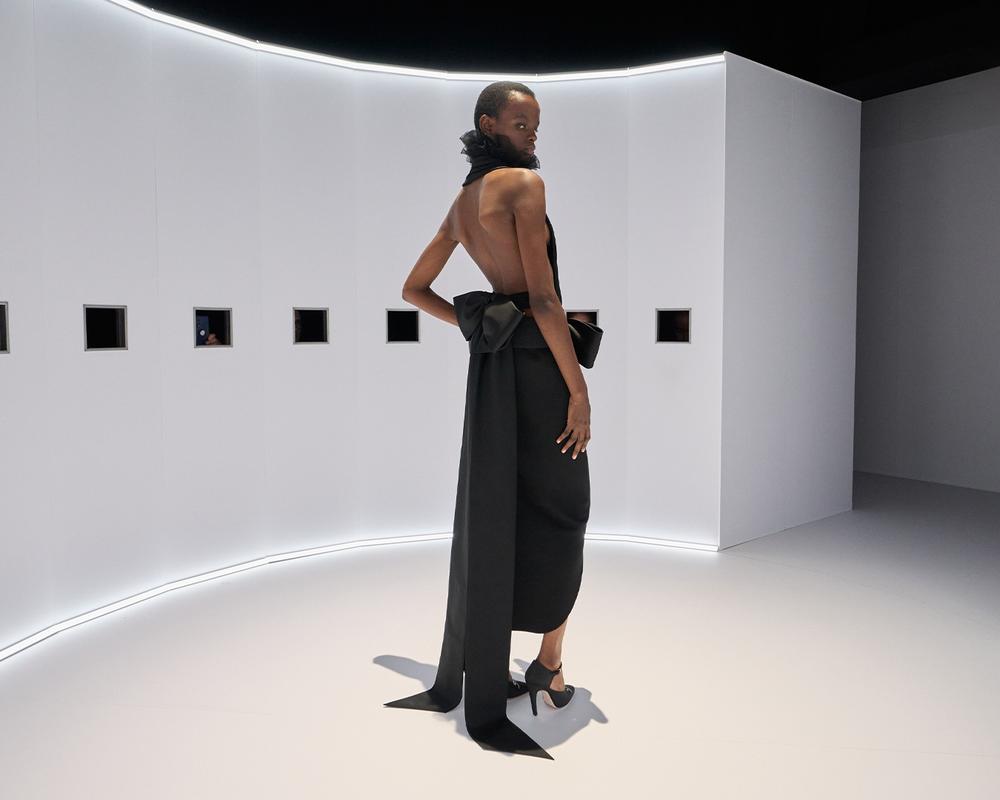
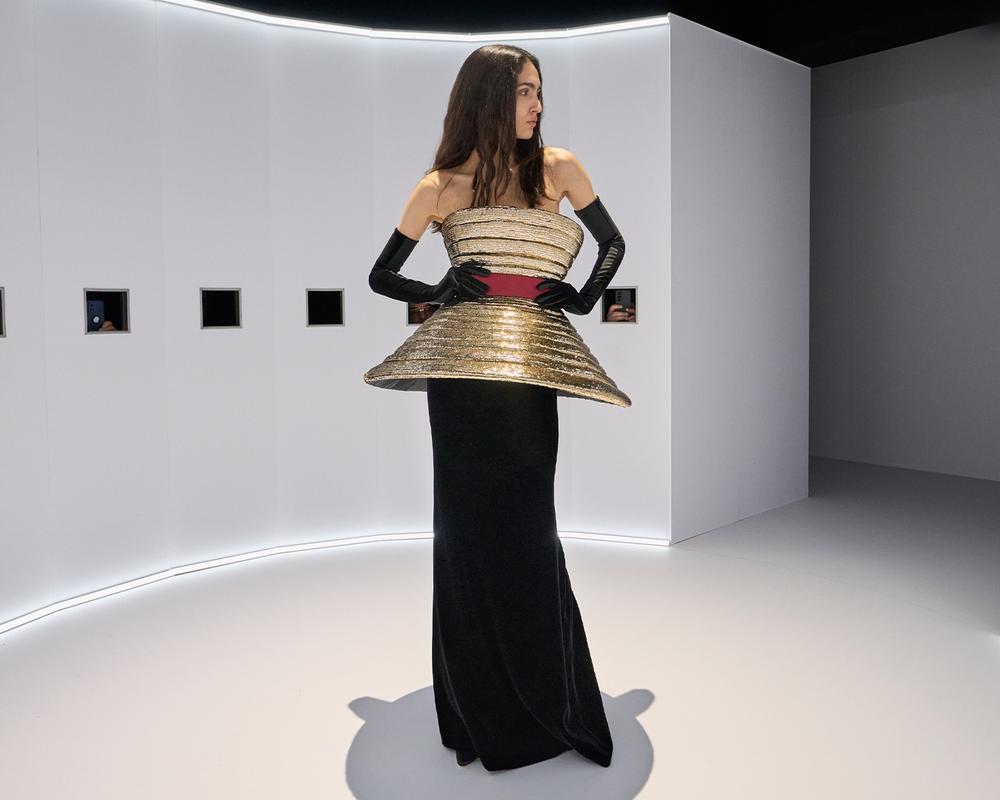
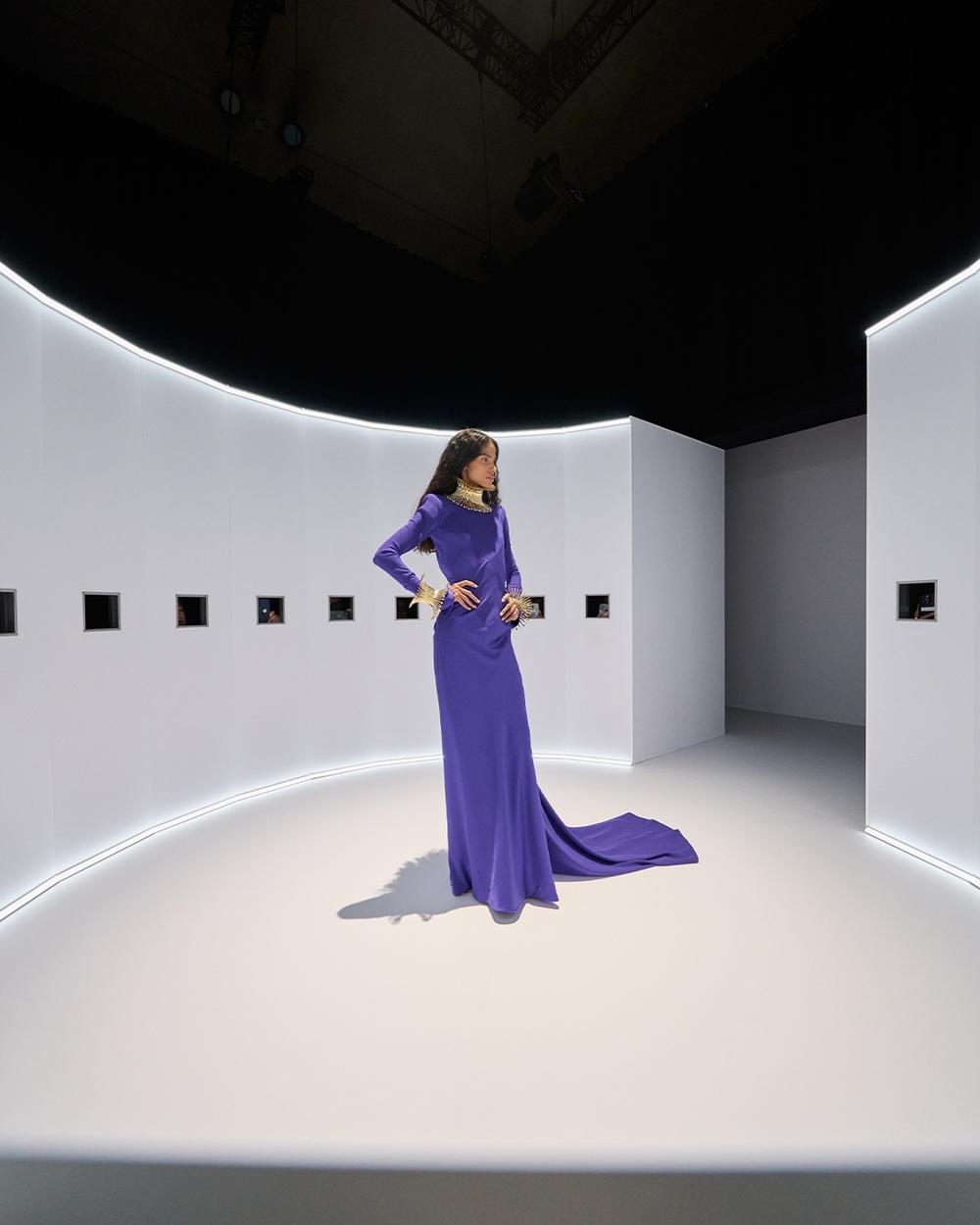
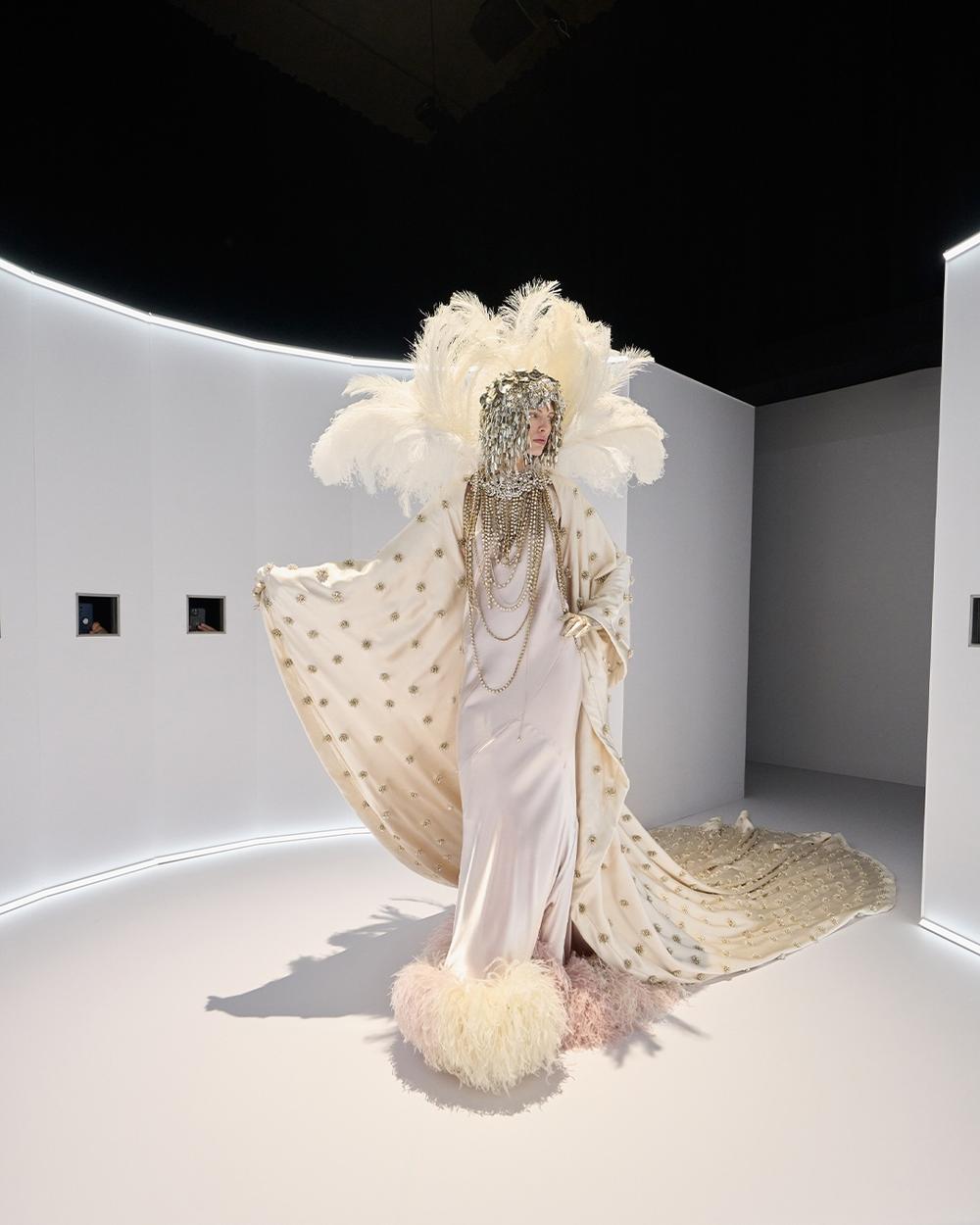
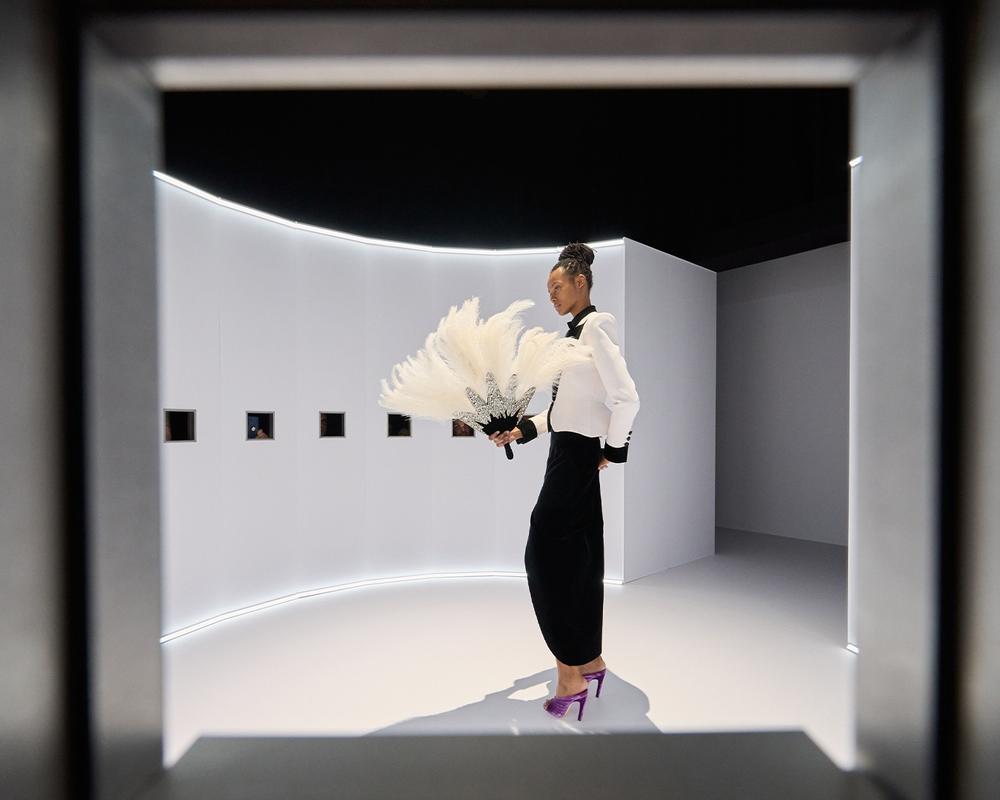
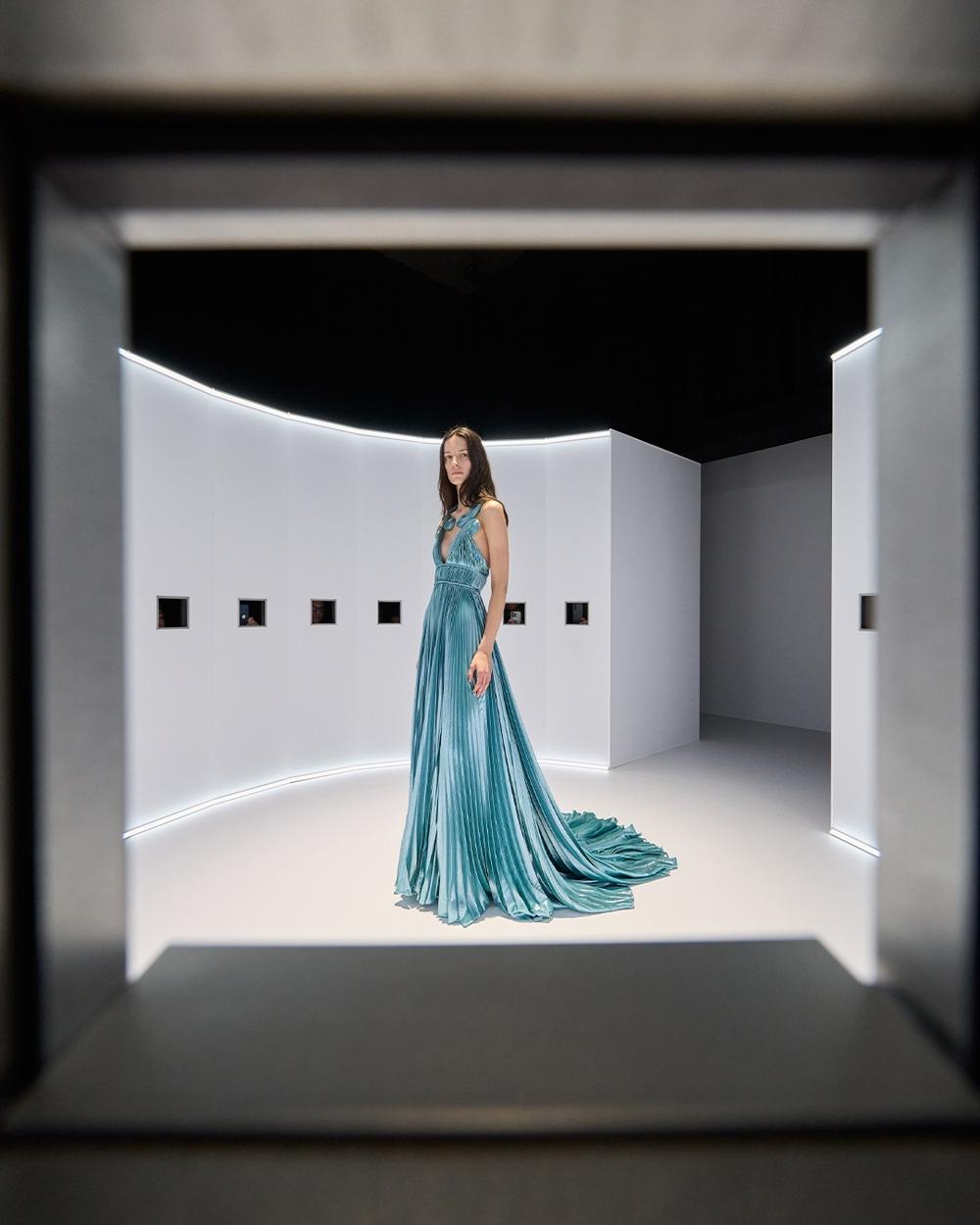
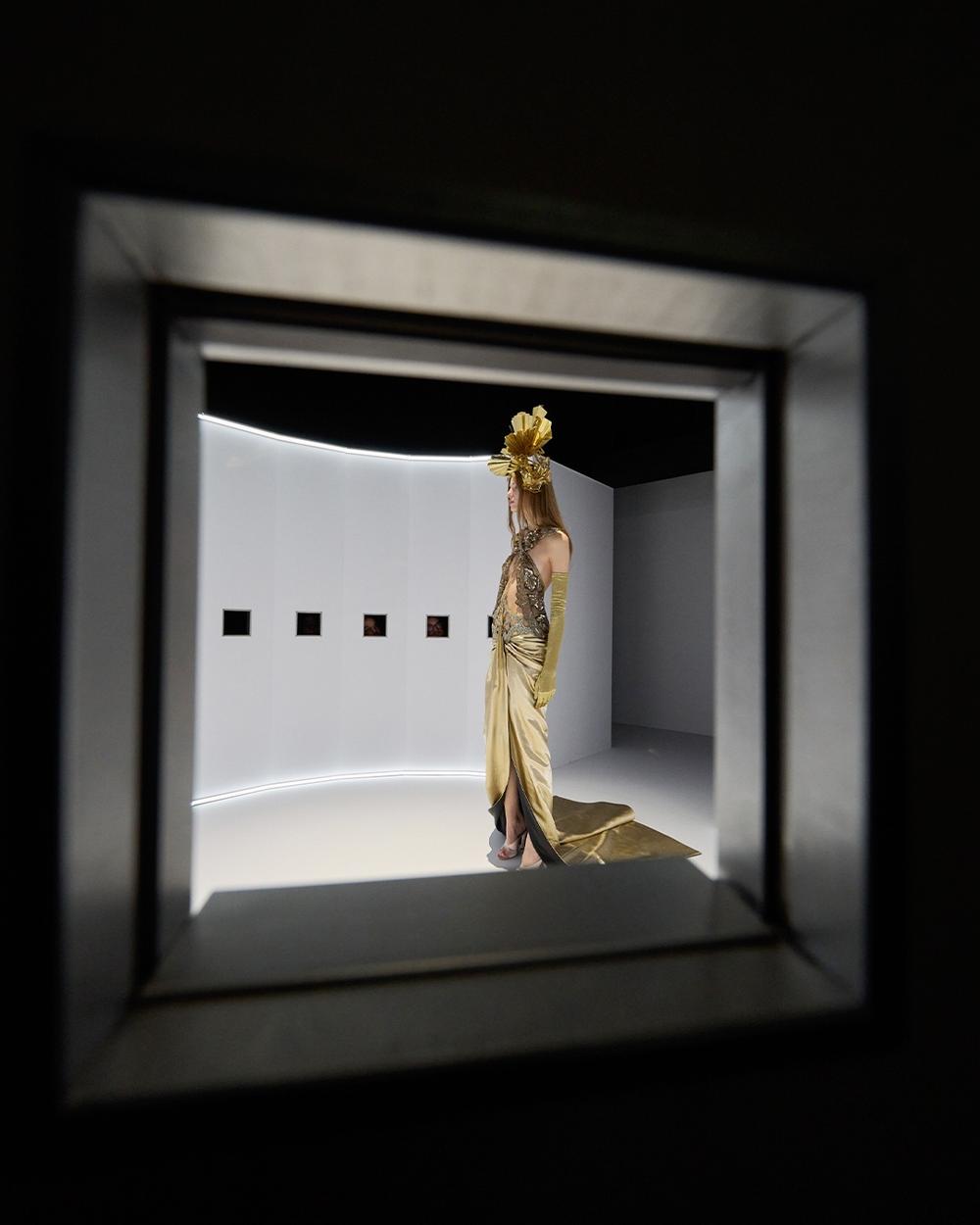
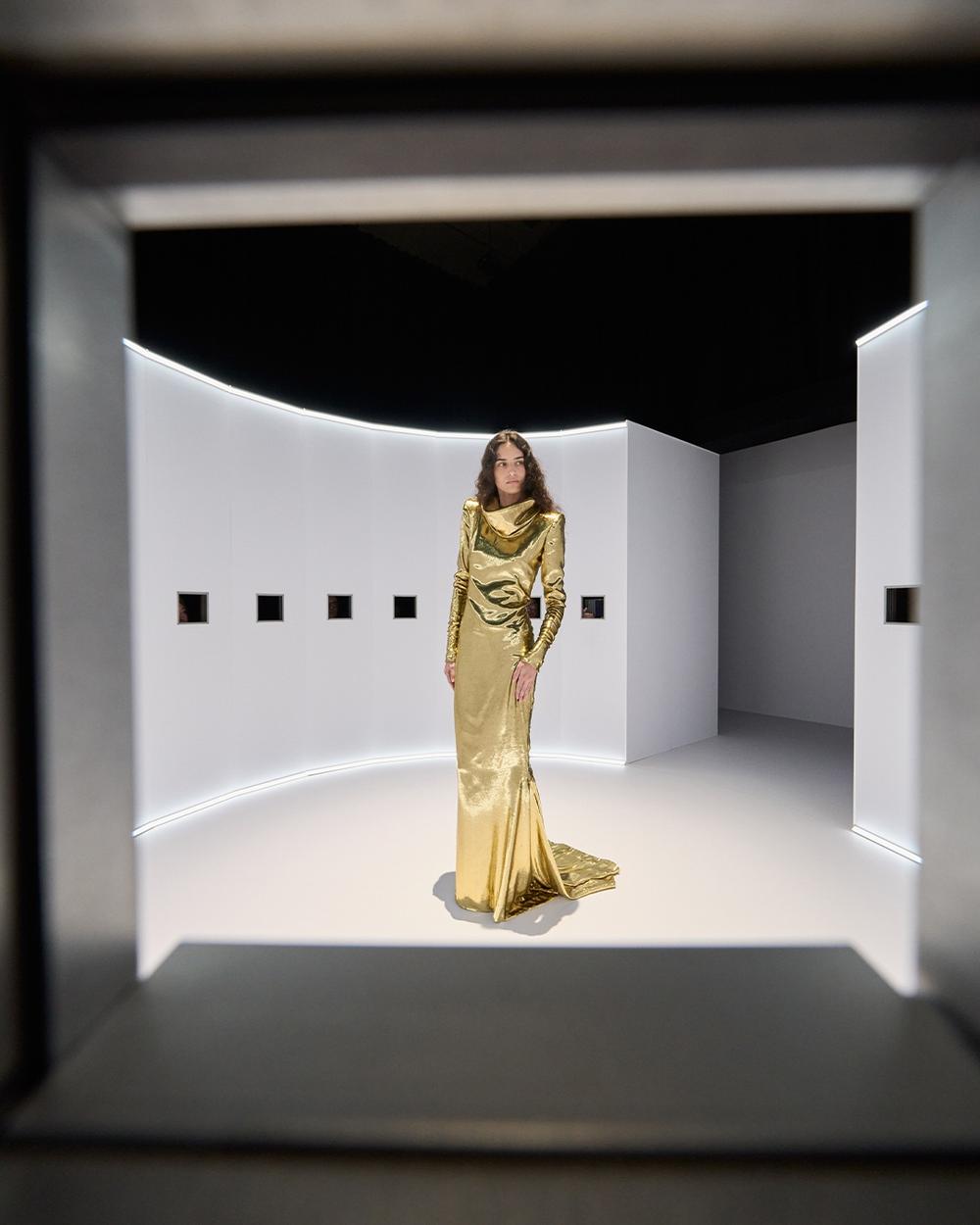
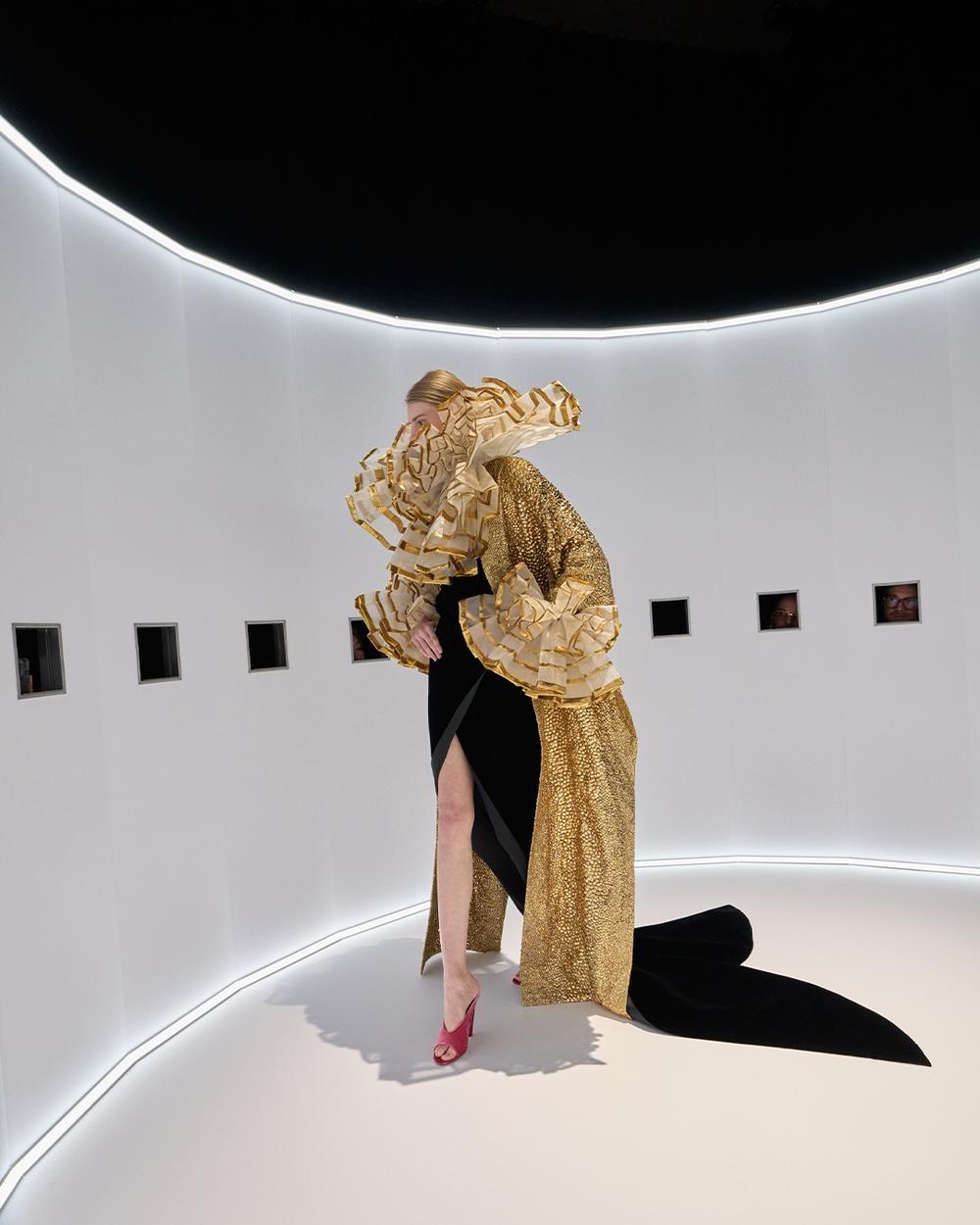
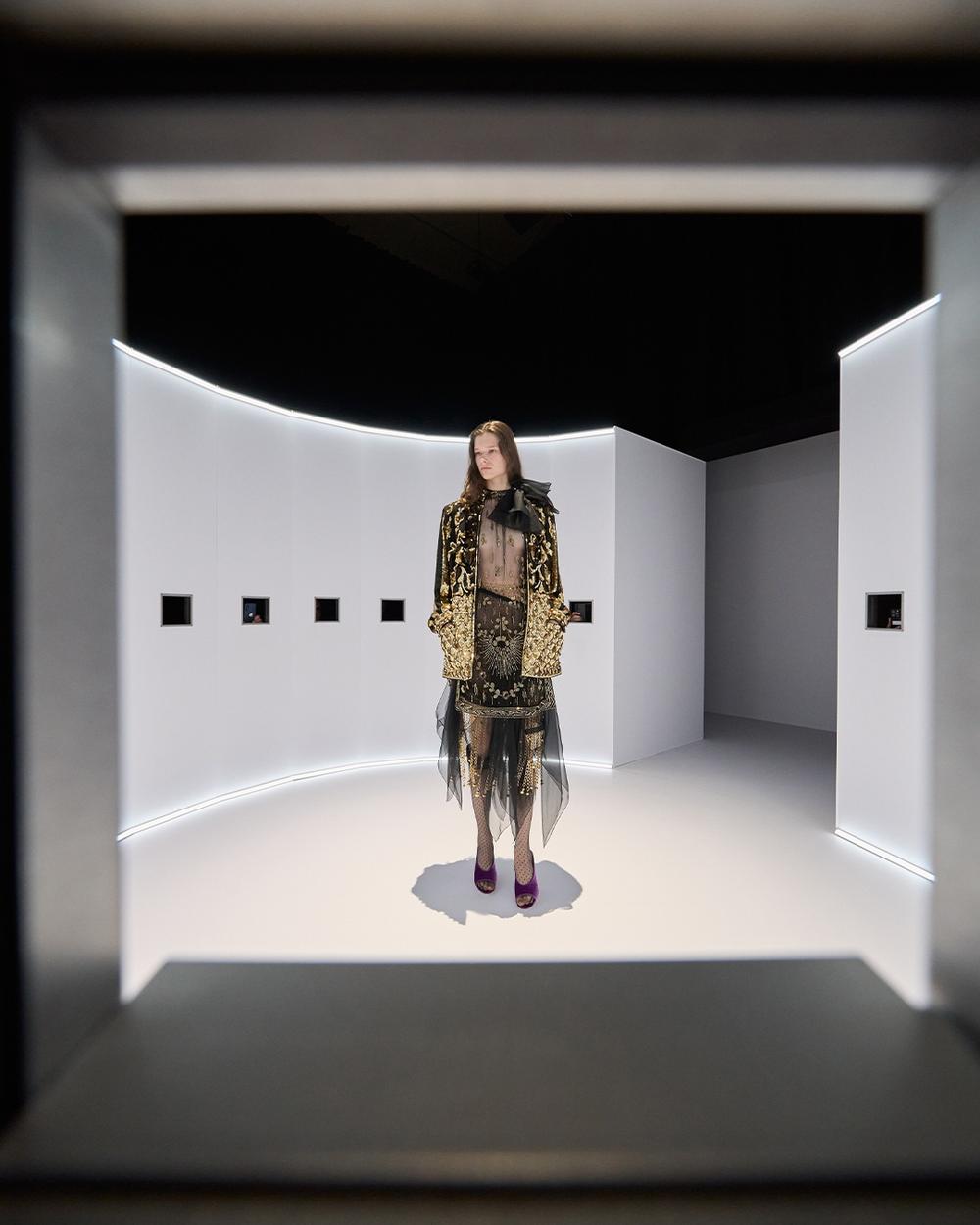
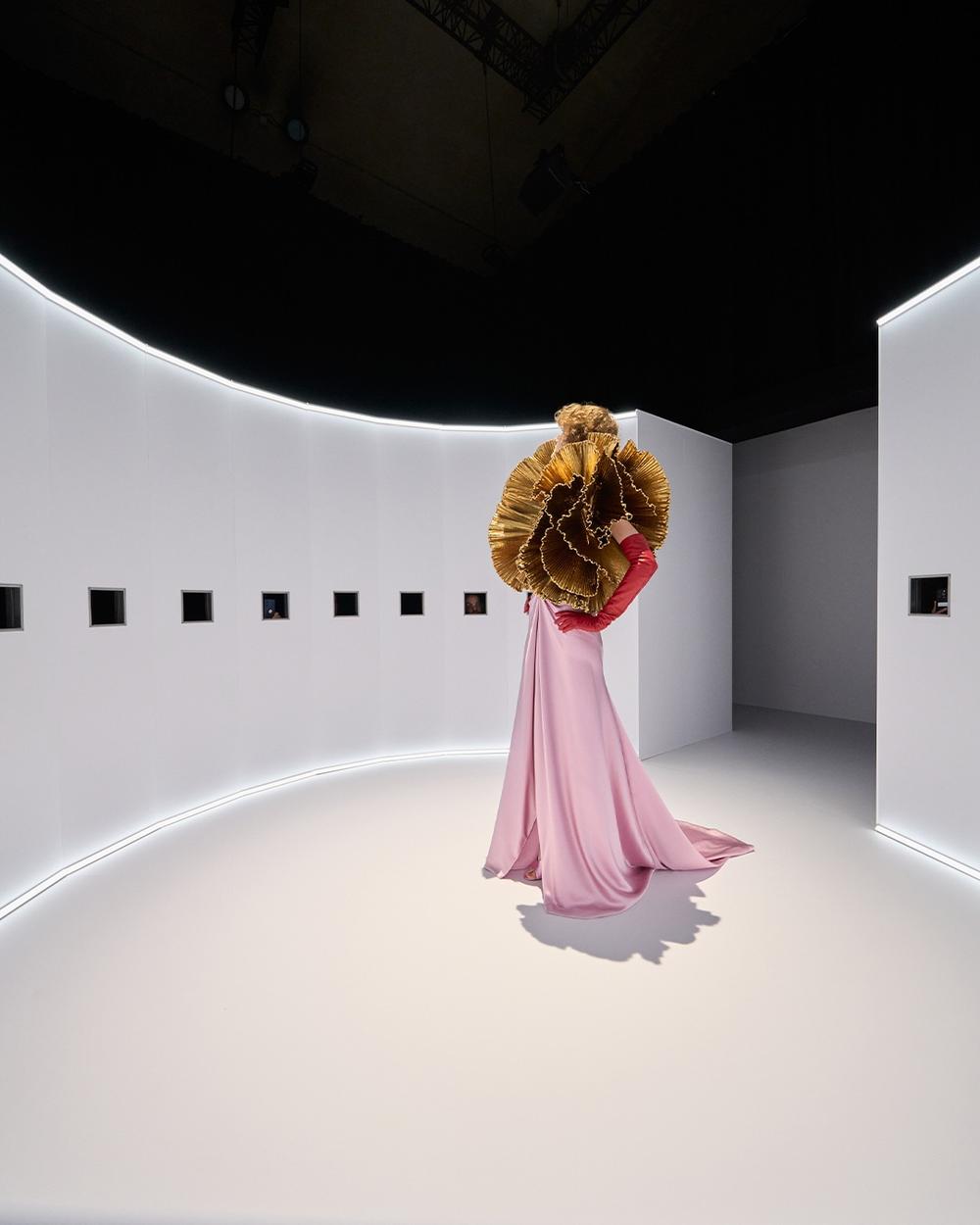
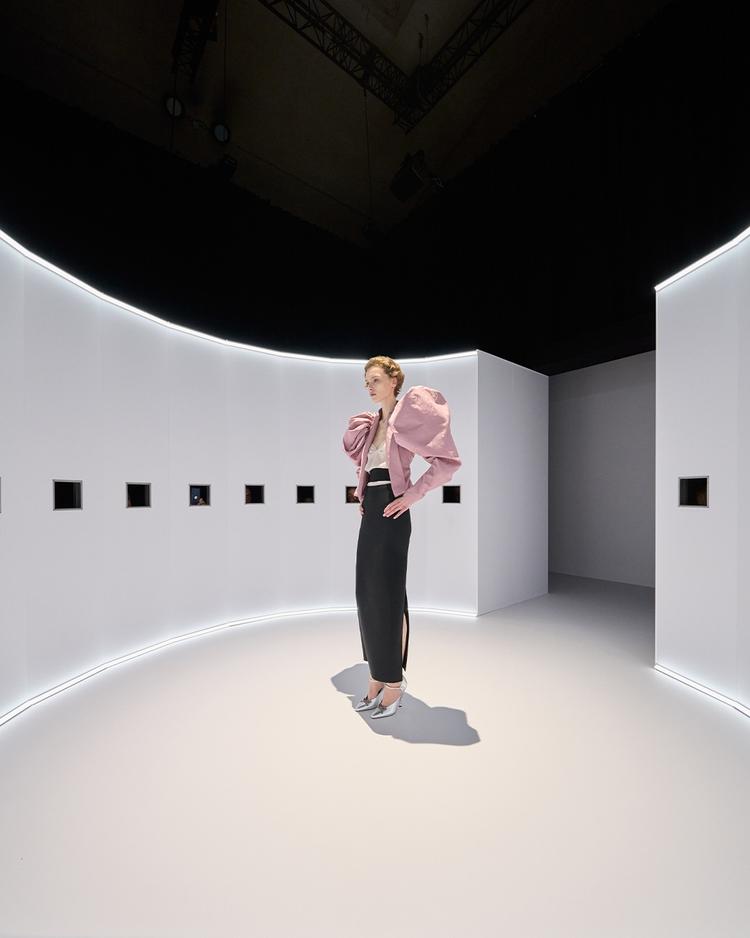
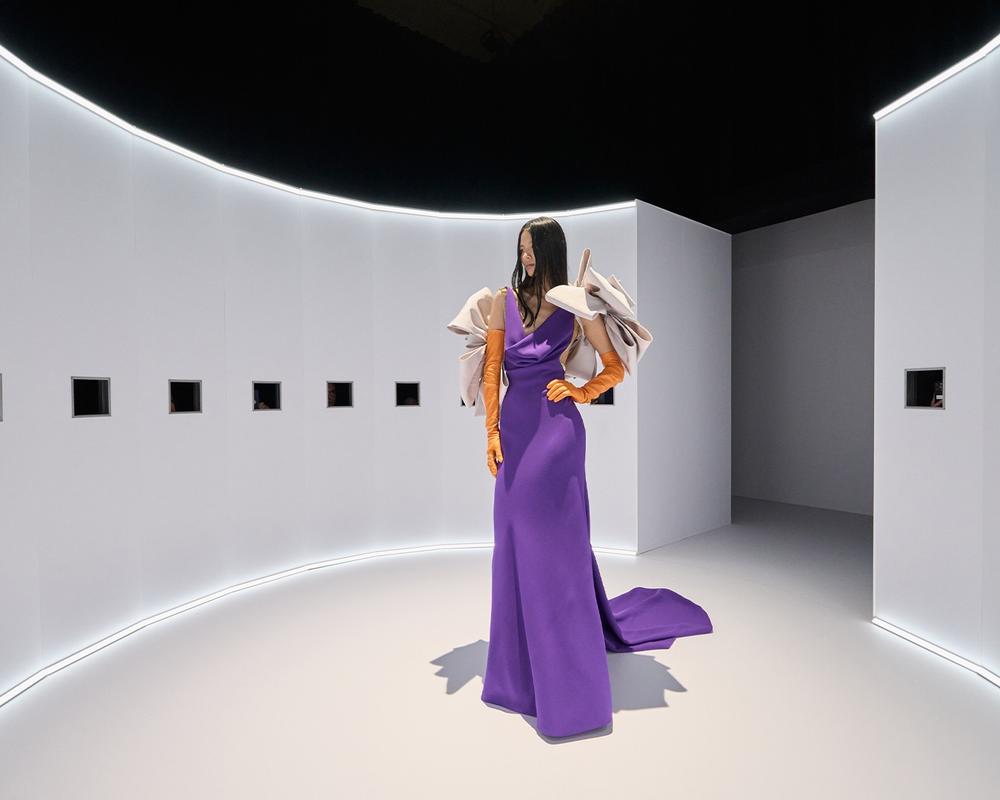
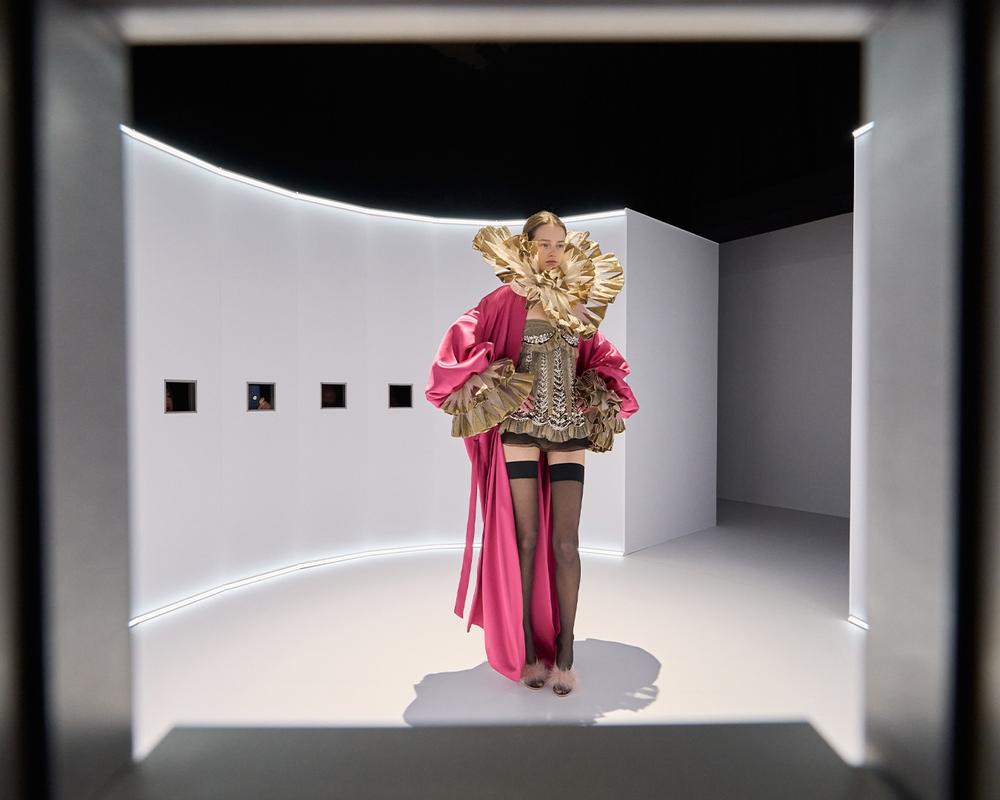
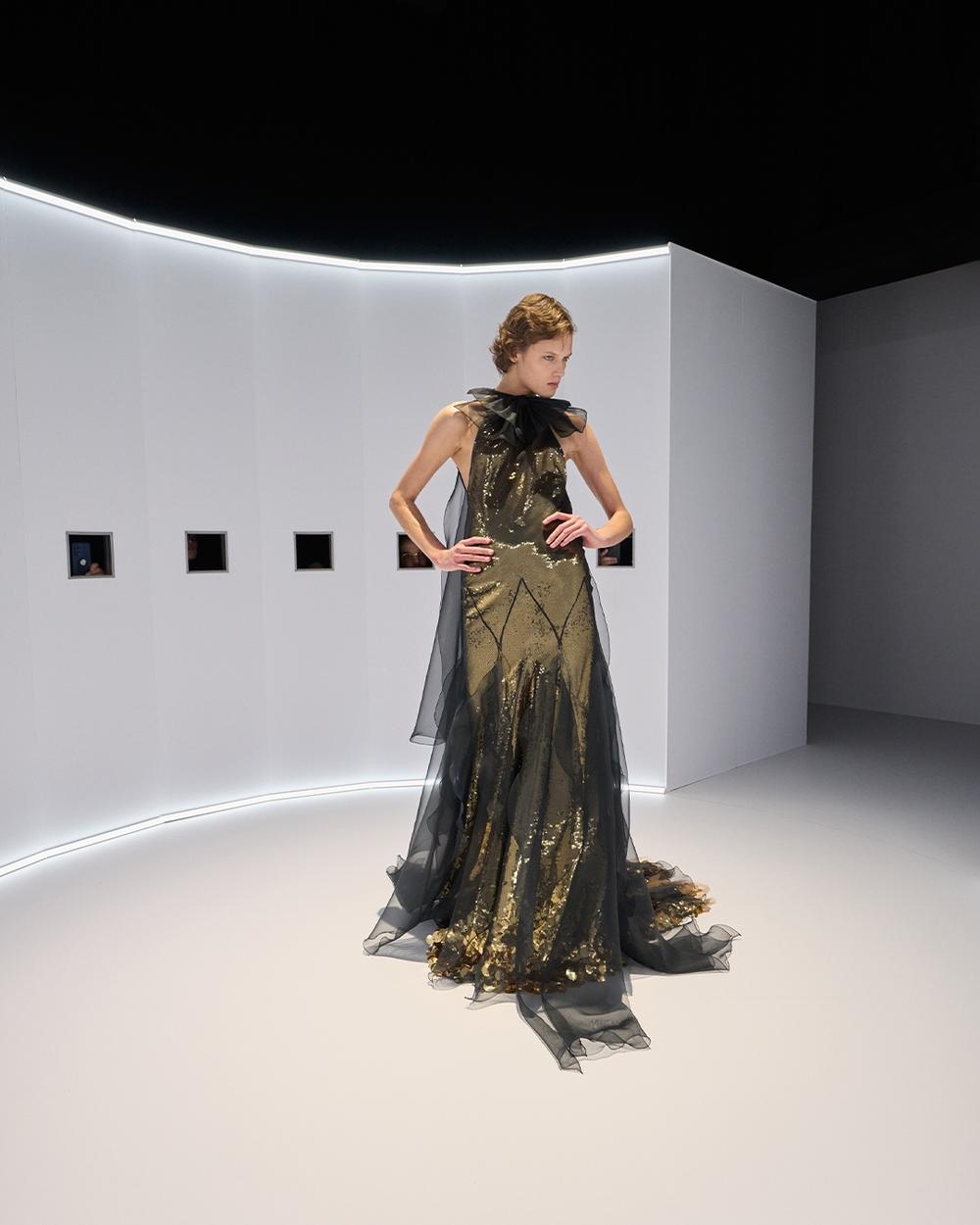
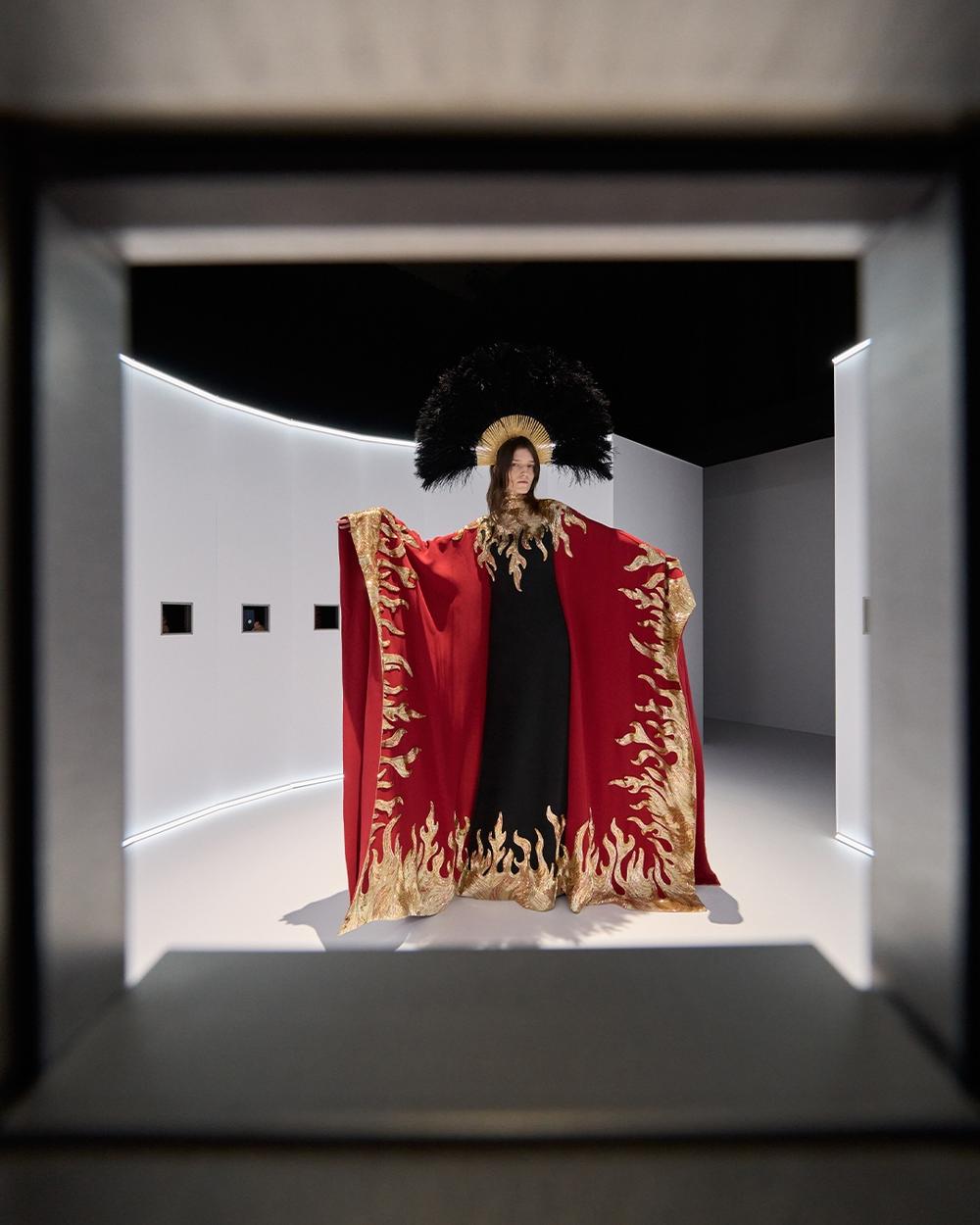
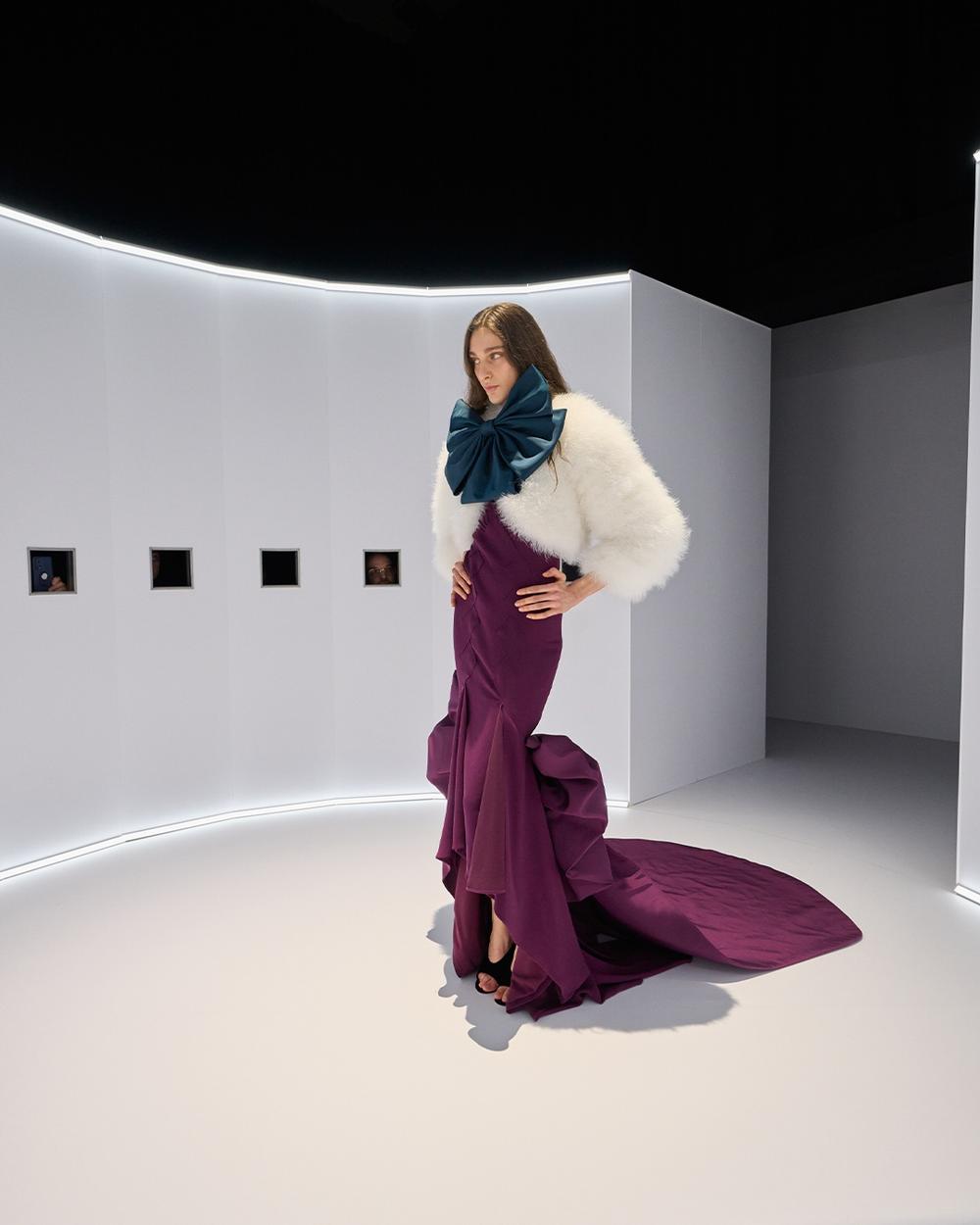
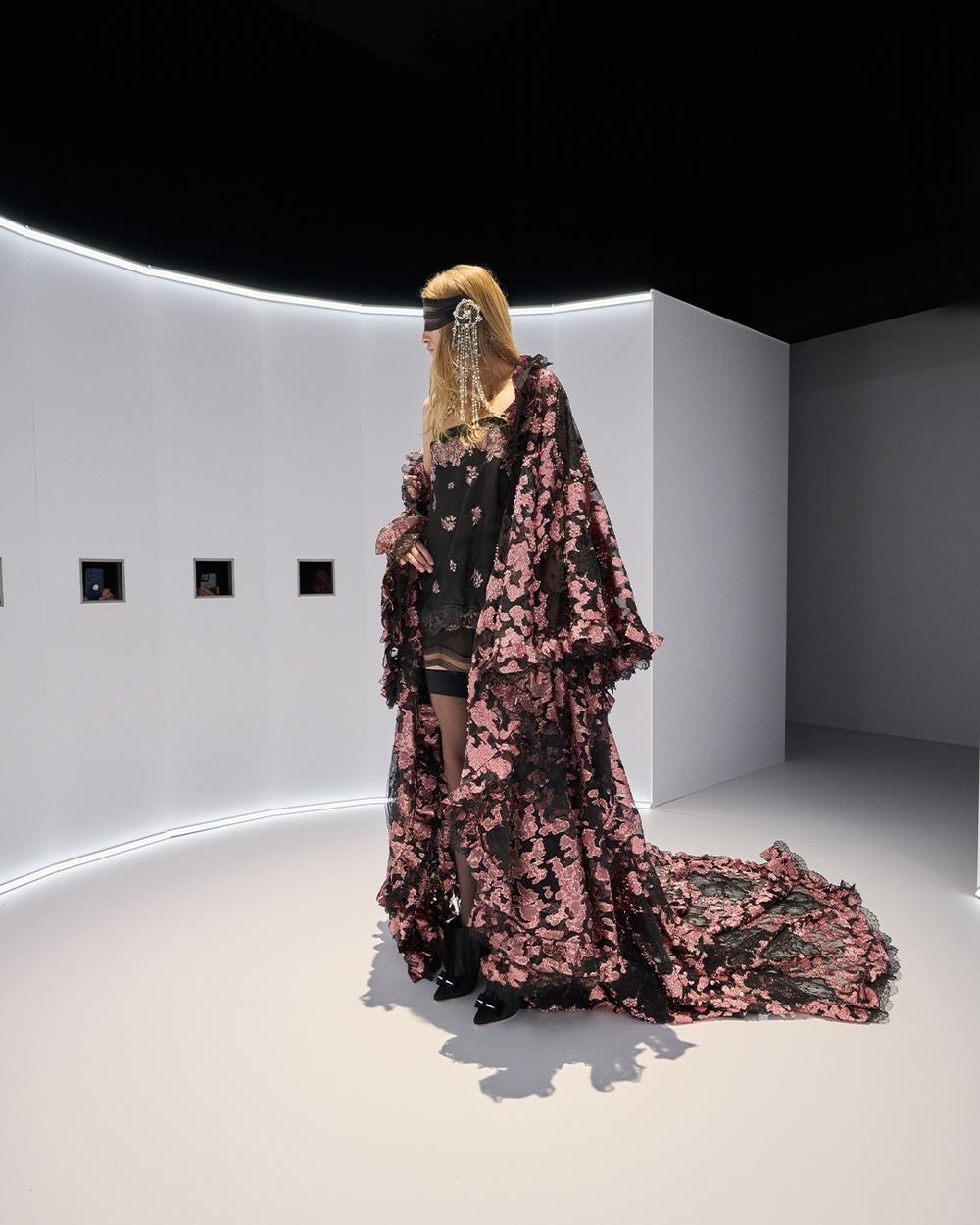
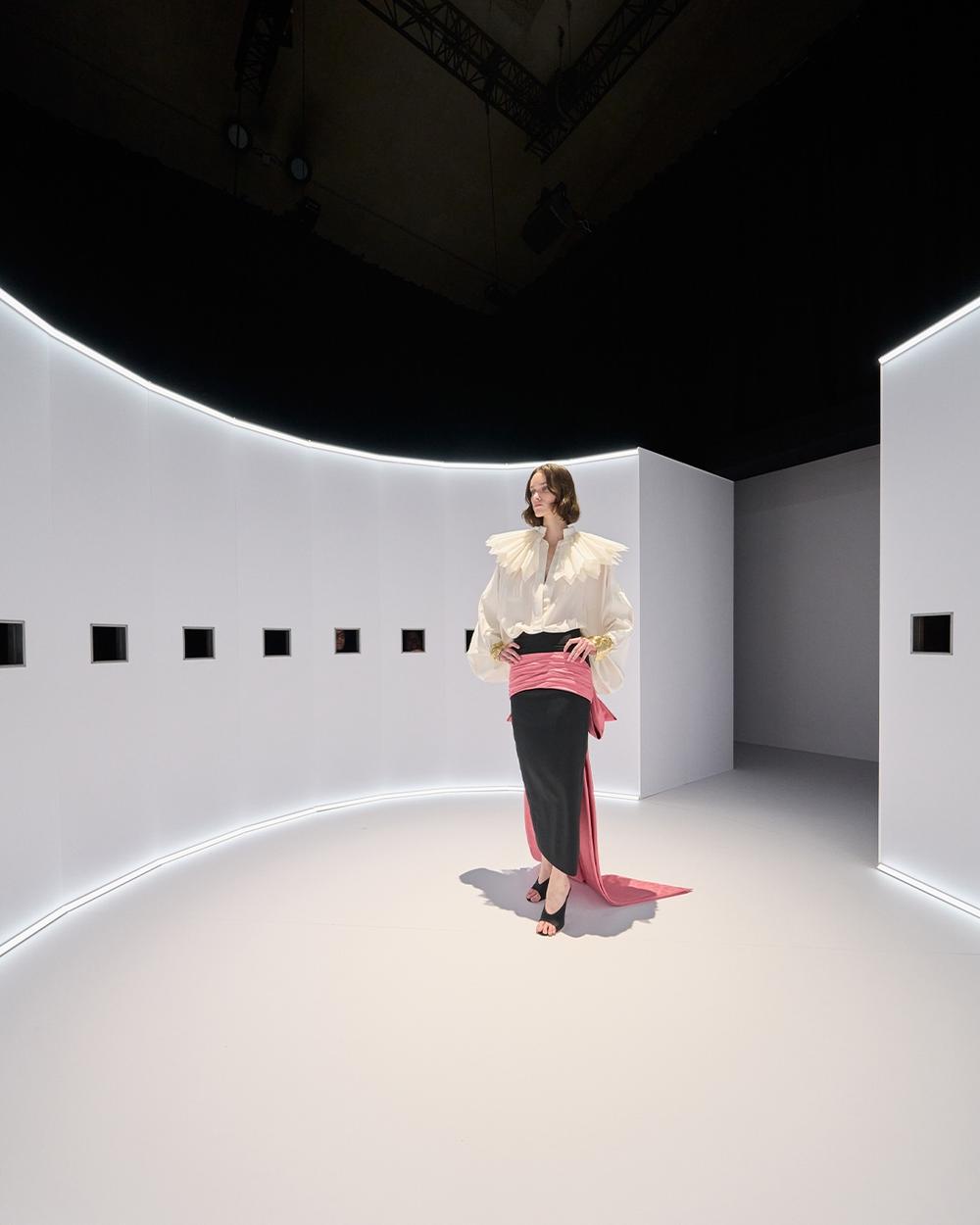
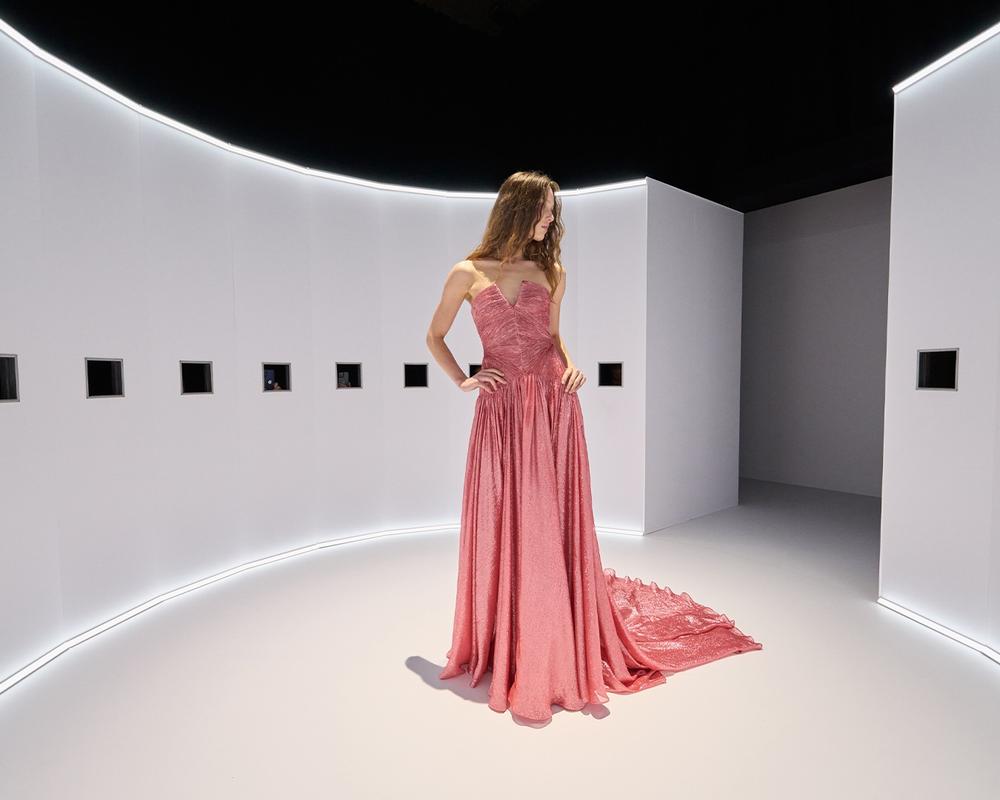
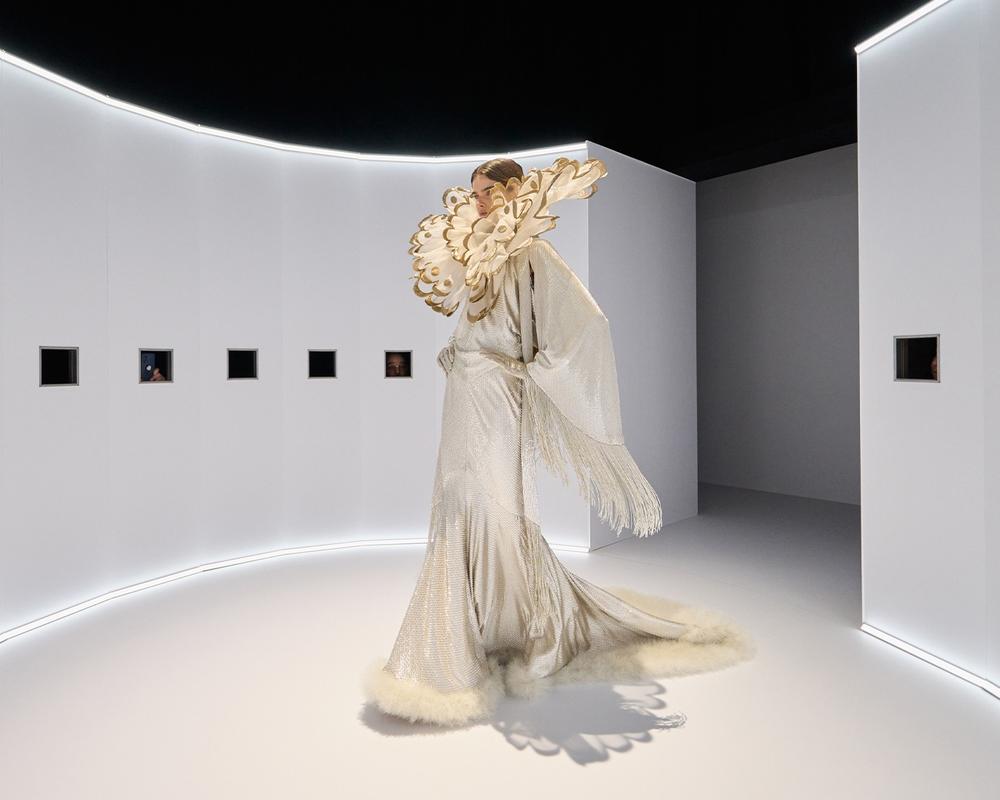
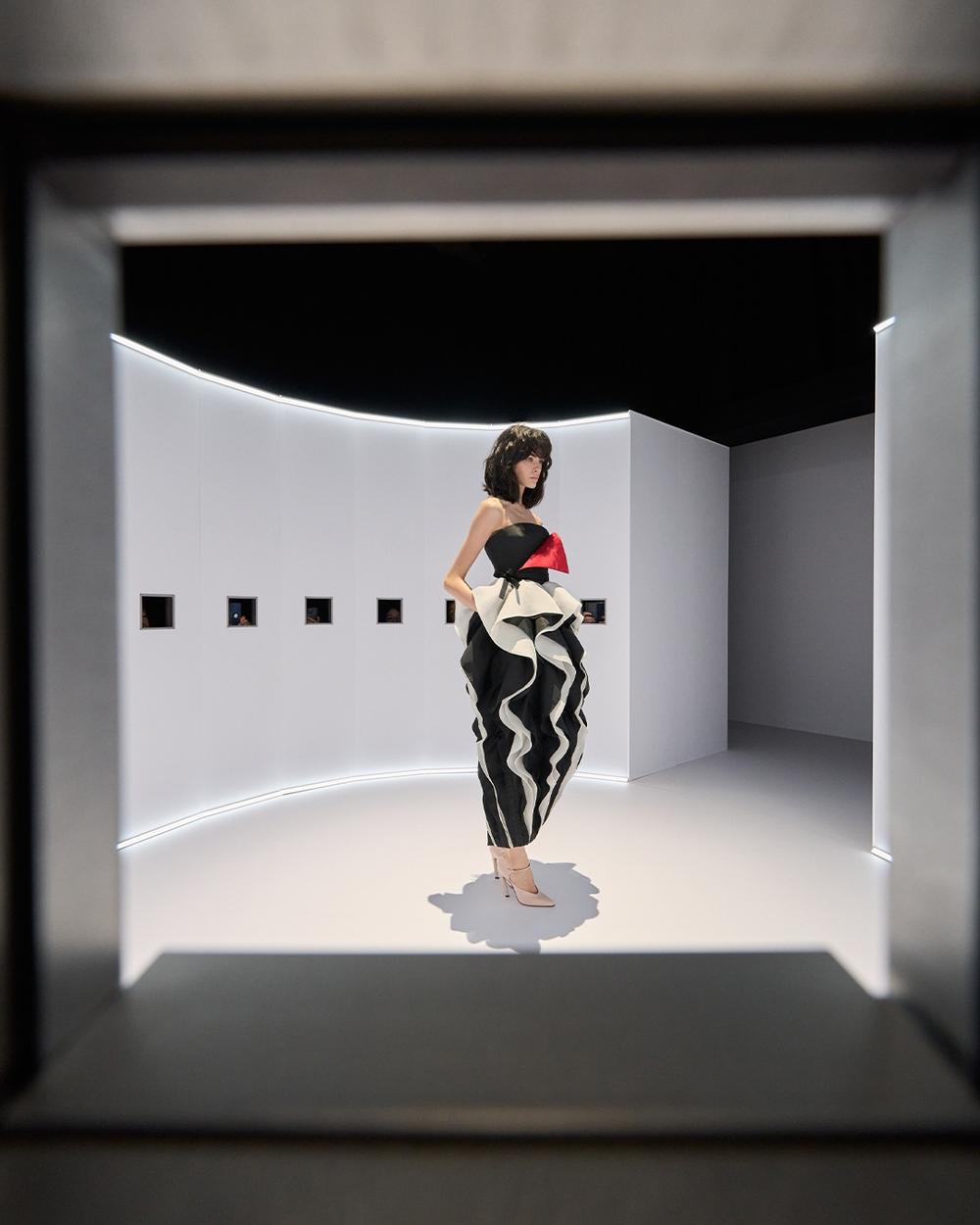
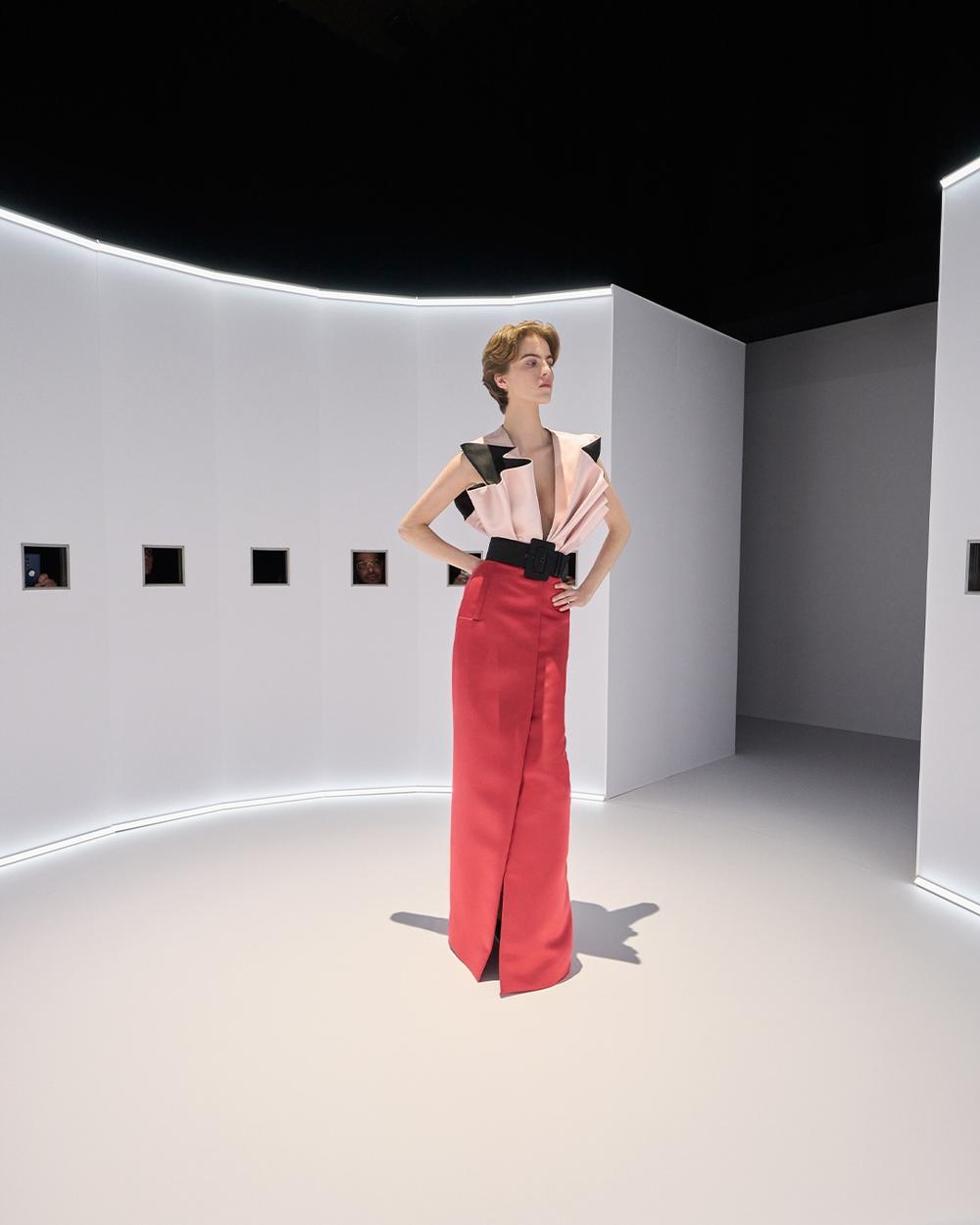
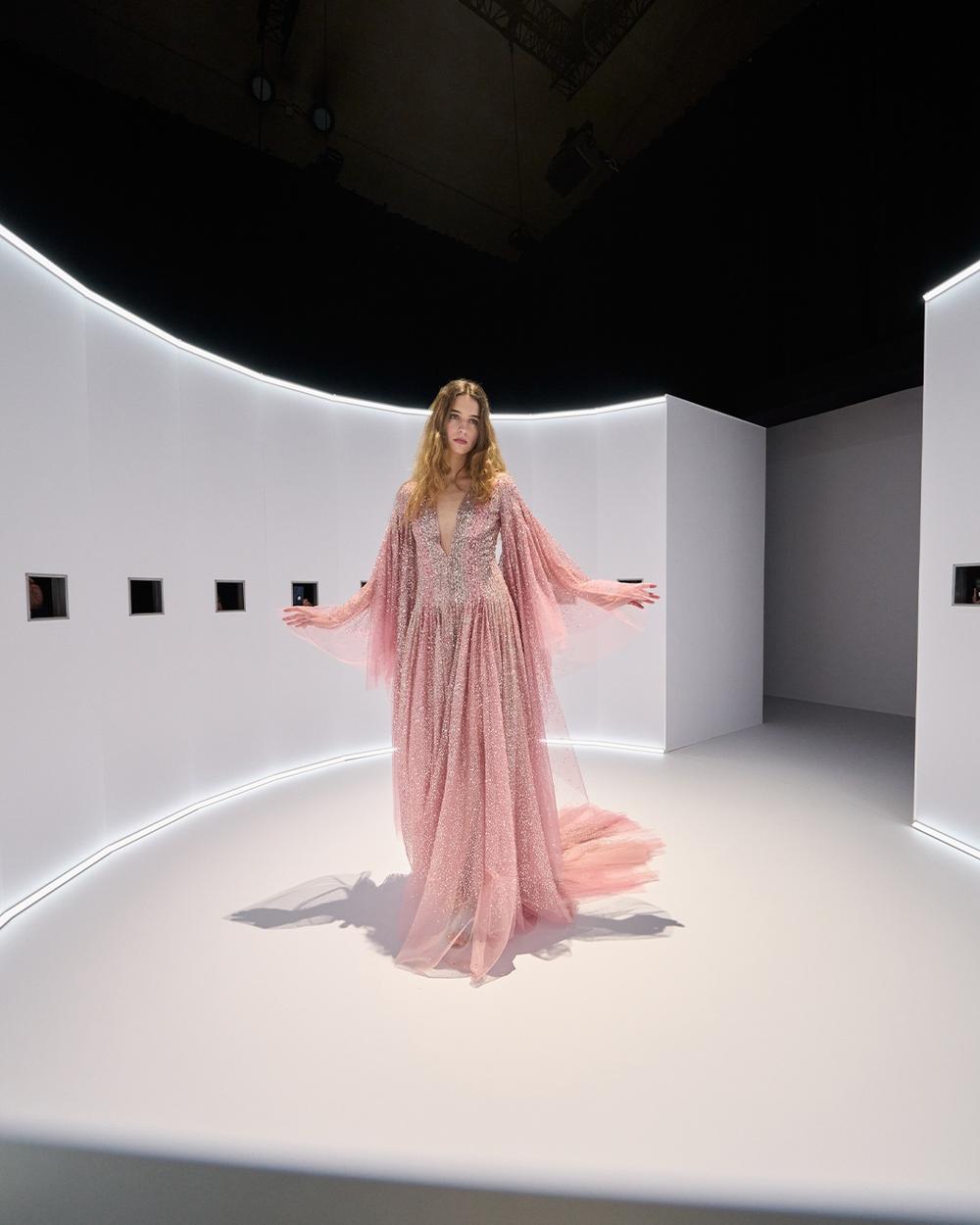
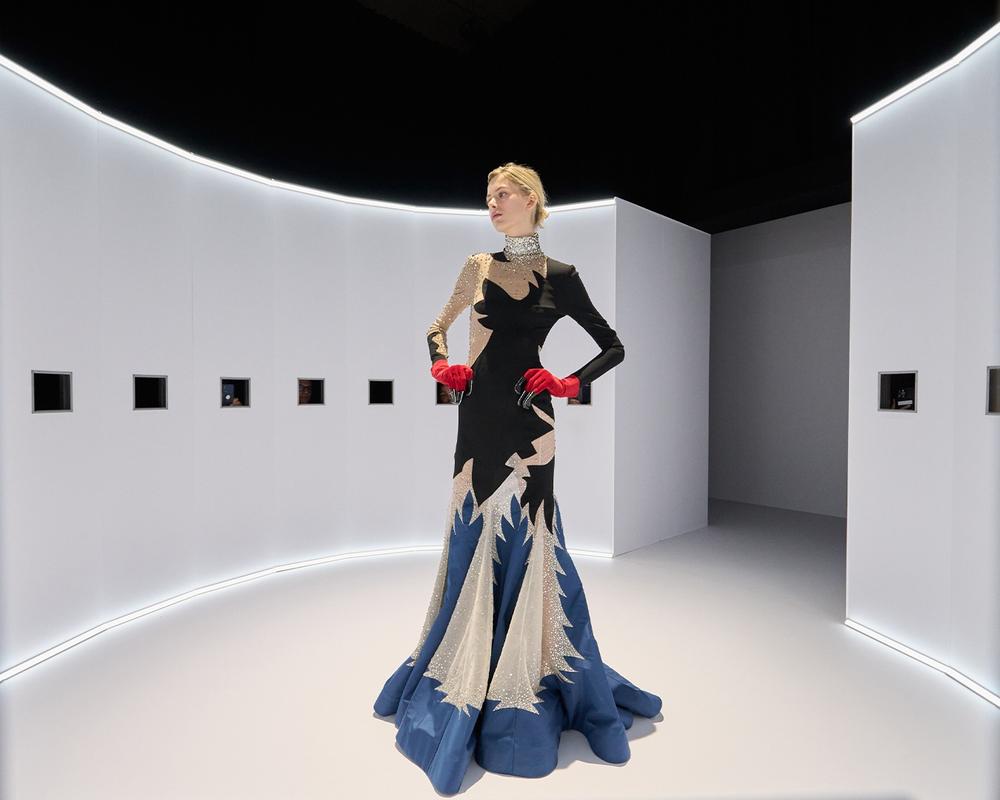
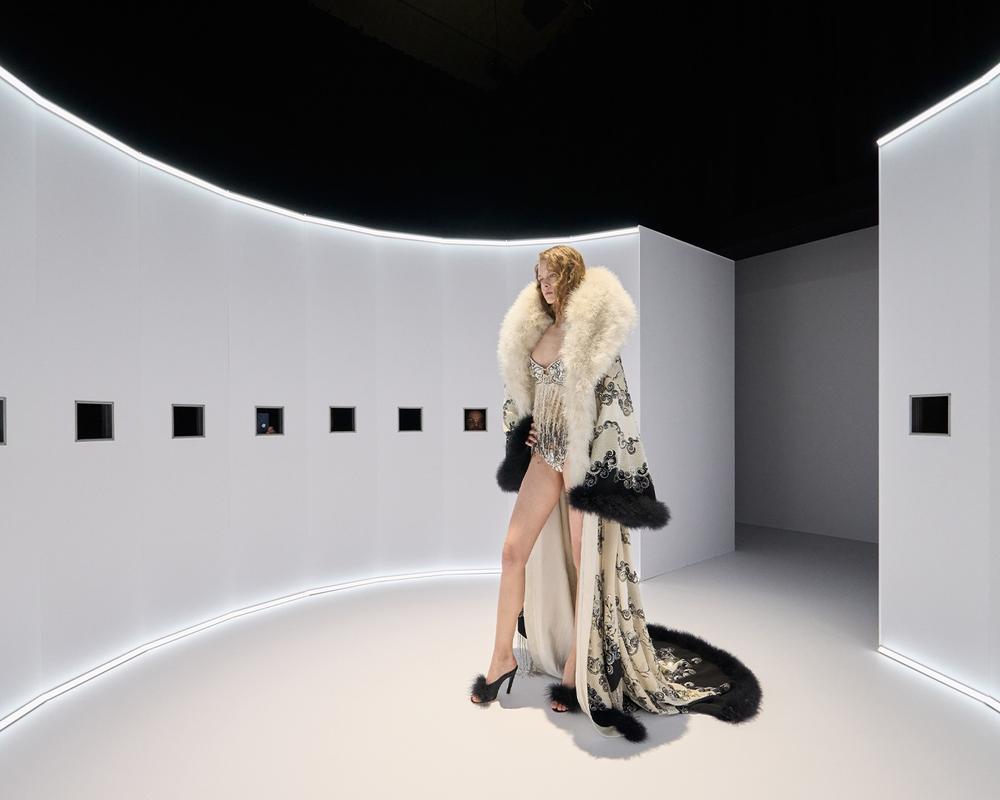
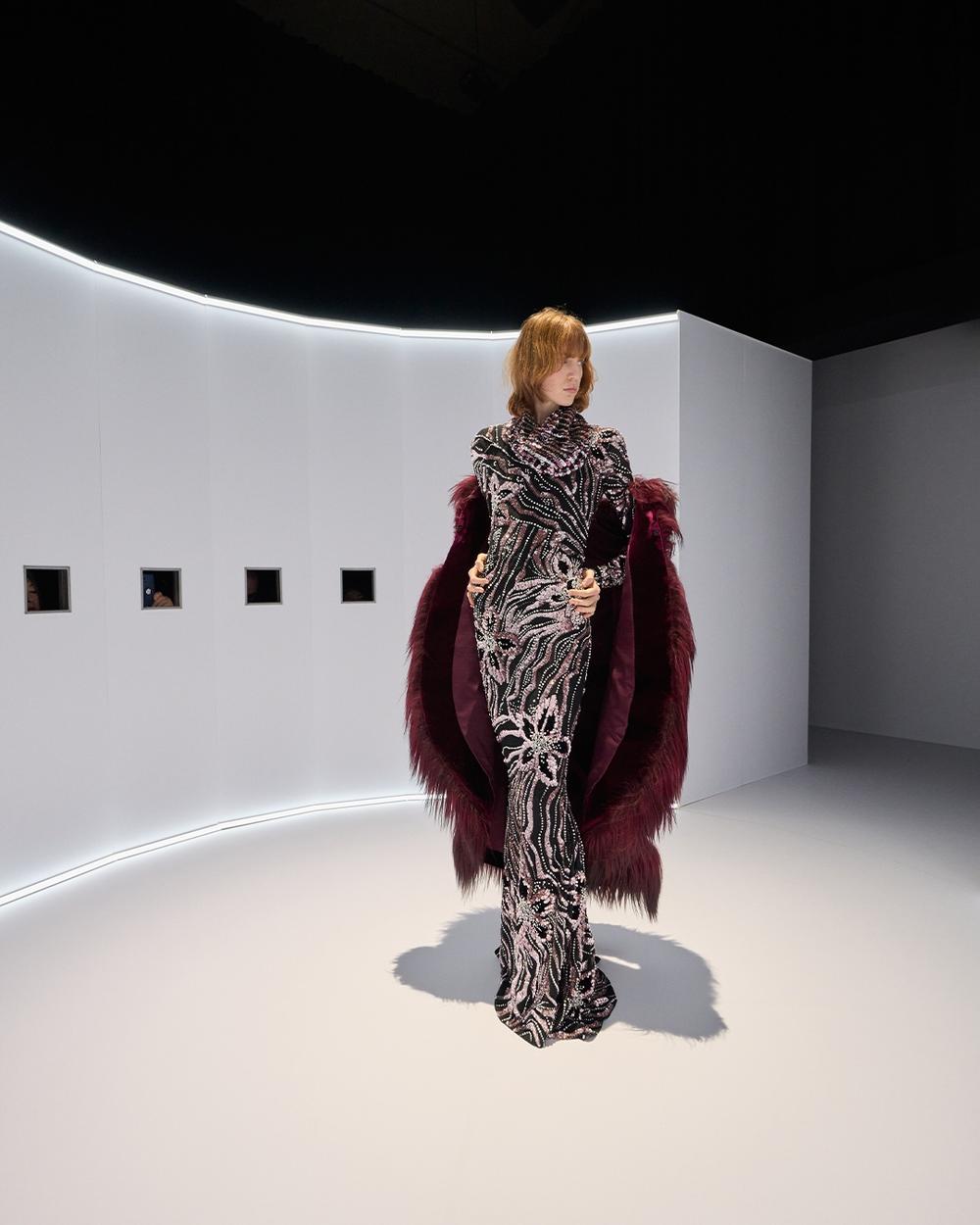
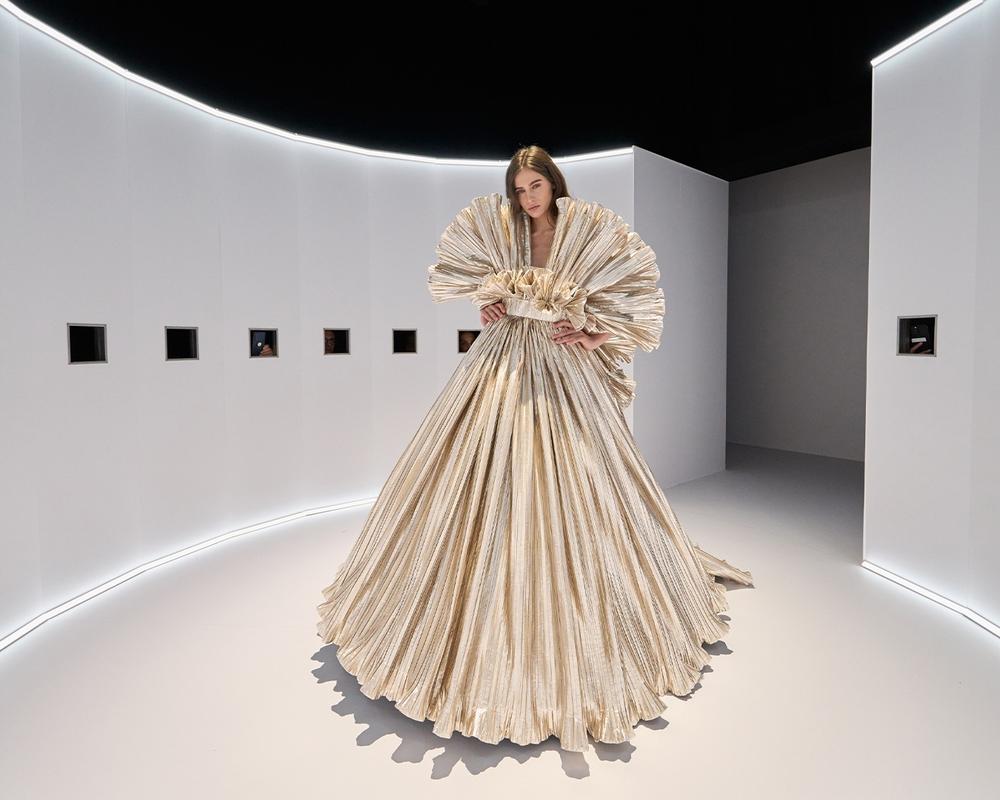
An immersive journey through the show's venue
Thank you Mr. Valentino
Thank you Mr. Valentino
Discover More